


GET IN TOUCH
- Please wait...

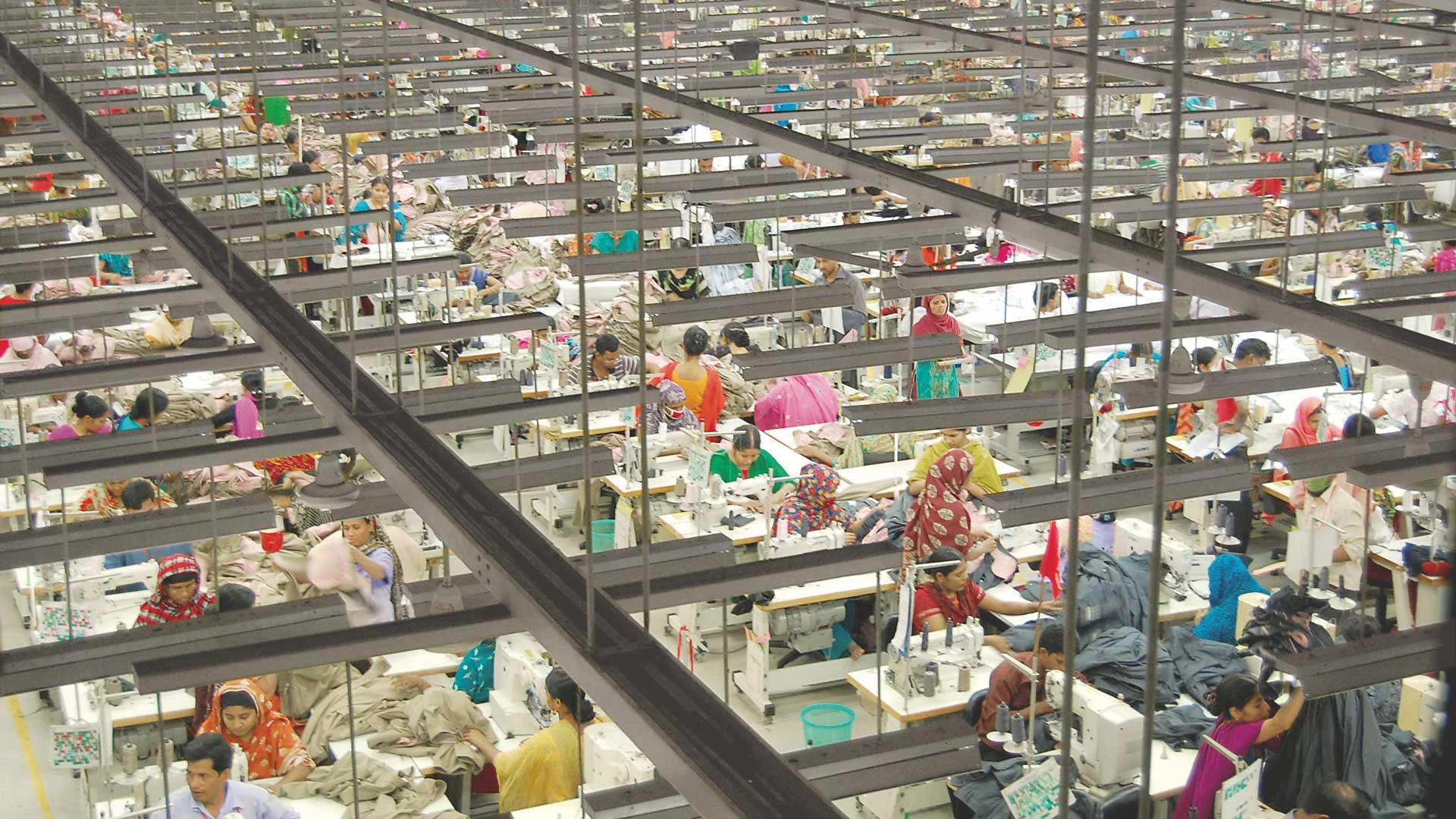
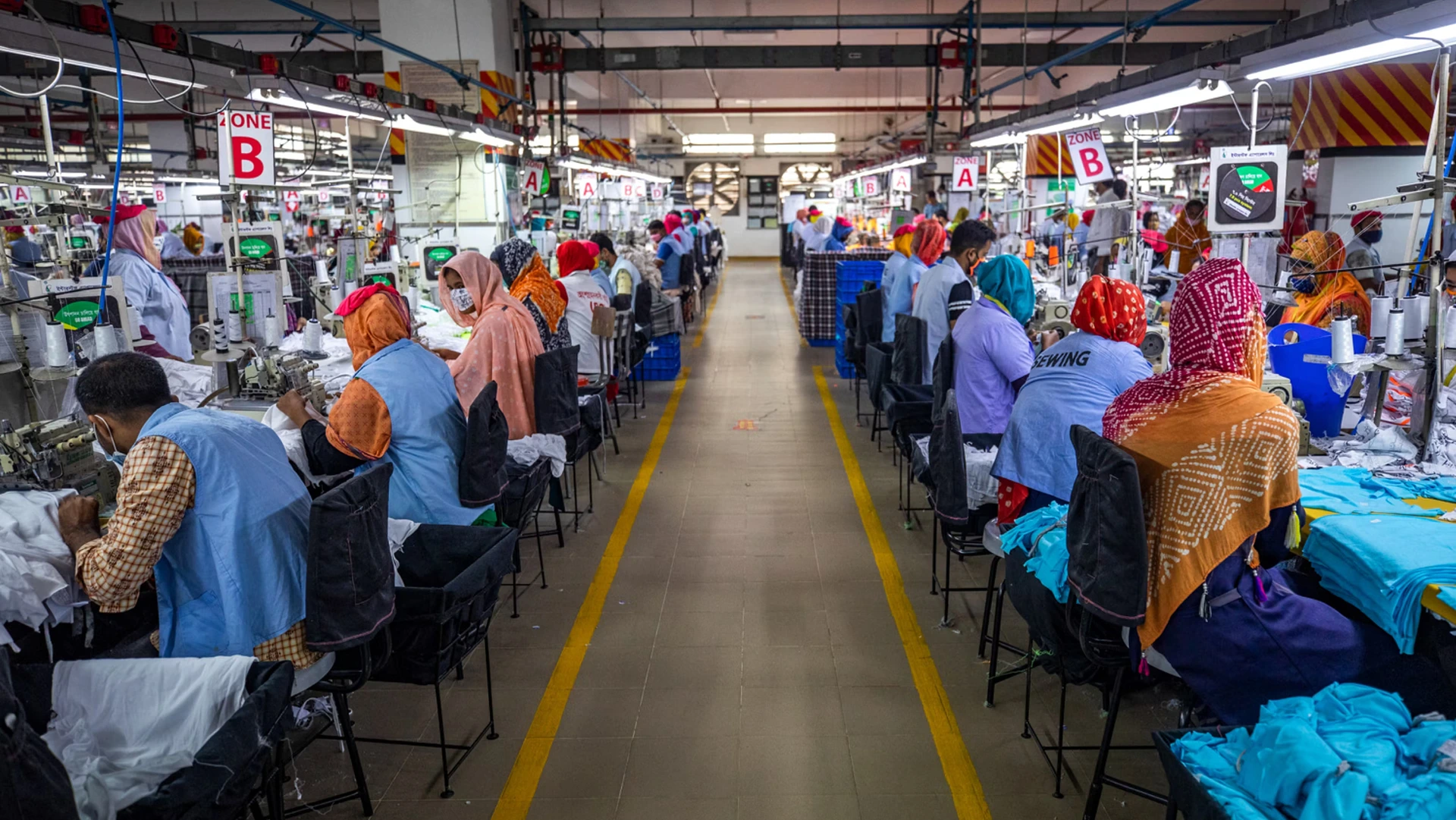
In Bangladesh’s thriving Ready-Made Garment (RMG) industry, conversations about worker wellbeing often focus on compliance, framed through the lens of laws and policy obligations. While these frameworks are essential, they represent only one side of the story. What often goes overlooked is the inherent value of investing in worker wellbeing as a catalyst for long-term productivity and business growth.
To unlock the next level of efficiency, industry leaders should recognize that a safe, healthy, and thriving workplace isn’t just a compliance goal; rather, it’s an investment that directly fuels higher productivity, retention, and resilience across the RMG sector.
To truly understand how a healthier workforce drives a positive multiplier effect across Bangladesh’s RMG production chain, let’s try to apply the lens of behavioral economics. Research by the Bangladesh Center for Workers Solidarity and the Centre for Labour and Development reveals a clear link between workplace conditions and worker productivity. Their findings reveal a striking reality: at least 56% of garment workers experience declines in productivity due to adverse workplace conditions. These challenges are mostly severe for women workers, who face disproportionately higher productivity losses, alongside widespread illness-related absenteeism.[i]
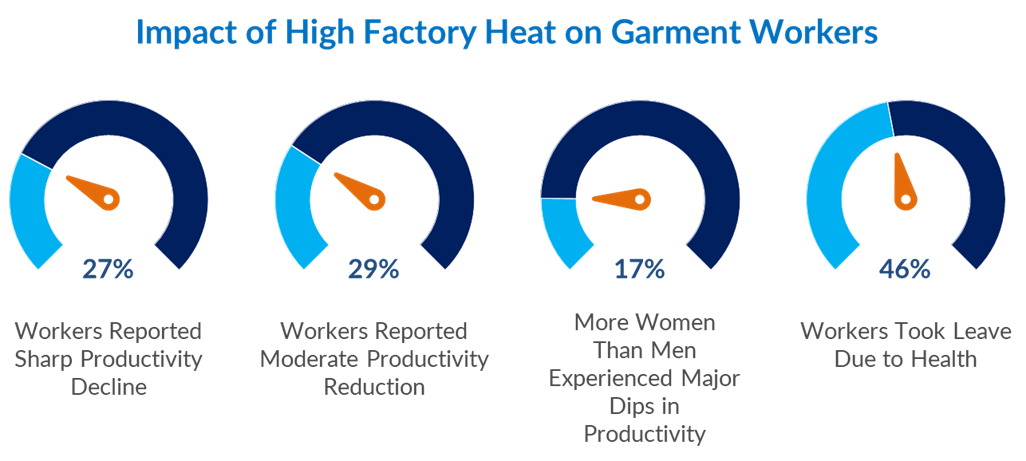
Such patterns highlight the reality that poor working environments don’t just harm worker wellbeing, but they disrupt entire supply chains and lower overall production efficiency.
From a behavioral perspective, the challenge lies not only in awareness but in how information is framed for decision-makers. Industry leaders often receive such findings as compliance, rather than as indicators of opportunity cost. A simple behavioral nudge, reframing wellbeing investments as productivity-enhancing and profit-driving measures, can shift perceptions. By viewing climate-friendly, worker-centric factories as strategic assets rather than expenses, the RMG sector can unlock both human resilience and economic gains.
While these findings reveal systemic challenges, the real question lies in understanding why factory owners often feel reluctant to invest in wellbeing despite clear evidence, a question behavioral economics helps unpack.
Oftentimes, the RMG industry leaders fall prey to cognitive biases, prioritizing immediate, tangible outcomes over long-term gains. While investments in physical safety, such as structural improvements to prevent factory accidents, have garnered public attention and are treated as urgent due to donor mandates, mental health initiatives are often perceived merely as costs or regulatory obligations. Mental wellbeing is frequently treated as a separate “worker welfare” item rather than a core driver of productivity and operational efficiency.
Behavioral framework sheds light on this mindset. Humans tend to overvalue short-term costs and undervalue long-term, less visible benefits, leading many industry leaders to miscalculate the real return of wellbeing initiatives. Yet, evidence proves otherwise. According to a Mercer study, companies that nurture a “culture of health” report 11% lower employee turnover compared to those that do not.[ii] In a high-turnover environment like Bangladesh’s garment factories, neglecting mental health and overall wellbeing imposes significant opportunity costs, leading to reduced productivity, frequent disruptions, and higher recruitment and training expenses.
By reframing wellbeing not as a welfare expense but as a productivity-enhancing strategy, RMG industry leaders can unlock measurable improvements in efficiency, retention, and workforce resilience, creating factories that are not only safer but also more competitive globally.
To foster this behavioral shift, it is essential to design the nudges that appeal to these factory owners’ decision-making patterns. Rather than positioning wellbeing programs solely as long-term investments for future gains, these interventions should be framed around the immediate, tangible losses producers incur by failing to invest in their labor force.
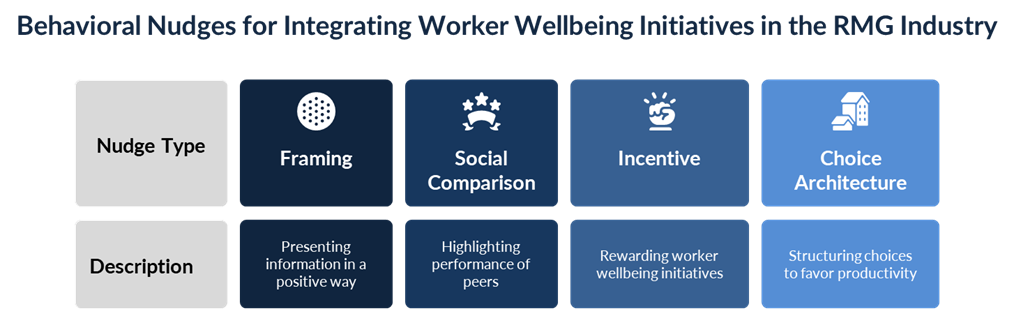
Framing Messages: Turning Wellbeing into a Competitive Advantage
When presented through a behavioral lens, information should be presented to highlight positive outcomes and short-term returns. Most of the time, people focus on the current costs of production while discounting future benefits. Therefore, messages promoting employee wellbeing should be reframed to show how investing in a healthy, worker-friendly environment leads to immediate operational improvements, such as higher efficiency, lower turnover, and better compliance with global buyer standards. When framed this way, wellbeing becomes not just a moral obligation but a business advantage that strengthens Bangladesh’s RMG industry in the global market.
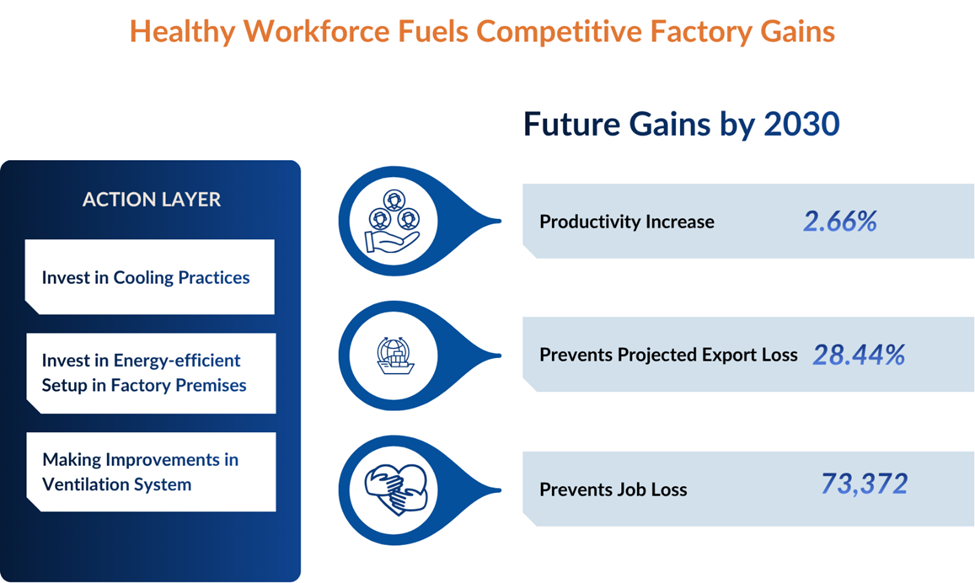
Note: Based on ETI Bangladesh’s strategic cycle (2023–2025), factories aiming to realise productivity and wellbeing gains by 2030 would need to begin investing in worker wellbeing initiatives from 2023.
Peer Comparison: Highlighting the Top Tier
Building on the power of framing, another effective behavioral nudge lies in leveraging social comparison, a principle deeply rooted in behavioral economics. In this context, the RMG factory owners are often influenced by the actions of their peers, especially when those peers represent top-performing and globally recognized exporters. When these successful factories are seen prioritizing worker wellbeing through better health facilities, fair practices, and safe environments, others naturally feel the pressure to follow their footsteps.
This behavioral pattern shifts the motivation from an ethical appeal (“you should invest in worker wellbeing”) to a competitive imperative (“your leading competitors are already investing and it’s making them more successful”). Instead of focusing on the cost of investment, this approach highlights the cost of inaction, which is the risk of being left behind in global value chains, losing access to high-value buyers, and missing opportunities for sustainable growth.
Incentive Nudges: Redesigning Choices for Lasting Change
To sustain these meaningful behavioral shifts among RMG industry leaders, effective incentive mechanisms must be embedded into factory management systems. For example, introducing incentive nudges can further strengthen this behavioral loop. Recognizing and celebrating factories that champion worker-friendly environments through awards, certifications, or visibility in global sourcing platforms creates social and reputational rewards that reinforce desired behavior. When factory owners see tangible acknowledgement and competitive advantages tied to wellbeing initiatives, they are more likely to internalize these actions as part of their business success model rather than short-term compliance efforts.
Cater to Consumer Preference: Signaling Demand for Ethical and Worker-Centric Factories
Another powerful behavioral lever emerges from the shifting values of global consumers, particularly their growing preference for apparel sourced from factories that uphold strong worker wellbeing standards. For today’s apparel end-consumers, especially the Gen Z, “sustainable sourcing” goes far beyond environmental compliance. It encompasses transparency, fair wages, ethical production conditions, and socially responsible business practices.[iv]
When brands publicly commit to sourcing from worker-friendly factories, they create a clear social signal across the value chain. This turns consumer preference into a form of social norming for suppliers: if consumers reward ethical brands, brands will preferentially reward ethical factories. In behavioral terms, this transforms wellbeing investment from a moral option into a market expectation. Factories then perceive the real risk as loss of business, not just loss of reputation, if they fail to demonstrate transparency and worker-centric operations.
To ensure a more resilient and high-performing RMG industry in Bangladesh, the focus must be not only on infrastructure or technology upgrades but on a deeper behavioral transformation among industry leaders. Embedding behavioral insights from addressing cognitive biases to restructuring decision environments can gradually shift mindsets from reactive compliance to proactive investment in people. This shift is further supported by evolving global consumer preferences, where buyers increasingly reward brands that source from factories prioritizing worker wellbeing. As brands respond to these consumer expectations, suppliers feel a growing market-driven motivation to strengthen their wellbeing practices.
This behavioral transformation can be facilitated through collaborative efforts, including industry associations, policymakers, and buyers, aligning their incentives to make worker wellbeing an integral benchmark for global competitiveness.
Such a transformation will help the garment sector move beyond short-term profit thinking toward long-term sustainable productivity. A thriving, healthy, and motivated workforce does more than meet global standards; it powers innovation, enhances export competitiveness, and strengthens the nation’s image as a champion of ethical and future-ready manufacturing. In essence, the future of the RMG industry will be defined not just by machines or margins, but by the mindset to invest in what truly matters, that is, the wellbeing and empowerment of its workers.
This article was authored by Sadia Karim, a Business Consultant at LightCastle Partners. For further clarifications, contact here: [email protected]
[i] Business & Human Rights Resource Centre
[ii] Umland, B. (2018, 10 April). The surprisingly strong connection between well-being and turnover. Mercer.
[iii] Understanding Just Transition and Environmental Sustainability in the Bangladesh RMG Sector A Summary of the Perception Survey edited High quality
[iv] Lu, S. (2023, October 19). What does sustainable apparel sourcing mean for Generation Z? Shenglu Fashion
Our experts can help you solve your unique challenges
Stay up-to-date with our Thought Leadership and Insights