


GET IN TOUCH
- Please wait...

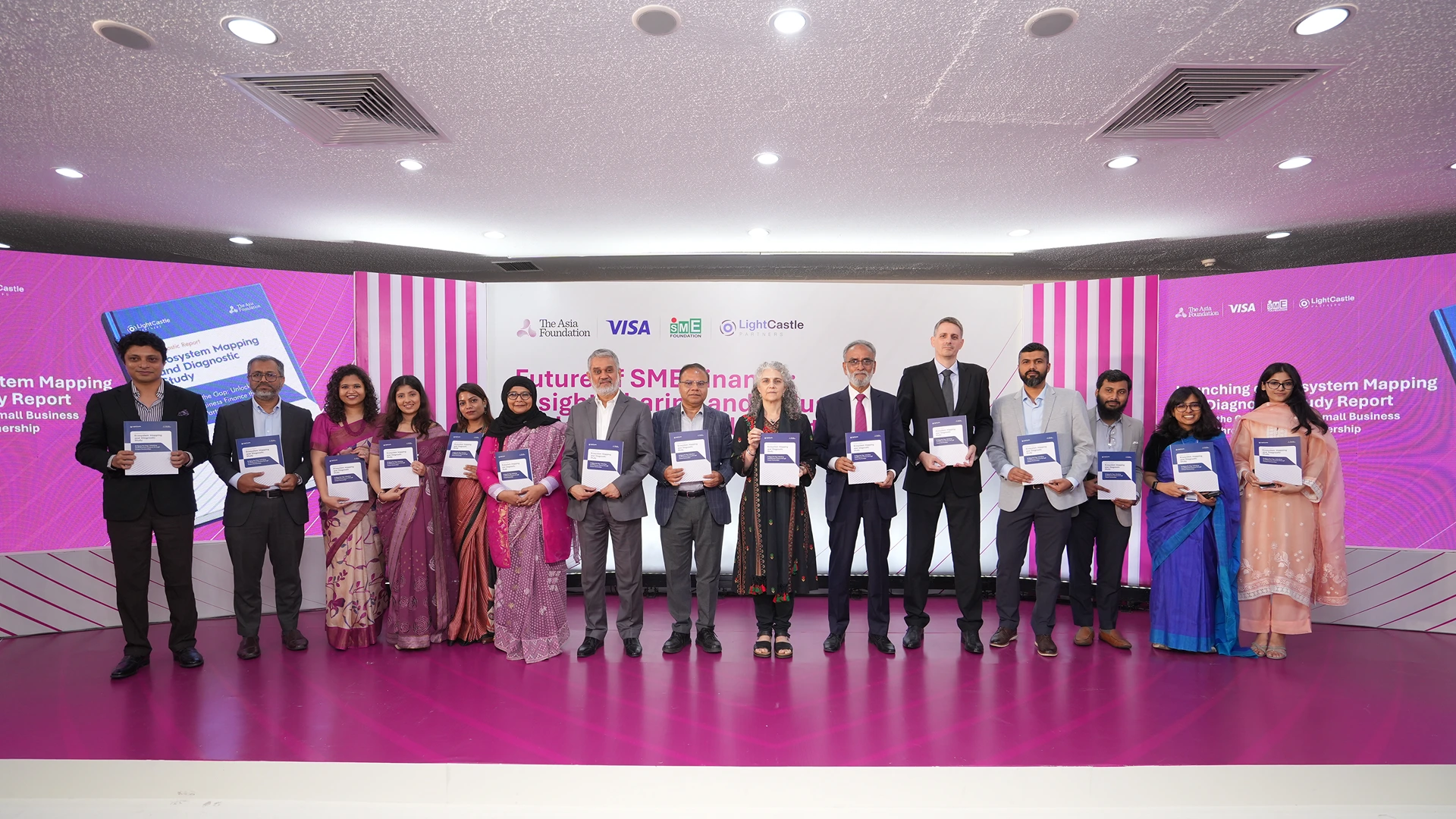
On September 22, 2026, LightCastle Partners, in collaboration with The Asia Foundation, Visa, and SME Foundation, hosted “Future of SME Finance: Insight-Sharing and Industry Dialogue on Small-Ticket Digital Lending” at Pan Pacific Sonargaon, Dhaka. The event brought together policymakers, financial institutions, development partners, and private-sector practitioners. They explored practical pathways for making small-ticket finance more accessible, efficient, and responsible for Bangladesh’s micro, small, and medium enterprises (MSMEs).
The event presented findings from the “Ecosystem Mapping and Diagnostic Study on MSME Financing in Bangladesh,” with a special focus on digitally enabled financing for small businesses. It also featured an industry dialogue on adopting and scaling digital credit for MSMEs. Participants discussed the strategic focus required from public, private, and development initiatives to help this important segment of the economy unlock its full potential. The study forms part of LightCastle’s broader work to strengthen Bangladesh’s small-business financing ecosystem.
With a 25–30% contribution to GDP, micro, small, and medium enterprises play an important role in employment generation, entrepreneurship, and private-sector development in Bangladesh. Yet many businesses remain outside formal finance. Complex documentation, limited collateral, a lack of formal financial records, and difficulties navigating lending processes continue to restrict access. LightCastle has previously worked with MSMEs to address similar barriers through investment readiness, enterprise development, and access-to-finance interventions.
Financial institutions also face challenges in serving this segment amid slowed growth in private-sector credit. High processing costs, borrowers’ limited formal financial footprints, perceived credit risks, recovery concerns, and weak accountability measures can make small-ticket lending difficult to scale. Digitally enabled credit can offer greater efficiency, simplicity, and cost optimization. However, the research identifies several key areas that stakeholders must address to scale small-ticket digital financing. Similar barriers to conventional lending have emerged through LightCastle’s work on mitigating financial barriers for MSMEs.
The Asia Foundation conducted the study under its “Bridging the Gap: Unlocking Small Business Finance through Fintech Partnerships” project. In Bangladesh, the initiative brings together financial institutions, fintech providers, business support organizations, and policymakers. It aims to make small-business lending more efficient, accessible, and commercially viable. The partners arranged the dissemination and industry dialogue event as part of the program’s first phase to identify key areas for strategic collaboration and intervention. LightCastle’s experience in digital financial services for agriculture and MSMEs provides further context for how digital finance can support underserved enterprises.
The program began with remarks from Sara Taylor of The Asia Foundation. She reflected on the Foundation’s long-standing partnership in Bangladesh’s development journey and highlighted the country’s considerable potential for inclusive growth. Sabbir Ahmed, Country Manager for Bangladesh, Nepal and Bhutan at Visa, discussed how digital adoption and scalable financial solutions can reduce lending costs and accelerate processing. These solutions can also help small businesses build transaction histories to access formal credit. These developments reflect the broader evolution of digital financial services in Bangladesh.
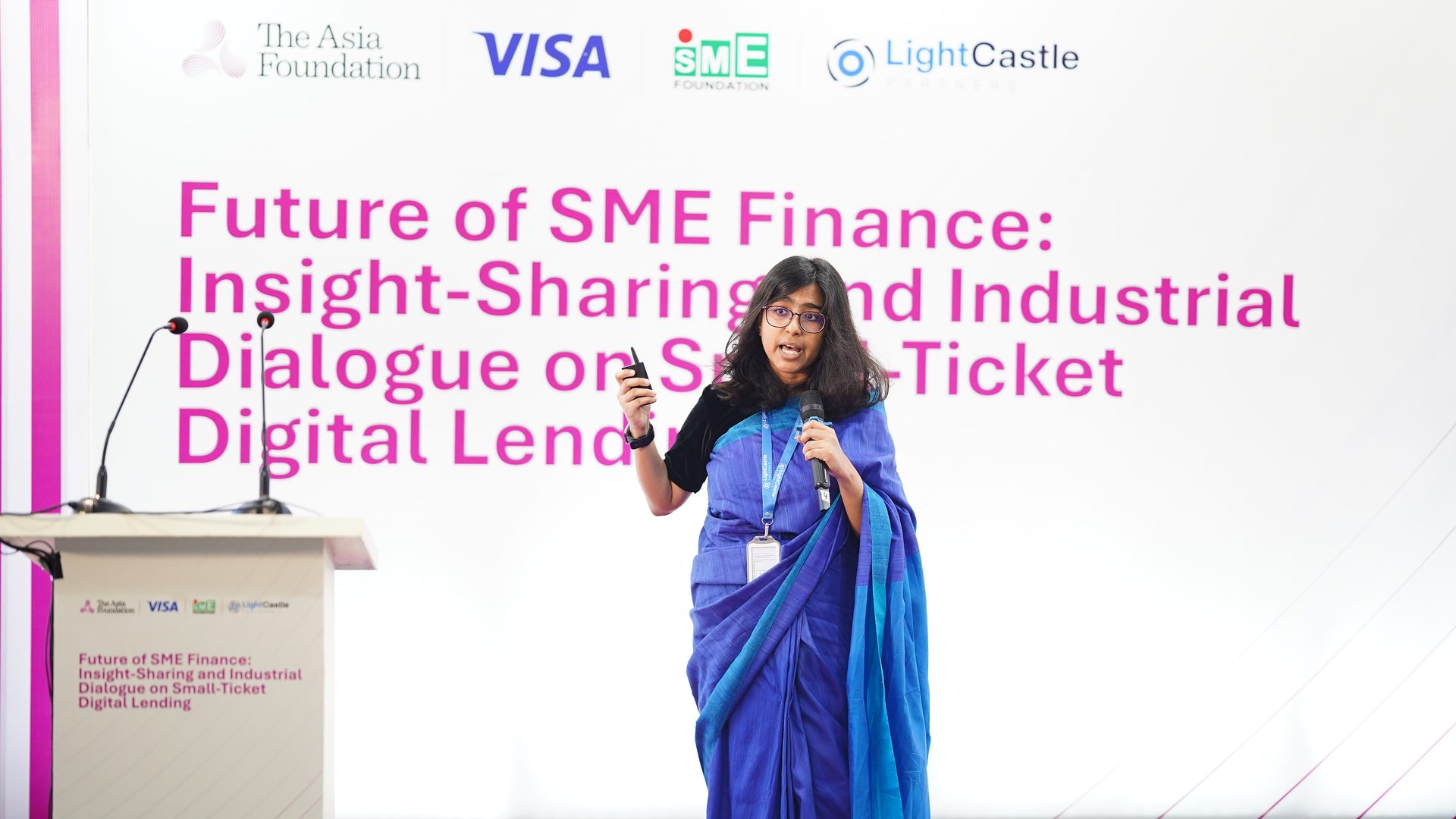
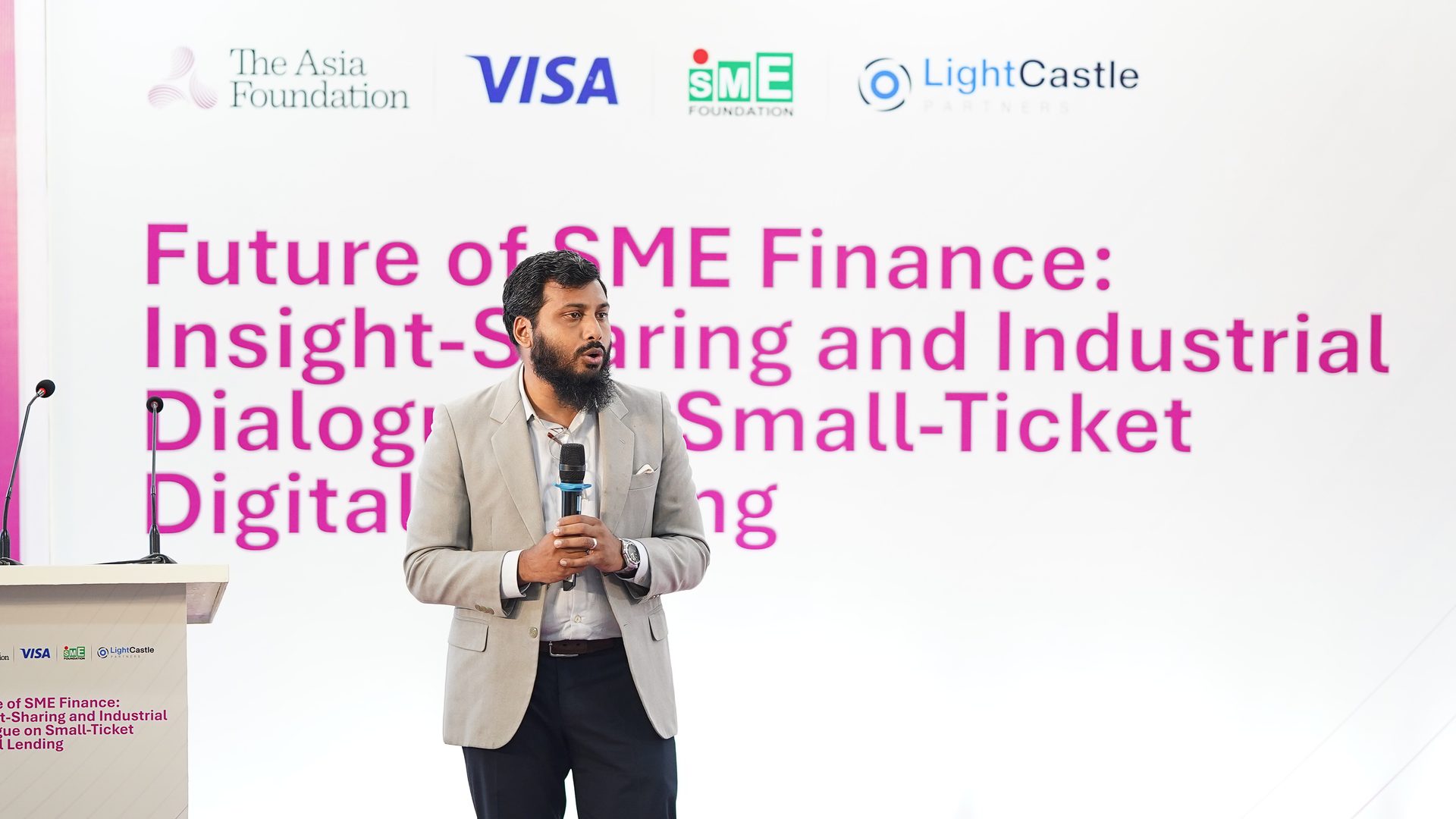
Bringing regional context to the discussion, Filip Graovac, Senior Adviser for Innovation and Future Economy and Project Lead of the Bridging the Gap program at The Asia Foundation, presented lessons from South and Southeast Asia. He discussed how technology can strengthen small-business finance. He also emphasized documentation, simplification, and standardization as the first steps toward digitalization. In the long term, he identified interoperability among financial institutions, payment platforms, and public systems as a key objective. LightCastle has also explored private-sector applications of fintech-enabled lending and digital credit infrastructure. Dr. M. Abu Eusuf, Professor of Development Studies at the University of Dhaka, added to the discussion by highlighting the importance of digital SME lending for financial inclusion and private-sector-led growth in Bangladesh.
A key segment of the event focused on the Ecosystem Mapping and Diagnostic Study on MSME Financing in Bangladesh. Ainan Tajrian, Senior Business Consultant at LightCastle Partners, presented findings from research covering 329 MSMEs across all eight divisions. The research also included focus group discussions and interviews with financial institutions, fintech providers, entrepreneurs, and other ecosystem actors. The assessment aimed to develop an evidence base for more inclusive MSME financing.
The study found that Bangladesh’s 7.16 million MSMEs account for 61.2% of all enterprises and employ approximately 19 million individuals. Yet they face an estimated financing gap of USD 2.8 billion. Looking deeper, microenterprises constitute 92.6% of MSMEs but receive only 14% of the total value of loans disbursed to the sector. LightCastle’s previous work on blended finance for MSMEs has similarly examined how financing structures can better serve enterprises that struggle to access conventional capital.
The research further highlighted that:
The findings indicated that bridging the financing gap for MSMEs requires better-matched products, simpler processes, stronger digital footprints, bank–fintech collaboration, and responsible alternative credit assessment. LightCastle’s partnerships with financial institutions, including its work to expand financial support for MSMEs, demonstrate how stronger institutional linkages can help address these gaps.
Following the presentation of the findings, Ainee Islam, Program Director at The Asia Foundation, moderated a panel discussion titled “Policy and Practice Priorities for Digital Small-Ticket SME Lending and Alternative Credit Scoring.” The panel brought together Md. Sharafat Ullah Khan, Director, Payment Systems Department, Bangladesh Bank; Farzana Khan, Deputy Managing Director, SME Foundation; Khalid Hossin, Chief Digital Officer, Mutual Trust Bank PLC; and Syed Ibrahim Saajid, First Vice President and Head of Digital Banking, The City Bank PLC.
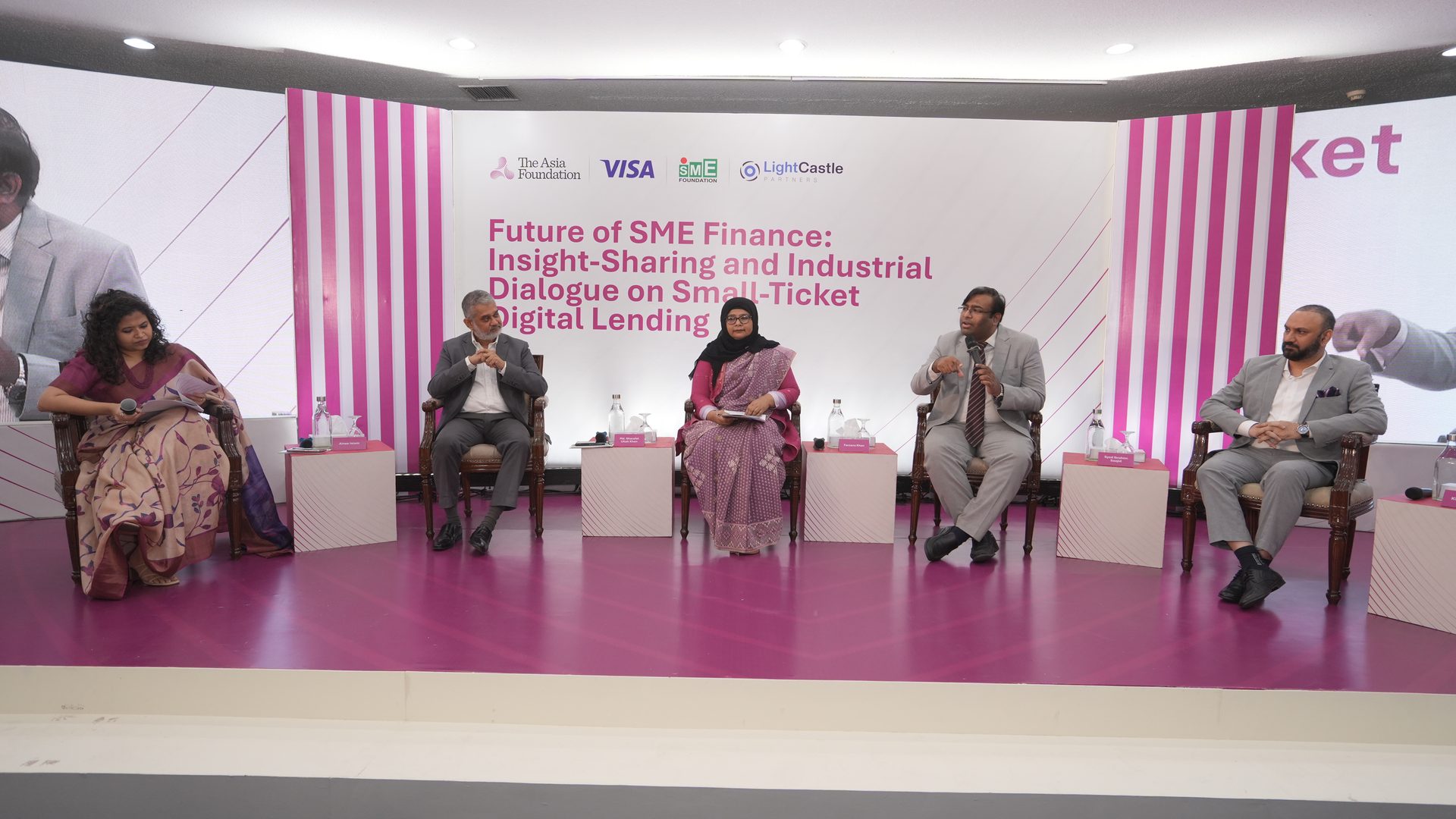
A central message from the discussion was the need to standardize and simplify lending processes before digitizing them. Panelists also discussed how digital payments and tools such as Bangla QR can help create usable financial records. They explored how lenders could reconsider collateral requirements through broader indicators of business performance. They also discussed how digital tools could improve repayment and recovery processes. Strengthening interoperability and digital payment infrastructure will be important for enabling these systems to operate at scale.
The discussion also recognized the potential of AI-assisted credit scoring. At the same time, panelists emphasized reliable data, responsible use, customer consent, institutional readiness, and evolving regulatory safeguards. They noted that technology should support sound lending decisions backed by quality data. Stakeholders also need to encourage and facilitate the expansion of MSMEs’ digital footprints. LightCastle has previously highlighted the potential of alternative credit assessment and technology-enabled SME financing for businesses without conventional credit histories.
Following the policy dialogue, Zeeshan Abedin, Social Research and Impact Advisor at LightCastle Partners, highlighted LightCastle’s longstanding work with MSMEs. He also discussed its experience in the Pacific with alternative credit assessment and digital repayment solutions for small and medium enterprises. This experience complements LightCastle’s broader portfolio of MSME accelerator, financing, and market-linkage programs.
The event welcomed Mr. Mohammad Muslim Chowdhury, Former Comptroller & Auditor General of Bangladesh and Former Finance Secretary, as Chief Guest. In his remarks, he emphasized the importance of keeping pace with rapid developments in AI and strengthening coordination across digital platforms.
Overall, the event highlighted the need for coordinated action among regulators, banks, fintech providers, development partners, and SME support organizations. The discussions focused on how simplified processes, trusted digital data, stronger partnerships, and responsible technology can create more inclusive pathways to finance for small businesses. LightCastle’s ongoing work with UNDP and SME Foundation on blended finance for CMSMEs in Bangladesh reflects this growing emphasis on ecosystem-level collaboration.
Expanding access to finance also requires stronger financial capabilities among enterprises. Recent initiatives to improve financial literacy, digital financial services adoption, and access to formal finance show how financing interventions can combine institutional linkages with enterprise-level capacity building.
Through the diagnostic report launch and industry dialogue, the partners created a shared evidence base for future collaboration. The insights will support continued efforts to improve SME readiness and strengthen lender confidence. They will also help expand responsible small-ticket financing in Bangladesh. More broadly, LightCastle’s work across financial inclusion and MSME development continues to explore how capital, capacity building, digital tools, and ecosystem partnerships can jointly support sustainable enterprise growth.
Our experts can help you solve your unique challenges