


GET IN TOUCH
- Please wait...

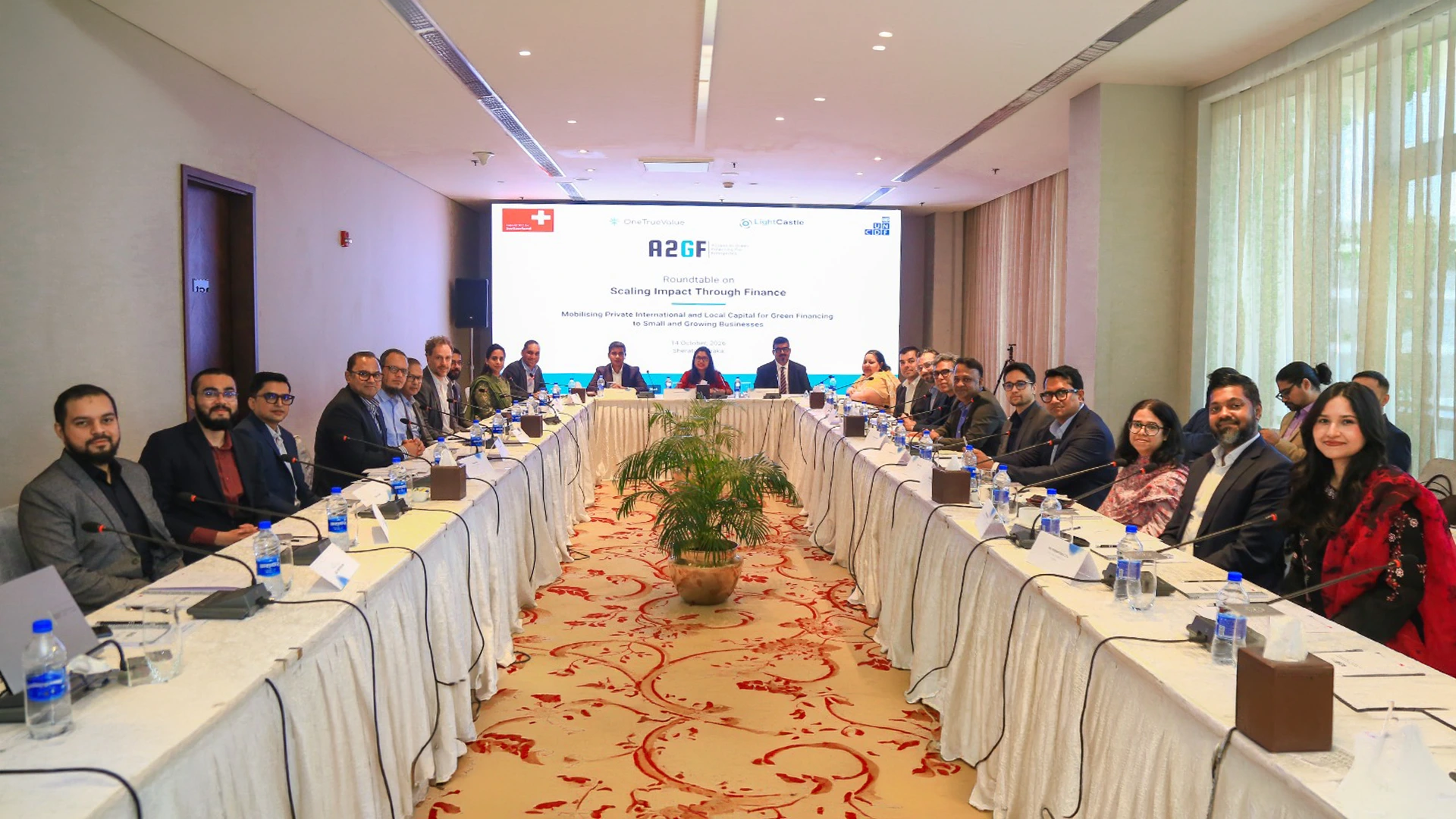
LightCastle Partners, with support from the Embassy of Switzerland in Bangladesh and in partnership with Truvalu Bangladesh and UNCDF, hosted Scaling Impact Through Finance. The closed-door roundtable focused on mobilising capital for impact-oriented Small and Growing Businesses (SGBs).
Held at Hotel Sheraton, Dhaka, the session brought together senior decision-makers from venture capital firms, corporates, market enablers, fund-of-funds, non-bank financial institutions, and commercial banks.
Banks and finance companies disbursed Tk 960.04 Bn in sustainable finance during April–June 2026. However, green finance accounted for just Tk 61.58 Bn, or roughly 6 percent of the total. The roundtable explored why this gap persists. It also examined the structures needed to direct more domestic capital towards enterprises driving Bangladesh’s green and inclusive growth.
Opening the roundtable, Ameena Chowdhury, Senior Programme Manager at the Embassy of Switzerland in Bangladesh, outlined Switzerland’s commitment to a financing landscape where catalytic financing attracts private capital rather than replaces it.
“Bangladesh has moved beyond asking why impact investing matters. The real question now is how we bring domestic capital to work at scale. Our banks, corporates, family offices and institutional investors have a vital role to play. With the right structures to share risk and measure results, they can build a market that delivers both strong returns and lasting benefits.”
Her remarks framed the event as a working session focused on practical solutions rather than a restatement of known barriers.
The session then introduced two investment vehicles under the A2GF framework.
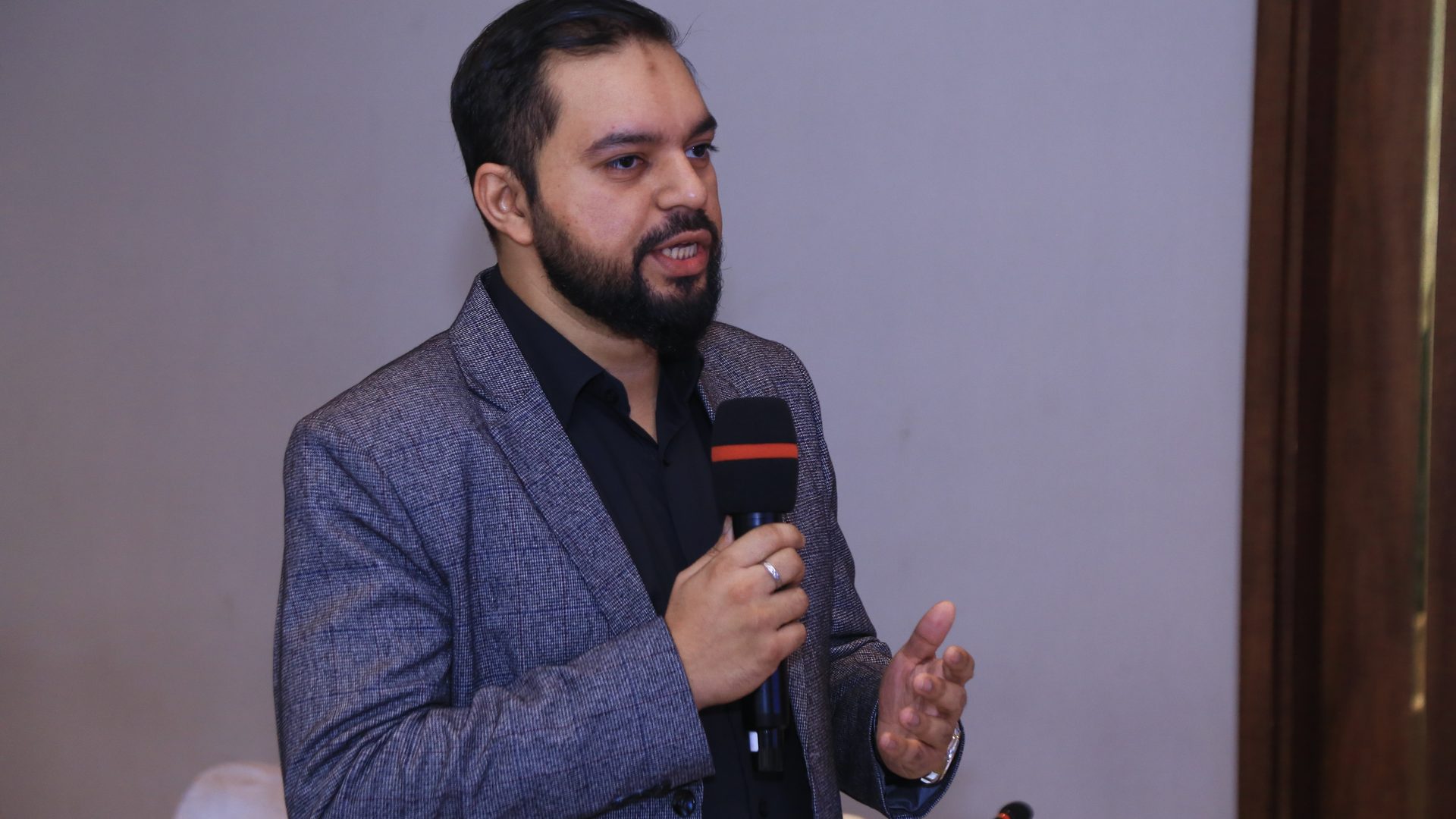
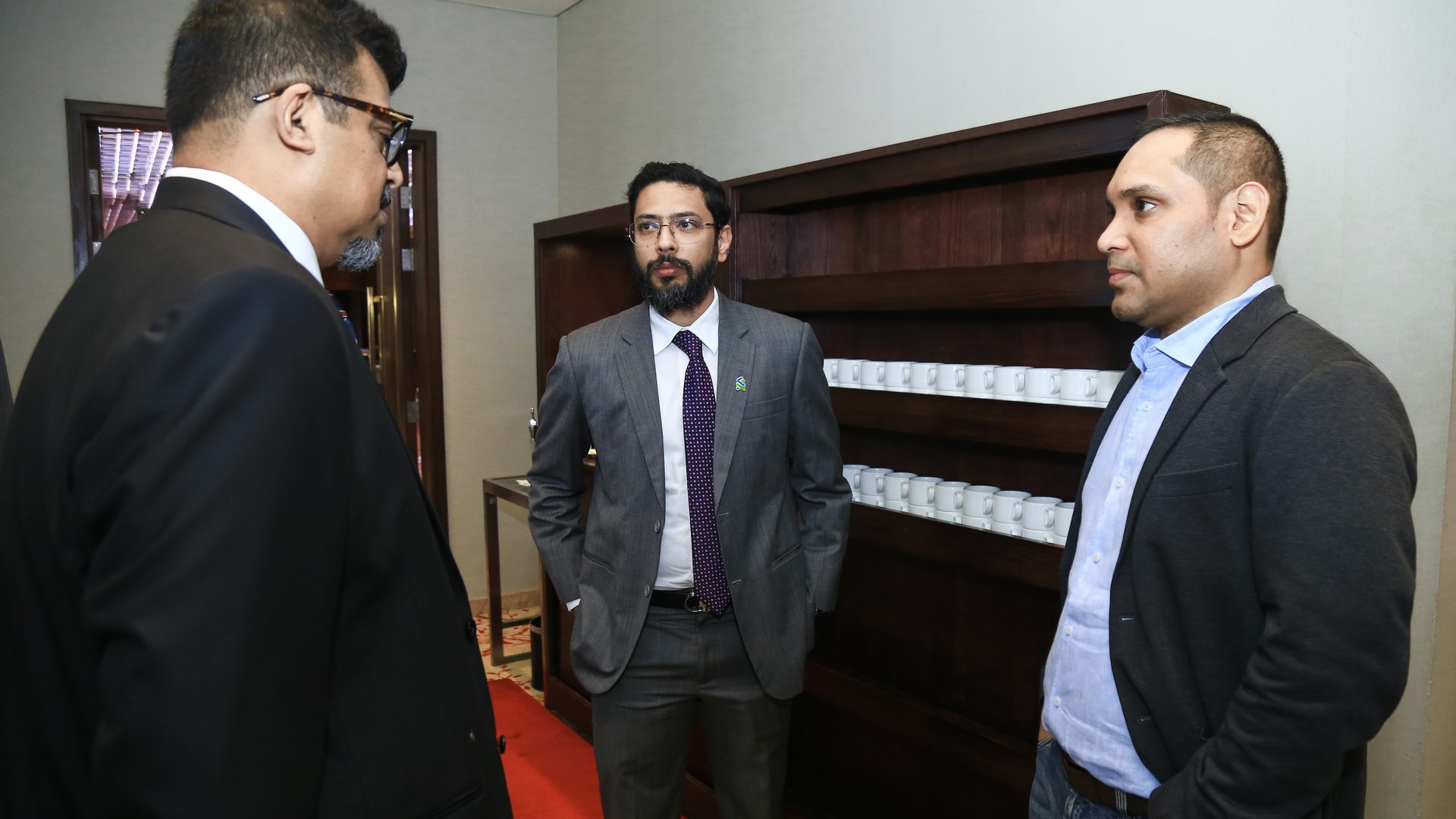
Bijon Islam, CEO of LightCastle Partners, presented the firm’s upcoming Bangladesh-based impact fund. The fund will back SGBs with strong commercial viability and measurable impact outcomes.
“In Bangladesh, we have short-term volatility, but we still have long-term positive growth. We see that there is close to around a $70 billion-plus MSME financing gap. One of the ways to solve that is by de-risking investments for investors and leveraging catalytic capital to unlock more private capital,” noted Bijon.
Willem Grimminck, Managing Director of OneTrueValue, presented the ORE II Fund. The impact investment fund backs high-potential, climate-vulnerable SMEs that deliver climate outcomes alongside commercial growth, with an emphasis on renewable energy.
“As a foreign investor, I can choose from multiple countries, and Bangladesh is the country where I want to be now. This is not only about making an impact, but also about making companies more competitive. For every factory that survives in this environment, we can maintain jobs and help these companies grow,” said Willem.
Together, the two funds aim to build investable track records in underserved segments. They also seek to create a pipeline towards mainstream financing from banks and institutional investors.
Bijon Islam and Sharawwat Islam, CFA, Managing Director of Truvalu Bangladesh, led the 90-minute moderated discussion. Rather than a traditional panel, the session encouraged participants to exchange views and explore practical solutions.
Bankers and NBFI leaders examined why growth-stage SMEs and green businesses fall outside their current credit appetite. They also discussed how they could participate through direct lending, co-financing alongside funds, or risk-sharing structures.
Venture capital managers and fund-of-funds discussed what they need from local fund managers before committing capital. Key considerations included track records, governance, GP commitment, and impact reporting.
Corporates explored whether they could deploy part of their CSR and balance-sheet capital as investment capital. Meanwhile, development and policy actors identified regulatory changes that could make new investment structures easier to operate while maintaining appropriate safeguards.
Impact-Linked Finance (ILF) emerged as a recurring theme. This approach ties financial rewards to independently verified social and environmental outcomes.
Under A2GF, ILF instruments aim to lower perceived risk and improve the returns from investing in green and climate-resilient enterprises. These instruments include performance-based incentives for banks and NBFIs that extend concessional green financing. They also provide outcome-linked support for investors who mobilise private capital for SGBs.
Participants explored which risks catalytic capital should address to influence investment and lending decisions.
Closing the session, Sharawwat Islam, CFA, summarised the most actionable barriers and solutions raised during the discussion. He also outlined the next steps.
“There is a real ambition for financing impact businesses, and the supply of capital is not the problem. A combination of efficient financing structures, risk-reduction mechanisms, catalytic capital, the right partnerships, and built-in MRV for impact can unlock capital for the last mile,” noted Sharawwat.
The organisers will follow up individually with participants interested in fund investment, co-investment, debt financing, and strategic partnerships. They will also publish a post-event knowledge brief outlining the findings. This brief will help shape the next phase of A2GF’s investor engagement.
Scaling Impact Through Finance is a curated, closed-door roundtable series under the A2GF programme. It brings together domestic capital providers, including venture capital firms, corporates, market enablers, fund-of-funds, non-bank financial institutions, and commercial banks. Regulatory and ecosystem partners also participate.
The series aims to identify structural barriers that prevent local capital from reaching impact-oriented SMEs and startups. It then translates these findings into practical financing structures and follow-through.
The Access to Green Financing (A2GF) for Enterprises – Scale & Innovation programme is a catalytic platform that connects enterprises pursuing green transitions with sustainable finance providers.
Through technical assistance and financing, the programme builds enterprise capacity and provides performance-based incentives to mobilise green finance and catalytic capital for SMEs in Bangladesh. It also supports policymakers and regulators in integrating climate resilience into policy.
The Embassy of Switzerland in Bangladesh supports the programme. OneTrueValue, LightCastle Partners, and the United Nations Capital Development Fund (UNCDF) implement it in partnership.
Learn more at www.a2gf.com.
Our experts can help you solve your unique challenges