



GET IN TOUCH
- Please wait...


In 2017, Bangladesh sent two female combat pilots to the UN mission in the Democratic Republic of the Congo (MONUSCO) – Flight Lieutenant Nayma Haque and Flight Lieutenant Tamanna-E-Lutfi. (Photo Credit: United Nations)
Bangladesh is facing tailwinds from the global post-pandemic shocks. A negative balance of payments and pressure on forex reserves are key concerns. However, while this is a global phenomenon across the world – Bangladesh also has exhibited impressive growth in the last couple of decades. That growth and its sustainability are often attributed to demographic bulge (60% below the age of 35), density dividend (1,200 people / sq km), growing middle class (expected to reach 34 million by 2025), mobile and internet connectivity (80%+, 60%+), growing remittance and exports. However, one particular factor that also sets Bangladesh apart from its neighbors – is female participation in the workforce.
In Bangladesh, 38% of the female working population is actively engaged compared to 20% in India and 22% in Pakistan. The RMG/Textile sector which contributes 80%+ to exports employs a 4 million workforce, 65% of which are female. There has been a direct correlation between the country’s inclusive and sustainable economic growth and female empowerment leading to growing investments in health and education at the household level. This is also exhibited by Bangladesh’s improvement in the UN Human Development Index.
While this is encouraging, women’s participation in the workforce needs to take place in all levels of work i.e. not only in the primary and secondary sectors but also in tertiary and also in management and leadership positions.
If we focus on STEM (science, technology, engineering, and mathematics) graduates and as Bangladesh sees growing industry development whether in manufacturing, communication, or ICT – the country will benefit since there is a need for an increasing number of talents in this space.
If we take a subset of STEM – CSE (Computer Science and Engineering) given the advent of ICT and ITES employment in the country we can see the difference between employment rates between male and female graduates.
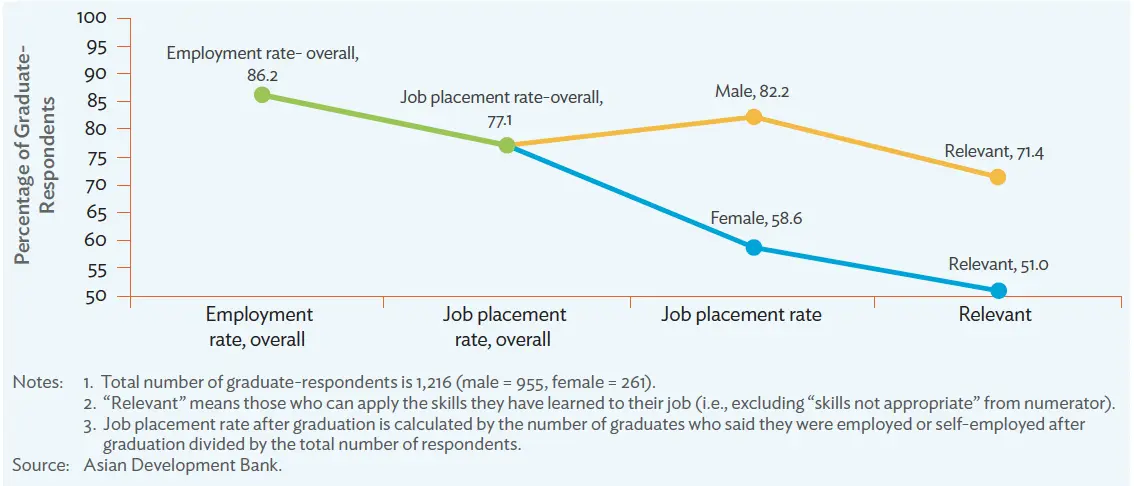
What is interesting to see is Job placement rate for females was significantly lower than for male graduates. When delved deeper we could see the following perspectives for this gap from employers, the reasons varied from skills to the absence of flexible workspace that accommodates maternity leaves, remote work, and working hours to family constraints. In addition to these, we are also seeing larger drop-out rates as well as a move to non-relevant fields.
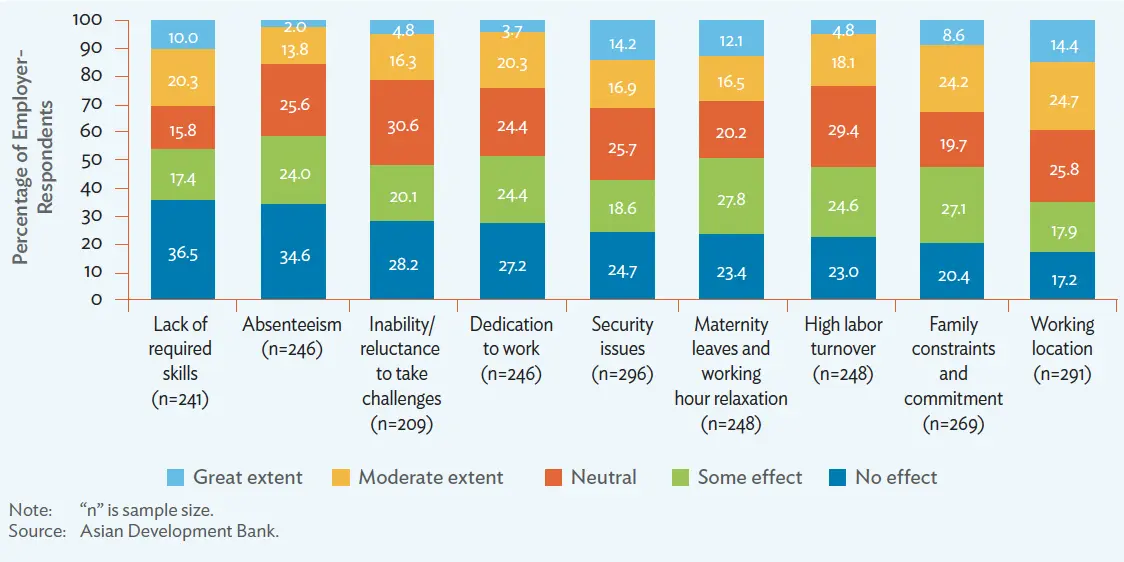
However, these challenges need to be addressed and the ratio of female participation in the workforce relative to STEM needs to increase. Few things that may help the process are:
While the above are ideas that way help we would need to design specific programs to address these challenges and nudge the employment ecosystem in the right direction.
Our experts can help you solve your unique challenges
Stay up-to-date with our Thought Leadership and Insights