



GET IN TOUCH
- Please wait...


When analysts assess the economic fallout of the Us/Israel-Iran conflict, energy prices tend to dominate the conversation. Yet for Bangladesh’s businesses and trade operators, the breakdown of logistics infrastructure has proven no less critical. In fact, in many respects, more immediately disruptive.
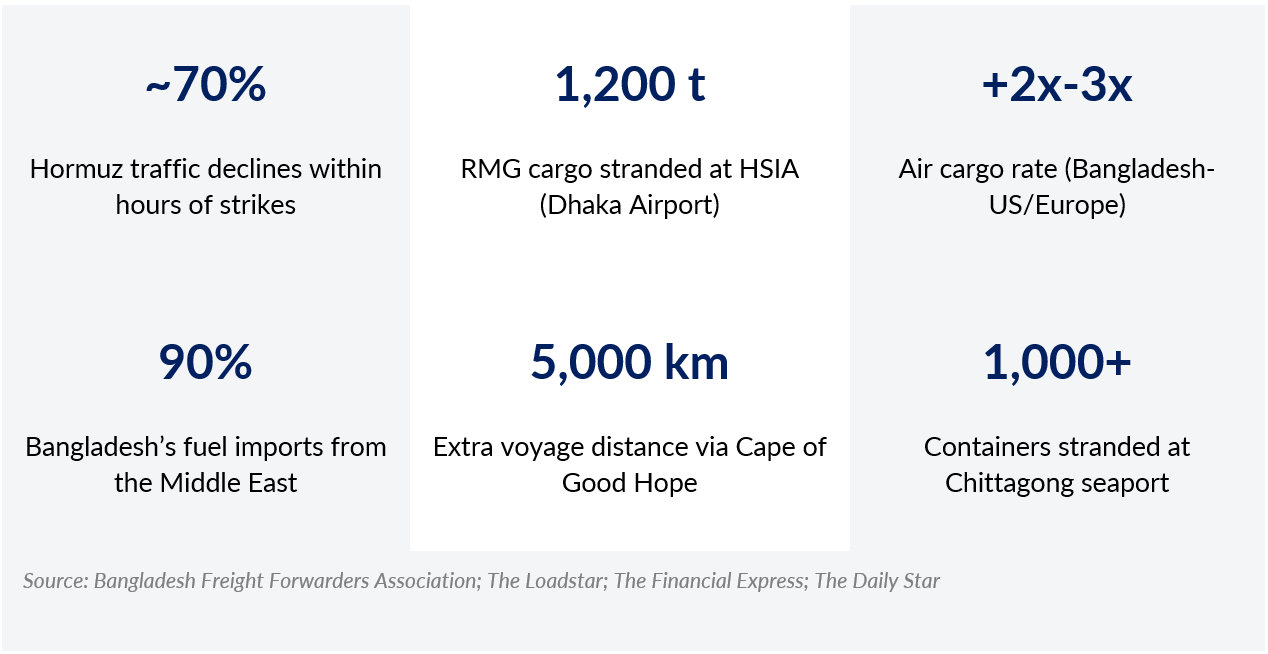
Bangladesh’s vulnerability to these shocks is largely structural. The country’s export base, led by ready-made garments, relies on sea routes that traverse or, at least, skirt the Gulf. It also relies on major Gulf hub airports to transport time-sensitive cargo, such as perishable food products by air. Against this backdrop, the analysis here explores the implications across four key domains: seaport operations, air cargo logistics, domestic operations pressures, and the broader ripple effects on major sectors of the economy.
The response from global shipping carriers was swift and far-reaching, with direct consequences for Bangladesh’s seaport operations. All five of the world’s largest container carriers including MSC, Maersk, CMA CGM issued suspension or rerouting directives within 24 hours of the strikes.
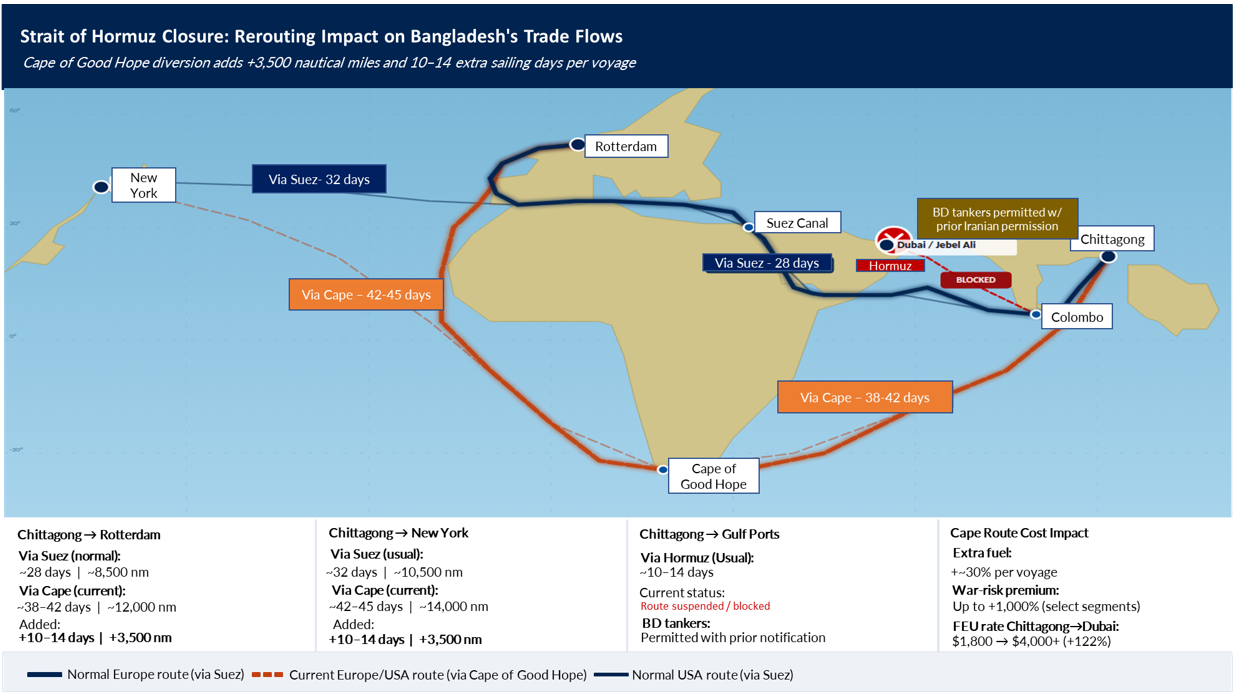
The combined effect of the Middle East crisis and the Red Sea’s pre-existing instability deterred container lines from returning to the Suez Canal. Instead, they are routing vessels around the Cape of Good Hope, extending transit times, eroding schedule reliability, and raising operational costs due to increased fuel consumption and higher insurance premiums. For Bangladeshi exporters, this has added around 2 weeks to voyages bound for Europe and the US East Coast.
Chittagong Port, which handled a record 3.29 million TEUs [1] in FY25 and serves as Bangladesh’s primary trade gateway, is now bearing the brunt of the ongoing logistical setbacks. Over 1,000 containers of frozen fish, processed food, and plastic goods now languish at the port and coastal facilities, awaiting dispatch.
![Chittagong Port, which handled a record 3.29 million TEUs [1] in FY25 and serves as Bangladesh’s primary trade gateway](https://lightcastlepartners.com/wp-content/uploads/2026/03/3.png)
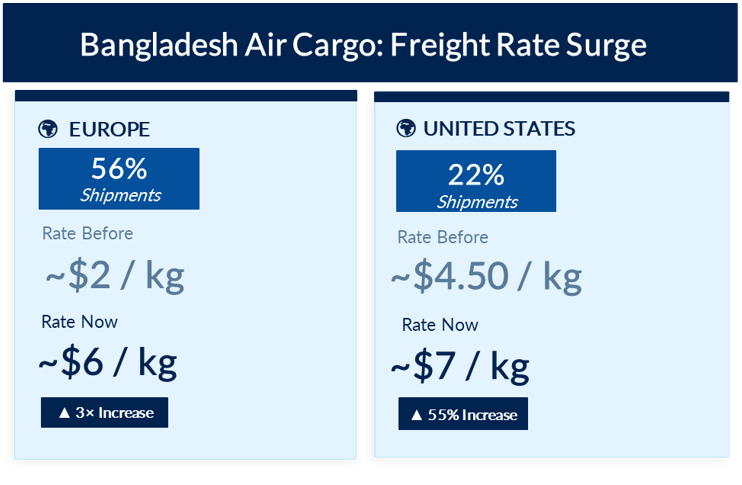
Bangladesh’s logistics strains have extended beyond maritime routes and into air freight. Around 60% of the country’s air cargo typically transits through Middle Eastern hubs; but with flights to these destinations largely suspended, airlines operating routes to the United States and Europe are increasingly rerouting shipments through secondary hubs in China, Malaysia, and Hong Kong. These detours inflate both cost and transit time, often exceeding the acceptable tolerance window for perishable goods.
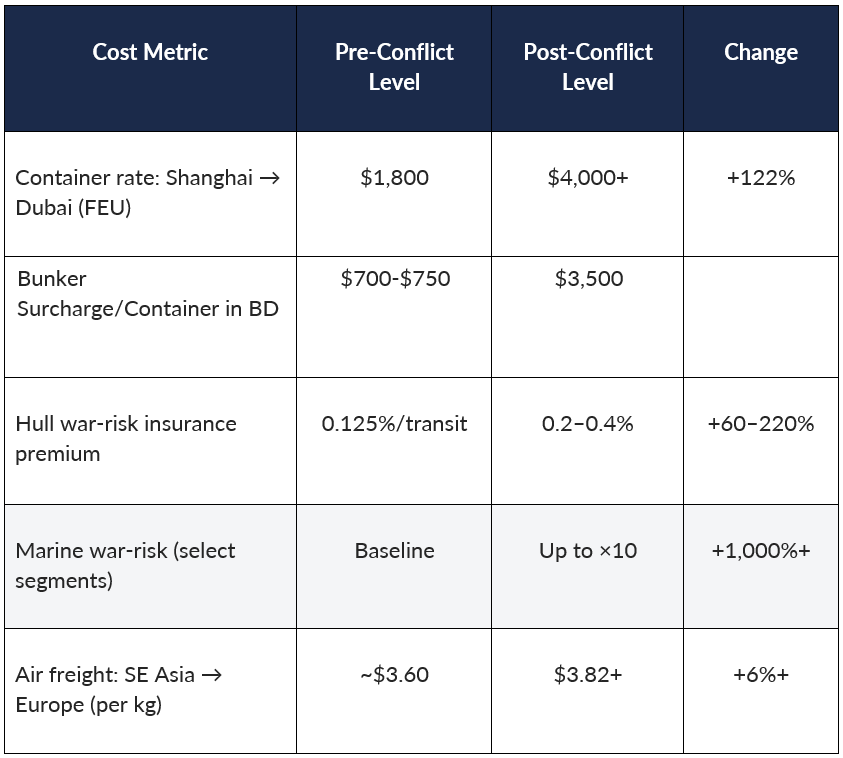
The financial escalation across Bangladesh’s logistics cost base is multi-layered, with carrier surcharges, base rate hikes, and insurance premium spikes operating simultaneously and compounding one another. On the container side, spot rates from Shanghai to Jebel Ali in Dubai more than doubled from $1,800 to above $4,000 [1]per FEU in a matter of days following the conflict’s onset. Furthermore, major marine war-risk providers cancelled Protection and Indemnity (P&I) coverage for vessels in the Persian Gulf, making transit economically untenable for most ship owners regardless of their willingness to operate.
The fuel crisis is rapidly translating into a structural breakdown in road haulage capacity. Freight rates on the Dhaka – Chattogram corridor surged by approximately 56% [1] in a single day, with comparable increases recorded across other major routes. The underlying driver is acute diesel scarcity at the pumps: trucks requiring 140–160 litres per round trip are receiving allocations of only 20–50 litres, rendering a significant proportion of the fleet non-operational for long-haul purposes.
This contraction in available truck capacity has materially halted flows of vegetables, fish, and poultry from regional production hubs to Dhaka — commodities with tight spoilage windows. Traders, fearing losses from delayed deliveries, are being compelled to absorb elevated freight premiums to secure the limited options for vehicles still in operation. Market participants broadly anticipate that these elevated logistics costs will manifest in near-term retail price inflation in the capital, with lower-income urban households disproportionately exposed.
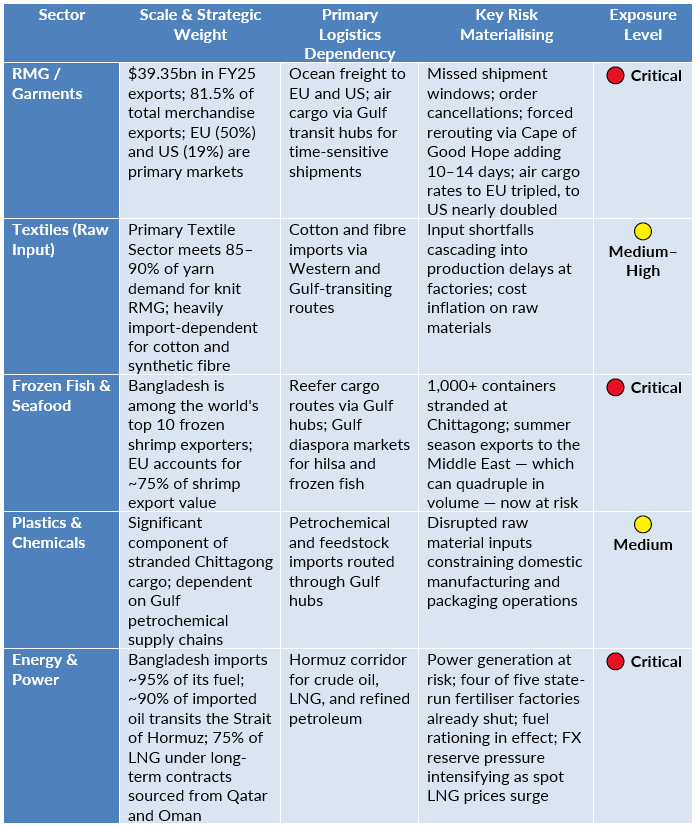
The logistics disruption does not affect all sectors of Bangladesh’s economy uniformly. Impact severity correlates with sectoral reliance on the now-compromised sea and air corridors — whether for outbound exports, inbound raw material procurement, or energy-dependent domestic operations. The matrix below maps each major sector against its primary logistics dependency, the specific risks that have materialized, and an assessment of overall exposure.
This article has been authored by Naziba Ali, a Business Consultant at LightCastle Partners. For further inquiries or clarifications, please contact: info@lightcastlepartners.com
Our experts can help you solve your unique challenges
Stay up-to-date with our Thought Leadership and Insights