

GET IN TOUCH
- Please wait...

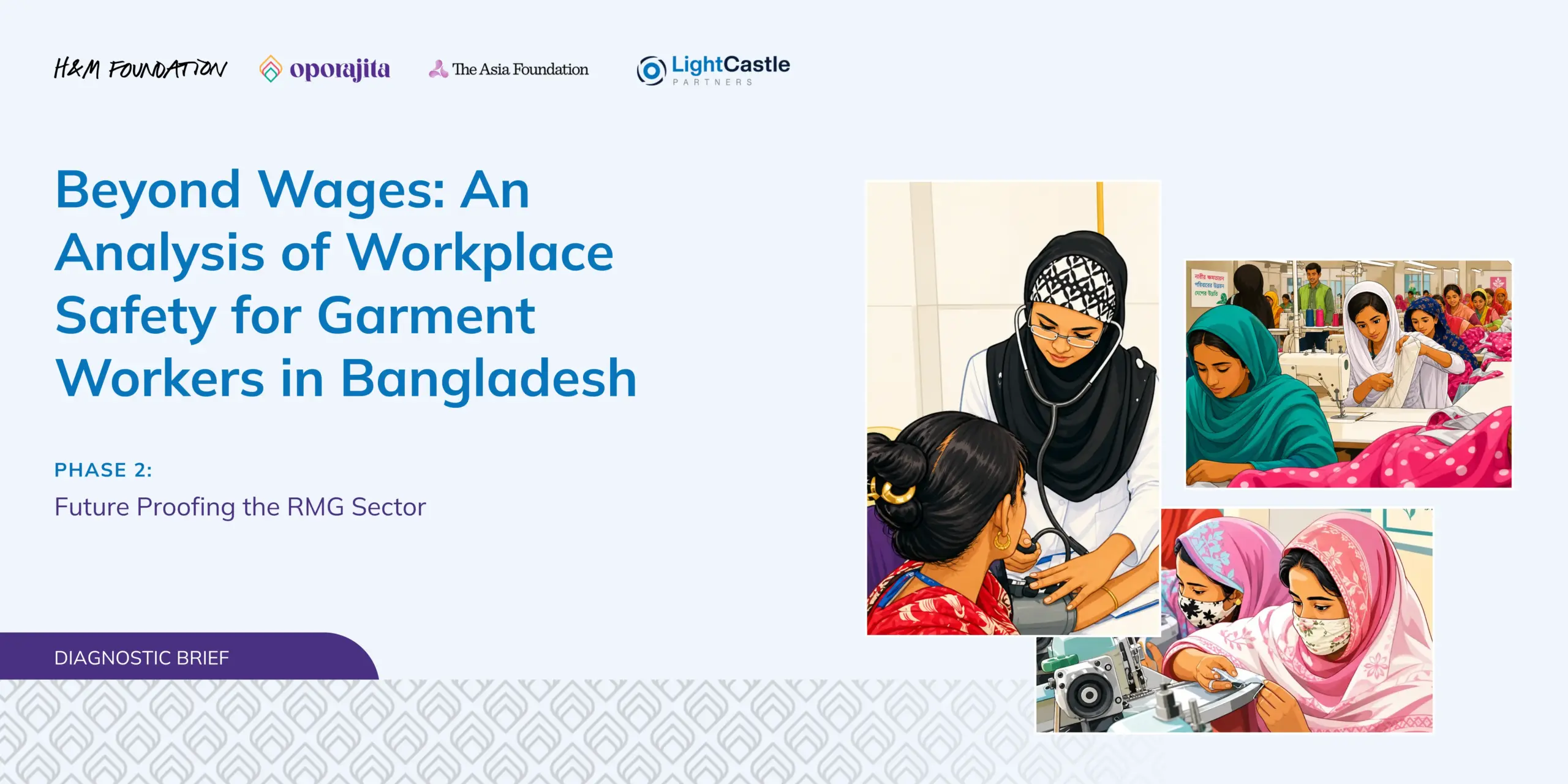
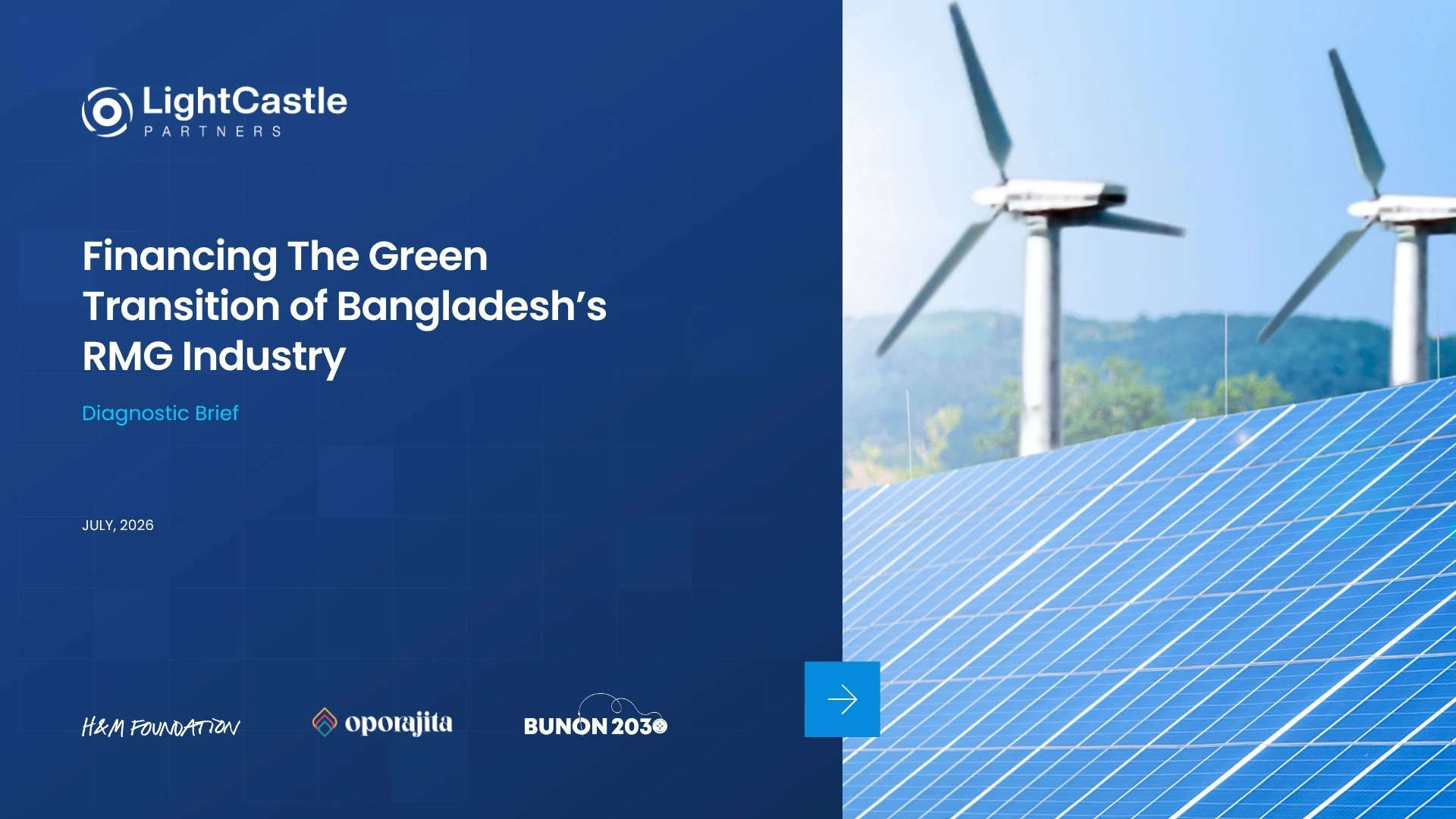
Bangladesh’s ready-made garment (RMG) sector depends on the safety and wellbeing of its workers to sustain productivity and competitiveness. While the industry has made significant progress in fire and structural safety, protection remains uneven across factories. Smaller and informal facilities face greater challenges in addressing heat stress, unsafe working conditions, and limited access to support systems. Rising production costs and pressure on factory margins further constrain investment in worker wellbeing, particularly for women workers and those employed in vulnerable Tier 3 factories.
Developed by LightCastle Partners through Bunon 2030 under the Oporajita initiative, supported by the H&M Foundation with The Asia Foundation serving as the backbone organisation, the report examines workplace safety across Bangladesh’s apparel sector. It draws on a stakeholder roundtable held on July 9, 2026, bringing together government representatives, industry associations, workers’ representatives, private sector actors, and development partners.
The analysis covers physical safety, occupational health, grievance mechanisms, childcare, and the challenges facing climate-displaced workers. It also examines gaps in implementation and draws comparisons with approaches in peer economies.
The findings highlight that worker safety extends beyond factory buildings. Heat exposure, inadequate drainage, and difficult commuting conditions affect workers’ health and productivity. Accessible grievance mechanisms are equally important, yet digital solutions alone may exclude many workers: research cited in the report found that only 28% of women garment workers own a smartphone.
Women also face additional barriers during pregnancy and after childbirth, including demanding production targets and limited access to functional childcare. These challenges underscore the need for safety measures that reflect workers’ everyday circumstances, both inside and outside the workplace.
The report outlines practical recommendations for strengthening worker protection and accountability. Priorities include stronger safety enforcement, closer links between buyer relationships and factory remediation, accessible grievance systems, and community-based childcare. It also recommends shared transport services and dedicated climate resilience funds to support cooling infrastructure, health screening, and emergency assistance. Advancing these measures will require coordinated action from government, factories, industry associations, buyers, and development partners. Investing in worker wellbeing can help Bangladesh’s RMG sector retain its workforce, strengthen resilience, and build a more competitive industry.
|
|
If you are interested to learn more:
|
Our experts can help you solve your unique challenges
Stay up-to-date with our Thought Leadership and Insights