


GET IN TOUCH
- Please wait...

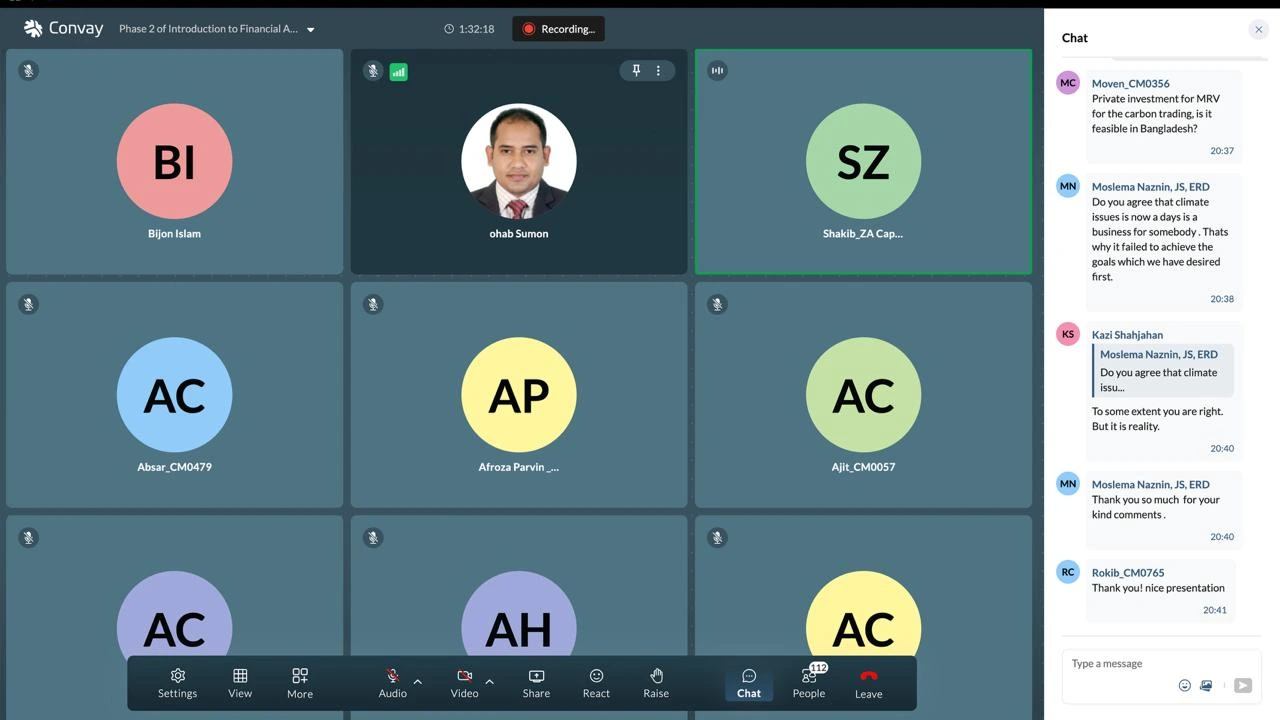
Bijon Islam, CEO and Co-founder of LightCastle Partners, recently conducted a capacity-building session for the International Climate Finance Cell (ICFC) under the Economic Relations Division (ERD) of the Government of Bangladesh. The session, titled Climate Finance: At a Glance, aimed to strengthen institutional understanding of global climate finance trends and their implications for Bangladesh’s development planning, investment strategy, and economic resilience.
The session brought together government officials engaged in climate-related financing and project development, focusing on how climate finance can be mobilized, structured, and aligned with national priorities.
At the outset, he positioned climate finance as a core component of modern economic systems rather than a niche environmental concern. Climate change, he noted, is increasingly a systemic economic risk, affecting infrastructure, productivity, fiscal stability, and long-term growth.
He explained that climate finance involves mobilizing financial resources to support both mitigation efforts, such as reducing greenhouse gas emissions, and adaptation measures that strengthen resilience to climate impacts. Importantly, he emphasized that climate finance should not be viewed as philanthropic or donor-driven funding alone, but as an investment framework that combines financial returns with measurable environmental and social impact.
The session highlighted the scale of the global climate investment gap, particularly for developing countries, where public resources alone are insufficient to meet growing financing needs. He underscored the importance of blended finance mechanisms that use public or concessional funds to reduce risks and attract private capital at scale.
Creating bankable project pipelines, strengthening institutional capacity, and ensuring policy clarity were identified as critical steps for mobilizing both domestic and international investment into climate-aligned sectors.
The discussion placed strong emphasis on Bangladesh’s position as one of the world’s most climate-vulnerable countries. Increasing exposure to floods, cyclones, heatwaves, and salinity intrusion poses significant risks to infrastructure, agriculture, livelihoods, and urban systems.
Beyond physical damage, climate impacts also create macroeconomic pressures through higher disaster response costs, supply chain disruptions, and rising poverty in vulnerable regions. Targeted investments in resilient infrastructure, climate-smart agriculture, clean energy, and disaster preparedness were highlighted as essential to protecting long-term economic stability.
The session also explored how climate risks translate into financial sector exposure through asset losses, transition risks, and market volatility. Policy changes, technological shifts, and changing market preferences are expected to affect the viability of carbon-intensive sectors, increasing the importance of climate risk integration in financial decision-making.
Strengthening sustainable finance policies, national green taxonomies, risk disclosure frameworks, and impact measurement systems was identified as essential for building a climate-resilient financial architecture.
A key theme of the session was the shift from compliance-driven sustainability practices toward intentional investment in solutions that deliver measurable outcomes. Climate-aligned investments were highlighted as opportunities to support new industries, generate employment, enhance energy security, and improve overall economic competitiveness.
Participants also discussed the importance of coordinated action across government, financial institutions, and development partners to scale climate finance effectively and ensure that capital flows support inclusive, resilient, and sustainable growth.
Our experts can help you solve your unique challenges