



GET IN TOUCH
- Please wait...

For decades, foreign aid has played an important role in supporting development across low and middle-income countries. It has financed investments in infrastructure, healthcare, education, agriculture, and social protection.
However, the global development financing landscape is undergoing structural transformation. Traditional donors are scaling back their aid commitments amid fiscal pressures, shifting geopolitical priorities, and growing domestic demands. For developing economies such as Bangladesh, these changes raise important questions about how they will finance development priorities in the coming years.
A September 2026 report by Boston Consulting Group (BCG), The Future of Development Finance Without Aid, highlights the scale of this transformation. Traditional official development assistance (ODA) declined from approximately USD 223 billion in 2023 to an estimated USD 175 billion in 2025. Projections suggest a further decline to USD 152–160 billion by 2029.
For Bangladesh, the implications extend beyond reduced donor funding. The country faces increasing external debt obligations, constrained domestic revenue mobilization, substantial climate financing requirements, and an expanding need for private investment.
Together, these developments underscore the importance of transitioning from a predominantly donor-supported development model towards a more diversified and sustainable financing architecture.
Traditionally, development assistance has come through grants, concessional loans, and technical assistance. Grants have been particularly important for programmes that generate substantial social benefits but limited commercial returns. These include healthcare, education, and social protection.
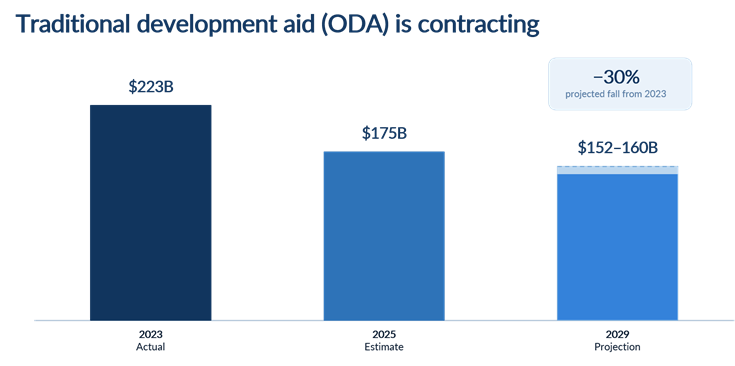
Figure 1: Trajectory of Traditional Development Aid
However, the composition of development finance is changing. According to BCG, the grant share of development finance inflows to lower-middle-income countries declined from 46% to 33% between 2011 and 2024.[[i]] This indicates a growing reliance on repayable financing rather than non-repayable assistance.
Fiscal pressures in donor countries and changing geopolitical priorities partly drive this shift. Trade relationships, economic security, supply chains, and strategic interests increasingly shape development partnerships.
For developing economies, securing financing may increasingly depend on three factors. These are the ability to demonstrate economic returns, mobilize private investment, and align development priorities with international partners.
Yet private investment cannot automatically replace declining aid. Investments in renewable energy or industrial infrastructure may generate commercial returns. Programmes addressing malnutrition, extreme poverty, or disaster vulnerability often cannot.
Therefore, the challenge is not simply to replace grants with loans. Countries must identify financing mechanisms that are appropriate for different development priorities.
The implications of declining foreign aid are particularly relevant for Bangladesh. External assistance continues to support infrastructure development, social programmes, and public investment.
According to provisional figures from the Economic Relations Division (ERD), foreign assistance commitments declined by approximately 37%. They fell from USD 8.32 billion in FY2024–25 to USD 5.24 billion in FY2025–26.
Meanwhile, external debt-servicing payments increased from USD 4.09 billion to USD 4.49 billion over the same period. Commitments fluctuate with the timing of financing agreements and do not necessarily reflect actual disbursements.
Nevertheless, these trends highlight an emerging challenge. Bangladesh must continue securing development finance while managing increasing repayment obligations.
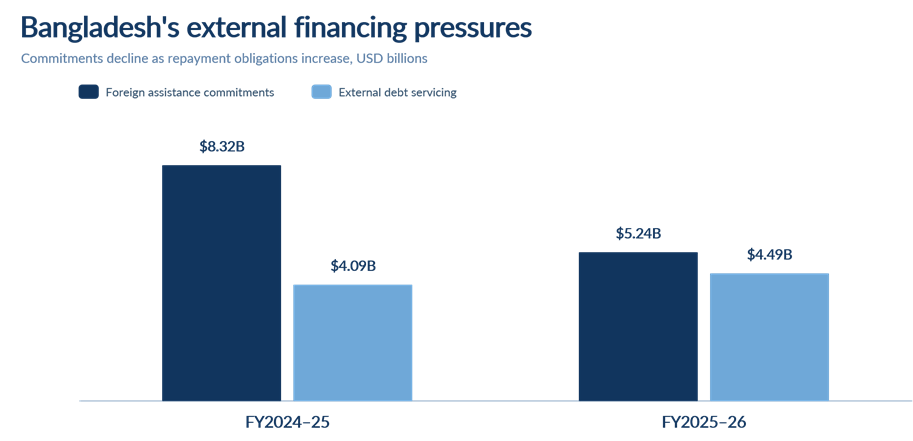
Figure 2: External Financing Pressure in Bangladesh (Source: ERD)
Beyond foreign assistance, Bangladesh faces a much larger development financing requirement. According to a 2026 assessment presented by ERD and UNDP, the country requires approximately USD 421 billion in additional financing over FY2026–FY2030 to achieve its Sustainable Development Goals.
This estimate demonstrates that Bangladesh’s development financing needs extend well beyond the resources traditionally provided by foreign donors.
At the same time, the country’s capacity to mobilize private capital remains constrained. Non-performing loans reached 33.2% in June 2026, reflecting significant weaknesses in the banking sector.[[ii]] Such vulnerabilities limit financial institutions’ capacity to finance productive investments.
Bangladesh’s scheduled LDC graduation adds another dimension to this challenge. Graduation does not automatically eliminate access to concessional financing. However, it increases the importance of strengthening trade competitiveness and diversifying investment partnerships.
Bangladesh must also prepare for changes in international support measures. Taken together, these developments suggest that the country must diversify its financing sources. It must also strengthen the institutions responsible for mobilizing and managing them.
As international assistance becomes less predictable, strengthening domestic revenue mobilization should be a central priority. However, Bangladesh’s revenue collection remains among the lowest globally.
As of FY2024–25, the country’s tax-to-GDP ratio stood at just 6.7%. This is less than half the 15% benchmark commonly associated with financing essential development needs.[[iii]]
This limits the government’s ability to invest in healthcare, education, infrastructure, and social protection without relying on borrowing or external assistance.
However, improving revenue collection does not necessarily require increasing tax rates. Bangladesh’s tax system has multiple rates, exemptions, administrative inefficiencies, and a relatively narrow effective tax base.
The World Bank estimates that tax exemptions are nearly as large as actual tax collection. This highlights substantial opportunities to improve revenue mobilization through policy and administrative reforms.
Reforms could include rationalizing tax exemptions, expanding electronic invoicing, strengthening taxpayer databases, and using digital systems to improve compliance. These measures could also reduce revenue leakages.
Nevertheless, mobilizing additional revenue is only part of the solution. Bangladesh must also ensure that it uses existing public resources effectively.
This requires stronger project appraisal, transparent procurement, improved monitoring, and greater scrutiny of the long-term financial implications of public investments.
For instance, authorities should evaluate infrastructure projects on more than construction costs. They should also consider expected economic benefits, maintenance requirements, and future debt-servicing obligations.
In a resource-constrained environment, improving the efficiency of public expenditure can be just as important as securing additional financing.
With traditional development assistance under pressure, Bangladesh needs to explore financing mechanisms that can attract private investment towards development priorities.
One such mechanism is blended finance. It combines public or concessional funding with commercial capital to support investments that private investors might otherwise consider too risky.
For example, agricultural cold-chain infrastructure can generate commercial returns through storage and transportation services. However, high initial investment costs, uncertain demand, and limited access to long-term financing may discourage private investors.
In such cases, concessional loans, credit guarantees, or targeted technical assistance could reduce investment risks and encourage commercial participation.
Similar opportunities exist in renewable energy, energy-efficient manufacturing, waste management, and financing for cottage, micro, small, and medium enterprises (CMSMEs).
Development finance institutions such as the World Bank Group, Asian Development Bank, and European Investment Bank can support these investments. They can provide risk-sharing instruments, longer-term financing, and technical assistance.
However, attracting private capital requires more than introducing new financial products. Bangladesh must also address the underlying constraints affecting investment.
These include banking sector weaknesses, regulatory uncertainty, limited project preparation capacity, and difficulties accessing long-term finance.
Moreover, blended finance should not become a mechanism for subsidizing investments that commercial institutions would have financed anyway. Public and concessional resources should support areas where they can mobilize genuinely additional investment and generate measurable development benefits.
This is particularly important for smaller businesses, women-owned enterprises, and agribusinesses outside major commercial centres. These groups often face greater financing barriers.
Bangladesh could therefore benefit from developing replicable financing models for priority sectors. These could include rooftop solar, industrial energy efficiency, agricultural storage, and SME financing.
While mobilizing private investment is important, not every development priority can or should rely on commercial financing. Climate adaptation provides a particularly relevant example.
According to Bangladesh’s latest Nationally Determined Contribution (NDC 3.0), the country requires approximately USD 8.5 billion annually for adaptation priorities. Estimated annual financing flows stand at USD 4 billion.
This leaves an estimated annual financing gap of USD 4.5 billion.
Many adaptation investments generate significant public benefits without producing direct financial returns. These include coastal protection, community disaster preparedness, and ecosystem restoration.
As a result, grants and highly concessional financing remain essential. The same applies to social protection, public healthcare, nutrition, and support for vulnerable communities.
Therefore, Bangladesh needs a financing strategy that distinguishes between commercially viable investments and essential public goods.
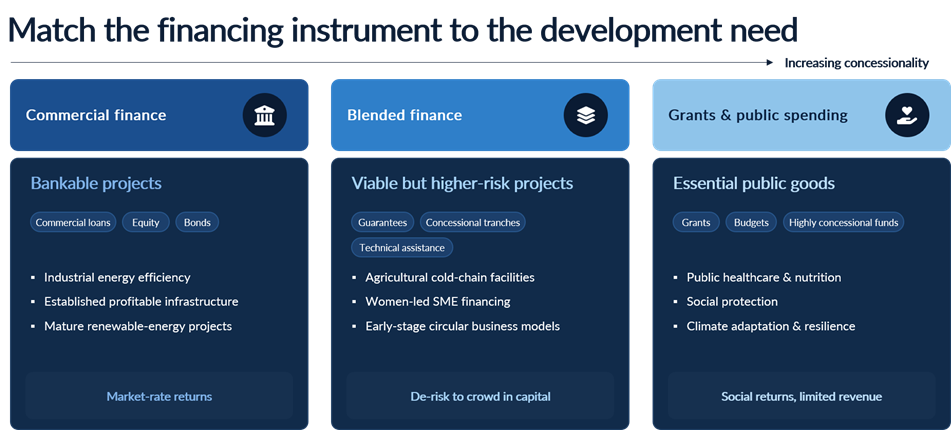
Figure 3: Indicative Framework for Selecting Development Financing Instruments
Moving forward, Bangladesh should prioritize four interconnected areas.
First, operationalize a coordinated national development financing strategy. Bangladesh has already taken steps in this direction through the Economic Relations Division (ERD), with support from UNDP.
The institutions are updating the SDG Financing Strategy and undertaking a Development Finance Assessment. The assessment estimates that Bangladesh will require approximately USD 421 billion in additional financing between FY2026 and FY2030 to achieve the SDGs.[[iv]]
The immediate priority should therefore be to translate these assessments into an actionable financing roadmap. This roadmap should identify priority investments, financing gaps, responsible institutions, and appropriate financing instruments.
Greater coordination between the Ministry of Finance, Planning Commission, Bangladesh Bank, and development partners will also be necessary. This can help align financing decisions with national development priorities.
Second, strengthen domestic financial institutions and investment readiness. Bangladesh’s banking sector vulnerabilities remain a major constraint to mobilizing private capital for development.
Recognizing these challenges, the World Bank approved USD 450 million in June 2026 under the Financial Sector Support Project II.[[v]] The project aims to strengthen the foundations for financial sector restructuring.
Beyond institutional reforms, Bangladesh needs a stronger pipeline of bankable projects. Priority sectors include agricultural logistics, renewable energy, and resource-efficient manufacturing.
Improving project preparation, credit appraisal, and financial governance would help domestic banks and investors finance productive investments more effectively.
Third, diversify development partnerships while protecting access to concessional finance. Bangladesh should strengthen partnerships with multilateral development banks, development finance institutions, and international investors.
This becomes particularly important as traditional development assistance becomes less predictable.
A relevant example is the EUR 60 million financing agreement between the European Investment Bank and BRAC Bank, announced in July 2026. The financing will support green and circular investments in Bangladesh, particularly in the textile and ready-made garment sectors.[[vi]]
Such arrangements demonstrate how international development finance can move through domestic financial institutions to support private sector investment.
However, Bangladesh must continue advocating for highly concessional resources for climate adaptation, social protection, and other essential public services. These areas may not generate sufficient commercial returns.
Finally, ensure that development financing remains inclusive. Mobilizing additional capital should not become the sole measure of success.
Financing decisions must also consider whether investments generate productive employment and strengthen climate resilience. They should also improve access to essential services and benefit underserved communities.
Bangladesh’s Inclusive Budgeting and Financing for Climate Resilience (IBFCR II) initiative provides a relevant example. UNDP and Agence Française de Développement (AFD) support the initiative.
It seeks to strengthen climate-responsive public financial management and improve the allocation and tracking of resources for vulnerable communities.
Similar considerations should guide investments in agriculture, small enterprises, healthcare, and social protection. This will help ensure that the transition towards diversified development financing does not come at the expense of equity and inclusion.
Bangladesh’s development journey has demonstrated the value of international partnerships. However, the financing arrangements that supported earlier decades of progress may not be sufficient for the challenges ahead.
The reduction in foreign aid does not necessarily have to translate into reduced development outcomes. But maintaining progress will require stronger domestic institutions and more effective public spending.
Bangladesh will also need diversified financing partnerships. Most importantly, it needs a clear understanding of where private capital can contribute and where public funding remains indispensable.
Ultimately, Bangladesh’s next phase of development will depend not simply on how much financing it can attract, but on how effectively it can mobilize and utilize that financing to deliver sustainable development outcomes.
This article was authored by Naziba Ali, Business Consultant at LightCastle Partners. Editorial and advisory support was provided by Sakina Binte Belayet, Business Consultant at LightCastle Partners. For further clarifications, contact here: [email protected].
[1] Dhanani, Q., Peters, K., Baker, G., & McConaughey, C. (2026, September 18). How to finance development when foreign aid runs short. Boston Consulting Group. https://www.bcg.com/publications/2026/future-development-finance-without-aid
[2] World Bank. (2026, October 6). Bangladesh needs urgent financial, energy, and revenue reforms to restore growth, create jobs. https://www.worldbank.org/en/news/press-release/2026/10/06/bangladesh-needs-urgent-financial-energy-and-revenue-reforms-to-restore-growth-cre
[3] Pesme, J. (2025, December 10). How can Bangladesh increase domestic revenues for development? World Bank Blogs. https://blogs.worldbank.org/en/endpovertyinsouthasia/how-can-bangladesh-increase-domestic-revenues-for-development-
[4] United Nations Development Programme. (2026, July 26). Bangladesh updates financing roadmap to advance SDGs. https://www.undp.org/bangladesh/press-releases/bangladesh-updates-financing-roadmap-advance-sdgs
[5] World Bank. (2026, June 24). World Bank helps Bangladesh strengthen its banking sector. https://www.worldbank.org/en/news/press-release/2026/06/24/world-bank-helps-bangladesh-strengthen-its-banking-sector
[6] European Investment Bank. (2026, July 8). EIB Global and BRAC Bank unlock €60 million to accelerate Bangladesh’s green transition. https://www.eib.org/en/press/all/2026-240-eib-global-and-brac-bank-unlock-eur60-million-to-accelerate-bangladesh-s-green-transition
Our experts can help you solve your unique challenges
Stay up-to-date with our Thought Leadership and Insights