



GET IN TOUCH
- Please wait...


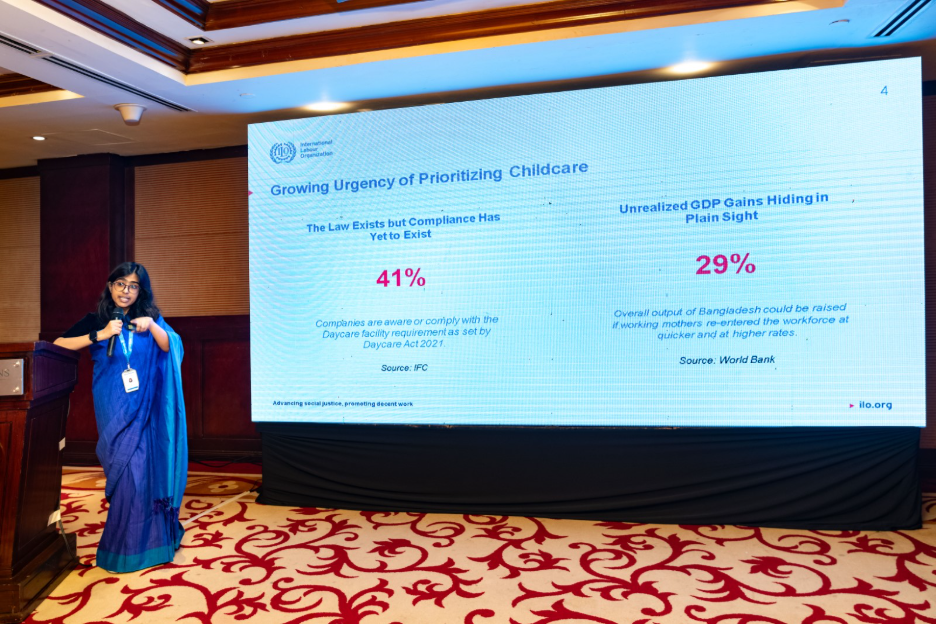
Bangladesh’s childcare sector stands at a defining crossroads. Nearly 73% of low-income mothers exit the workforce after childbirth due to a lack of quality and affordable childcare options, a staggering loss of economic participation with cascading consequences for families, firms, and national productivity. With only 38% of women participating in the formal workforce, and many leaving employment between the ages of 30 and 35, the cost of inadequate childcare infrastructure is not merely social; it is deeply economic.
At the same time, around 38% of children under five in Bangladesh experience delays in cognitive and socio-emotional development, underscoring the urgency of not just more childcare, but better childcare. The International Labour Organization (ILO) estimates that investing in childcare reform and early childhood care and education could generate over 2 million jobs by 2035, making childcare both a social protection imperative and a significant employment opportunity.
Bangladesh’s childcare ecosystem today spans five distinct models: government-operated, privately-operated, employer-managed or factory-based, community-based or NGO-supported, and home-based. While these models collectively serve a growing population of working parents and guardians, the sector operates without a unified regulatory framework. Services are fragmented, quality varies widely across models, and affordable quality access remains out of reach for low-income and informal-sector families. Although the Child Daycare Centre Act 2021 established the legal mandate for registration and licensing, the absence of a coherent National Minimum Standards (NMS) framework has meant that compliance lacks practical grounding.
Recognising these challenges, the ILO commissioned LightCastle Partners to conduct qualitative research to understand the landscape of childcare services in Bangladesh, develop a comprehensive set of guidelines for the sector’s National Minimum Standards, and assess the implementability of those guidelines through a real-world piloting exercise.
The work unfolded across three interconnected streams: understanding the sector from the ground up, building the guidelines for the standards framework, and testing it in the real world.
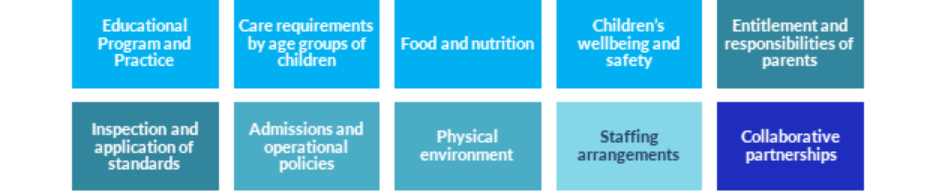
A comprehensive qualitative study was conducted spanning all five childcare models and ten quality dimensions, from early childhood education and physical infrastructure to staffing arrangements, nutrition, child protection, and the working conditions of care workers themselves.
The research drew on in-depth interviews with childcare service users and childcare workers, capturing the lived experience of those the guidelines would ultimately serve. Key informant interviews with childcare centre managers surfaced operational realities, while interviews with ecosystem actors provided the systemic view. Focus group discussions with service users validated and deepened the findings.
The findings revealed that early learning activities were found to be relatively structured in government-operated and privately-operated centres. But structured learning mechanisms for school readiness remained limited, and the capacity of childcare workers to deliver quality early learning was uneven.
On nutrition, while some centres offered age-appropriate meals, many did not provide food at all, yet parents expressed strong demand for centre-provided, nutritious meals. A clear need for training childcare workers in meal planning and safe food handling was identified for this quality area. Across the board, the research pointed to a single root cause: the absence of a formal, coherent quality framework meant that the sector’s progress was uneven, unverifiable, and unsustainable.
The research surfaced a workforce dimension for policy discussions. Childcare workers in Bangladesh were found to lack formal recognition, standardised qualifications, and consistent working conditions. Without addressing this, no standards framework could hold, because standards are only as strong as the people implementing them.
The research findings became the foundation to develop the draft Guidelines for National Minimum Standards for Childcare in Bangladesh, a living policy document built around ten quality areas and deliberately designed to speak to all five childcare models.
The draft guidelines proposes age-appropriate care requirements for infants, toddlers, preschoolers, and school-aged children; establish curriculum standards aligned with the National Early Learning and Development Standards (ELDS); define physical space, hygiene, and fire safety requirements; and suggest staffing qualification matrices and BNQF-aligned skill certifications calibrated to each model. They introduce illustrative minimum wage structures by staff role, create a registration, inspection, and grievance architecture to operationalise the Child Daycare Centre Act 2021, and establish a progressive, income-based shared financial responsibility framework across government, employers, and workers.
The draft guidelines were designed from the outset to treat childcare facilities as more than service providers. Every centre is also an employer and an organisation, and the governance architecture had to work at all three levels. A privately-operated centre in Dhaka faces different operational realities than a community-based centre in a rural upazila or a home-based caregiver. The guidelines acknowledge this heterogeneity while proposing a common quality floor.
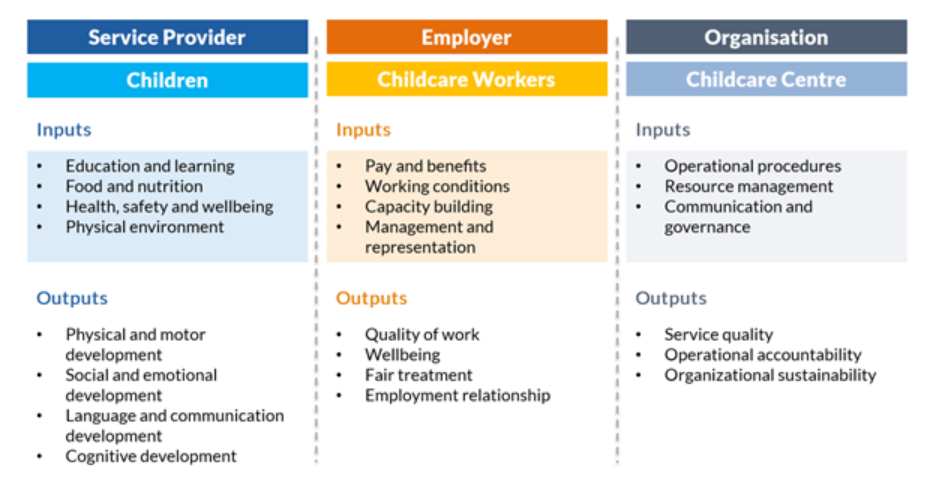
Figure: Assessment Framework to Understand the Childcare Sector
To ensure the guidelines reflected stakeholder realities, few technical stakeholder consultation workshops were co-organised with the ILO and Bangladesh Institute of Labour Studies, bringing together Ministry of Women and Children Affairs, Ministry of Labour and Employment, worker organisations, employer bodies, training institutions, private operators, and development partners to stress-test the draft across key themes, including childcare quality, child safety and infrastructure, decent work and operational policy, and education, care, and nutrition. The inputs from those sessions were woven directly into the revised guidelines.
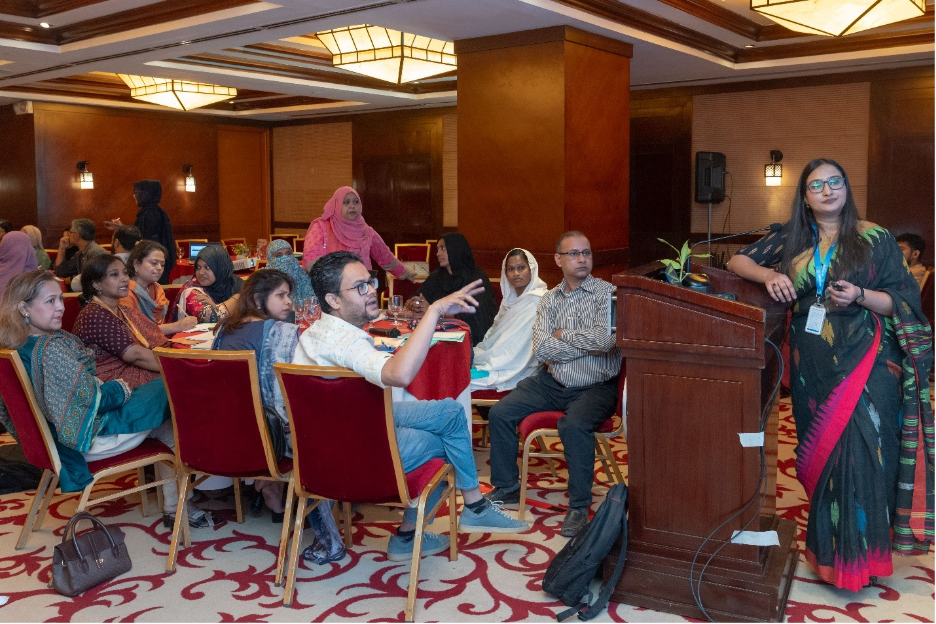
While the guidelines outline a quality framework based on sector understanding, assessing the implementability of the guidelines was also important. To bridge that gap, a pilot exercise was conducted at Kichir Michir Day Care, a community-based childcare centre operated by Karmojibi Nari.
The pilot examined the centre in three roles simultaneously: as a service provider for children, as an employer of childcare workers, and as an organisation responsible for operations and governance. Across the service delivery dimension, improvements were introduced in early childhood development programming, nutrition practices, safety protocols, and the physical environment, including new educational materials, improved activity monitoring, enhanced hygiene routines, and adjustments to make spaces more child-friendly. A certified training programme equipped childcare workers with practical skills in early childhood development, health, safety, and the application of the guidelines. Awareness and capacity-building initiatives were also conducted with the parents and community members.
On the employer dimension, structured reporting systems, improved staff qualification documentation, and formal training on worker rights were introduced, helping the centre move toward more organised and decent-work-aligned workforce management. At the organisational level, the centre invested in formalising governance processes, developing monitoring checklists, and deepening engagement with parents and the community to build shared ownership of the changes.
While the piloting exercise revealed that broadly, the guidelines are implementable, it also emphasised the importance of adopting a collaborative approach, involving all the government, non-government and private stakeholders, to strengthen the implementation efforts of childcare centres, especially community-based and home-based centres. To catalyse wider adoption, phased compliance timelines, standardised monitoring templates, practical implementation manuals, and financing mechanisms to ensure quality improvements need to be integrated into the implementation design.
The pilot at Kichir Michir demonstrated that the guidelines are broadly feasible and that even modest, phased implementation can produce measurable improvements in how children learn, how workers are treated, and how centres are managed. It also showed that effective adoption will require a supportive ecosystem, with access to training, partnership frameworks, and financing mechanisms that allow smaller and community-based centres to raise quality without pricing out the families who need them most.
The guidelines have been designed to be a living framework. The priorities for the sector are clear: formalising the registration and inspection architecture under the Child Daycare Centre Act 2021, establishing a sectoral minimum wage for childcare workers through the Minimum Wage Board, and building the national database of childcare facilities that would make demand-supply mapping and targeted investment possible. Equally important is the recognition of caregiving as a formal profession, with standardised skill certification pathways, career progression structures, and labour protections that apply to workers across all five models.
Realising this transition will require shared responsibility. Government subsidies, employer childcare allowances where facilities do not exist, and CSR contributions channelled through a centrally managed pool can be viable instruments.
Bangladesh has the policy foundation, the political momentum, and now the evidence base to build a childcare system that is safe, affordable, and accountable. Promoting quality and affordable care for all children and decent work for all childcare workers is an achievable goal for the country.
Our experts can help you solve your unique challenges