



GET IN TOUCH
- Please wait...

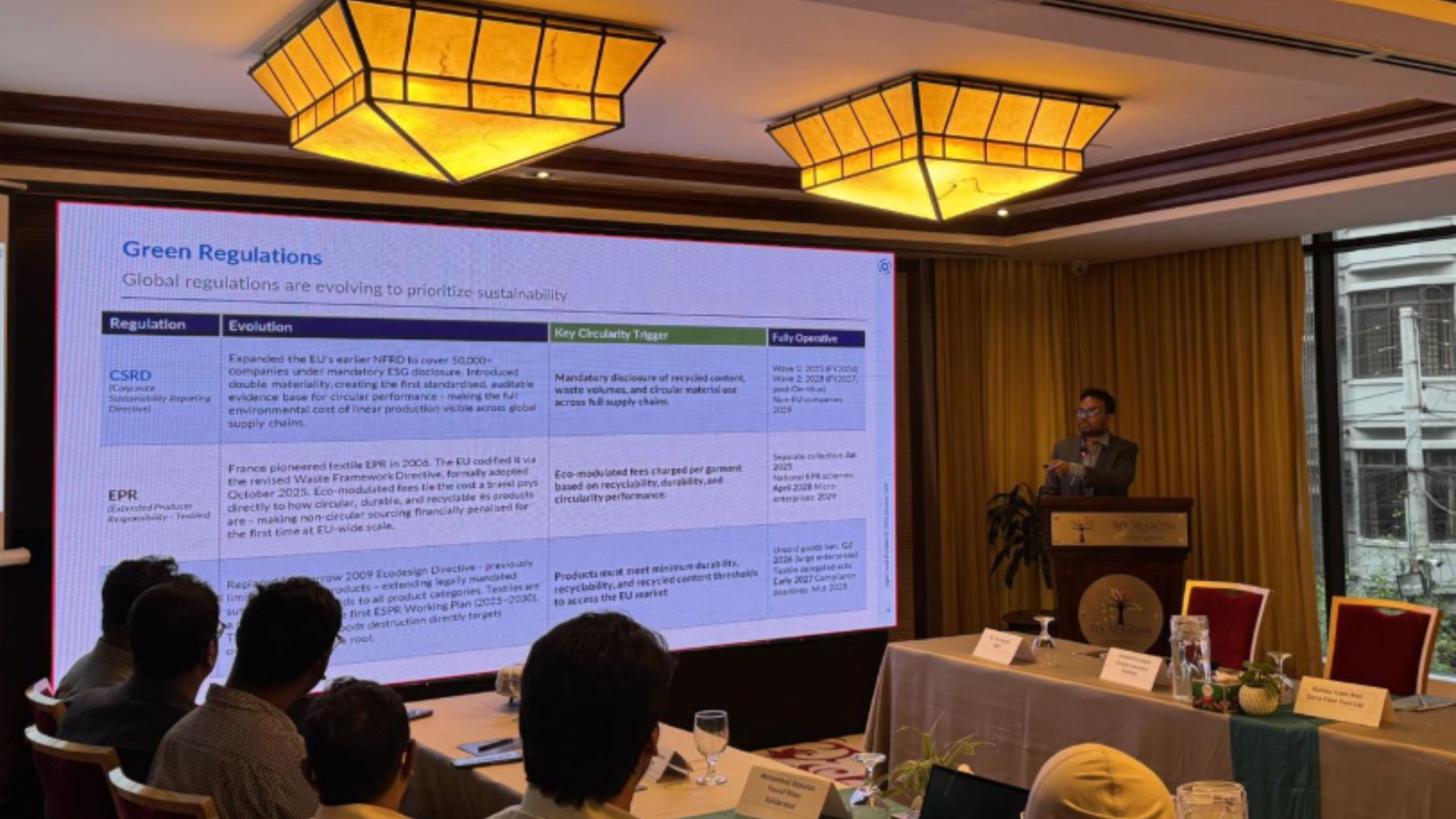
On April 2, 2026, LightCastle Partners convened a closed-door roundtable titled “Closing the Loop: Advancing Circularity in Bangladesh’s RMG Sector.”
The session was organized as part of Bunon 2030 under Phase 2 of the Oporajita – Collective Impact on Future of Work: Just Transition for Women in the RMG Ecosystem initiative. The initiative is supported by the H&M Foundation, co-funded by Sweden and COS, with The Asia Foundation serving as the backbone organization.
The roundtable brought together key stakeholders. From across policy, industry, finance, and development to discuss pathways for scaling circularity in Bangladesh’s RMG sector.
Participants included representatives from BGMEA, the European Union, UNIDO, The Asia Foundation, DBL Group, Team Group, Reverse Resources, SME Foundation, Woolmark Company, WaterAid, and Circle Economy, among others.
The roundtable was hosted by Sadia Karim, Business Consultant, and it was commenced with a presentation by Zahedul Amin, Managing Director and Co-Founder of LightCastle Partners. Who outlined the global and local imperatives driving circularity in Bangladesh’s RMG sector.
He highlighted that global brands are rapidly shifting toward recycled and sustainably sourced materials. While regulatory frameworks, particularly in the European Union, are increasingly mandating traceability, emissions reduction, and circular production standards.
He further emphasized that without integrating circularity, Bangladesh risks rising compliance costs, reduced competitiveness post-LDC graduation, and potential erosion of market access, particularly in the EU.
Prior to the roundtable discussion, a virtual presentation by Kumar Prashant, Research Analyst, and Luke Bailey, Senior Economist at Circle Economy, provided additional context on the employment and financing dynamics of circularity in Bangladesh.
Prashant highlighted the scale of informality within the sector. Noting that “only one in ten workers enabling circularity are represented in the data,” underscoring the extent of underreporting across the value chain.
Whereas Luke emphasized financing constraints as a key barrier to adoption. Stating that “traditional financing routes are often too expensive,” limiting the ability of manufacturers to invest in circular solutions at scale.
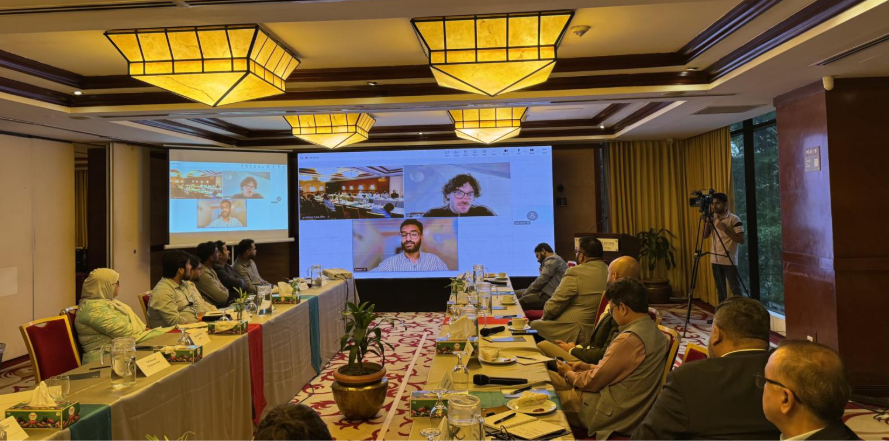
Building on these insights, roundtable discussions highlighted that Bangladesh’s circularity ecosystem remains structurally constrained. Despite significant underlying activity in pre-consumer waste collection and recycling.
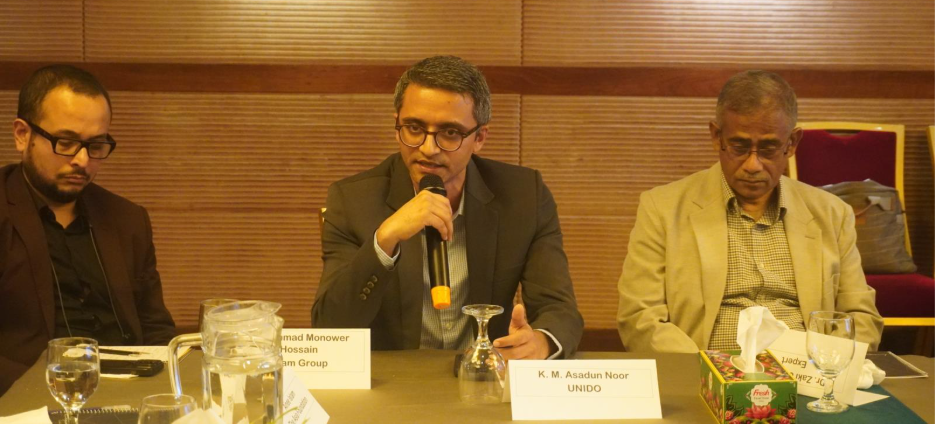
K. M. Asadun Noor, National Project Coordinator at UNIDO, emphasized the need to broaden the focus across the value chain: “We always talk about the larger players, but in most cases, we forget the Tier 2 and Tier 3 suppliers who are also supporting the value chain.”
A key bottleneck identified was the lack of reliable, disaggregated data on textile waste, which limits both investment decisions and compliance readiness.
Mohammad Monower Hossain, Head of Sustainability at Team Group, stated: “Implementing circularity right now is like searching for a black cat in a dark room where the black cat does not actually exist.”
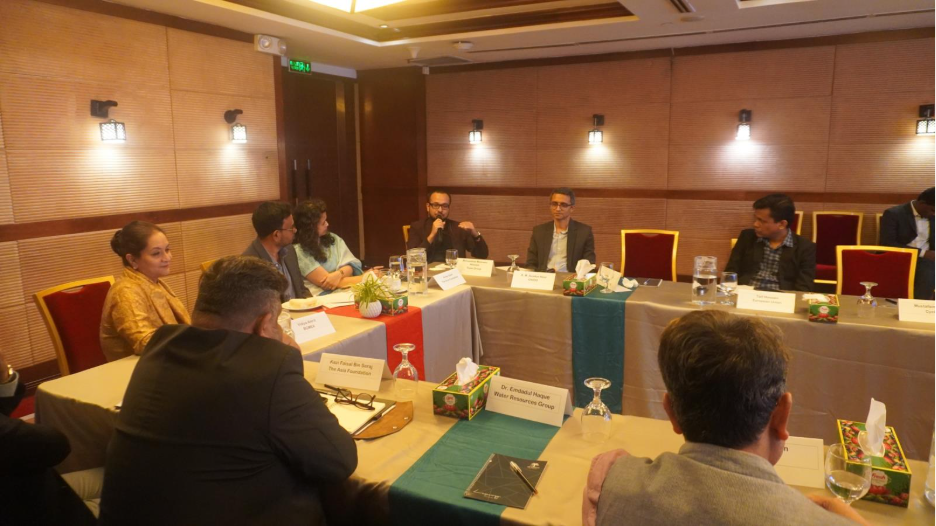
From a policy perspective, Dr. Zaki Uz Zaman, Former Country Representative at UNIDO, highlighted underutilized frameworks: “This quality policy can be revisited to see what the missing links are and how circularity can be incorporated so Bangladesh can benefit out of it.”
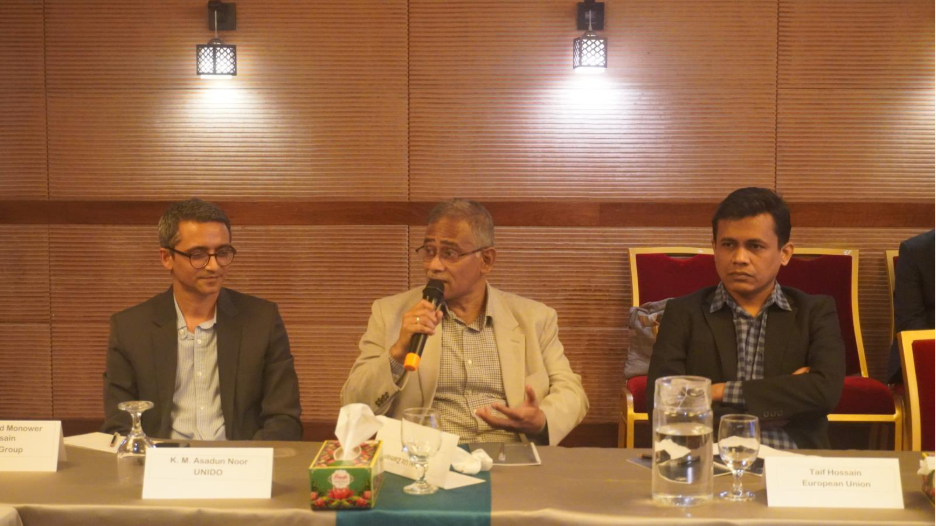
Additionally, Rizvan Hasan, Country Head at Reverse Resources, pointed to regulatory inefficiencies: “This is a country where waste has 27.5% VAT and tax, a huge deal.”
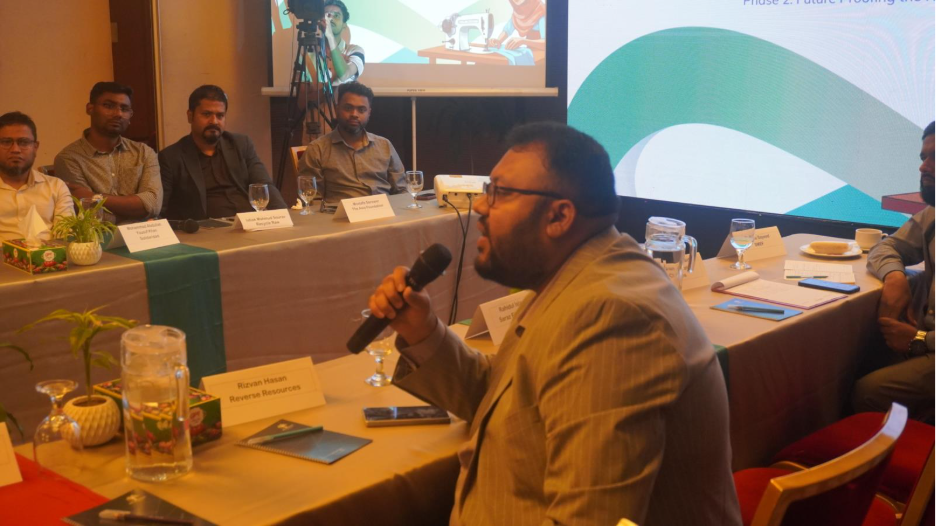
While multiple initiatives, pilots, and policy discussions are underway, participants emphasized that execution, not strategy, is the primary constraint.
From an industry perspective, Mohammad Zahidullah, Chief Sustainability Officer at DBL Group, proposed a cluster-based solution: “The easiest way is to engage the government, get land, and combine traders together into a cooperative so all proper diligence is met.”
Stakeholders further highlighted the need for top-down alignment and coordinated implementation mechanisms to address entrenched informal systems and enable scale.
Beyond recycling, participants emphasized the importance of reducing waste at source through improved resource efficiency.
Azeezur Rahman Khan, Country Representative at Woolmark Company, highlighted that optimizing resource use at the early stages of production can significantly reduce downstream waste challenges. He also stressed that circularity initiatives must be commercially viable, as adoption will depend on clear economic returns for manufacturers.
Stakeholders highlighted that circularity in Bangladesh is not new but remains largely informal, requiring systemic alignment. Vidiya Amrit, Vice President of BGMEA, stated:
“Circularity is a low-hanging fruit, with an existing ecosystem already in place, but unlocking its full potential requires a coordinated and collaborative approach.”
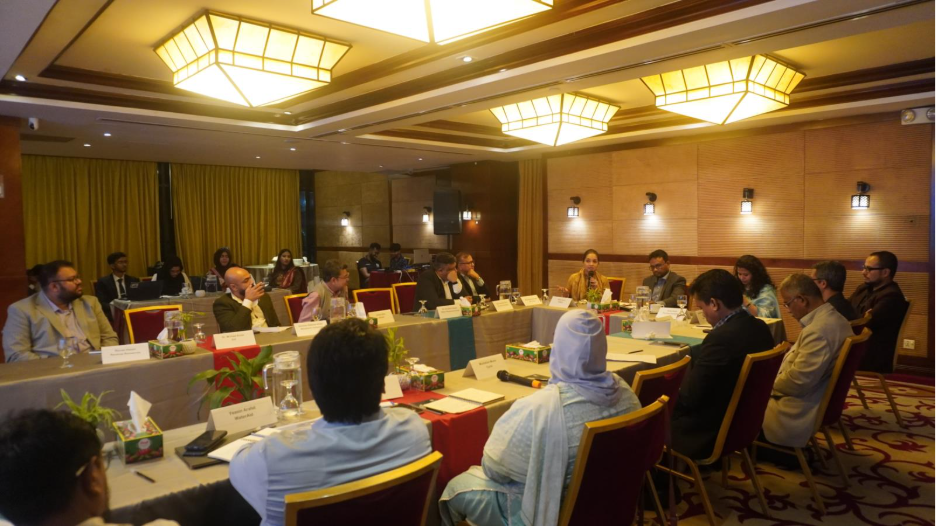
She emphasized collaboration, noting that scaling circularity requires a collective, non-competitive approach. The need for a just transition was also underscored. Ainee Islam, Program Director at The Asia Foundation, added: “At the heart of this project are the women RMG workers, we are creating models that can be scaled.”
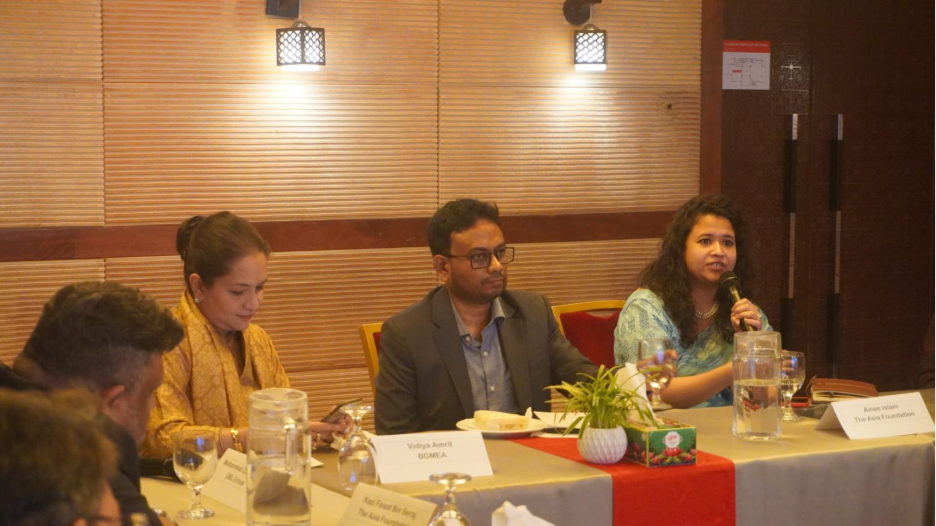
Lastly, stakeholders aligned on the need for coordinated policy action, improved data and traceability systems, greater access to finance, and formal integration of informal actors to scale circularity in Bangladesh’s RMG sector. The way forward will require strong public-private collaboration and actionable implementation frameworks to translate existing momentum into measurable outcomes.
The event was concluded by closing remarks from Ainee Islam, Program Director of the Asia Foundation. She emphasized the importance of such dialogues as a platform for fostering a deeper understanding of the current dynamics within the RMG sector, highlighting the pivotal role of these discussions in creating an enabling environment for women apparel workers, thereby contributing to their empowerment and advancement within the industry.
Our experts can help you solve your unique challenges