

GET IN TOUCH
- Please wait...

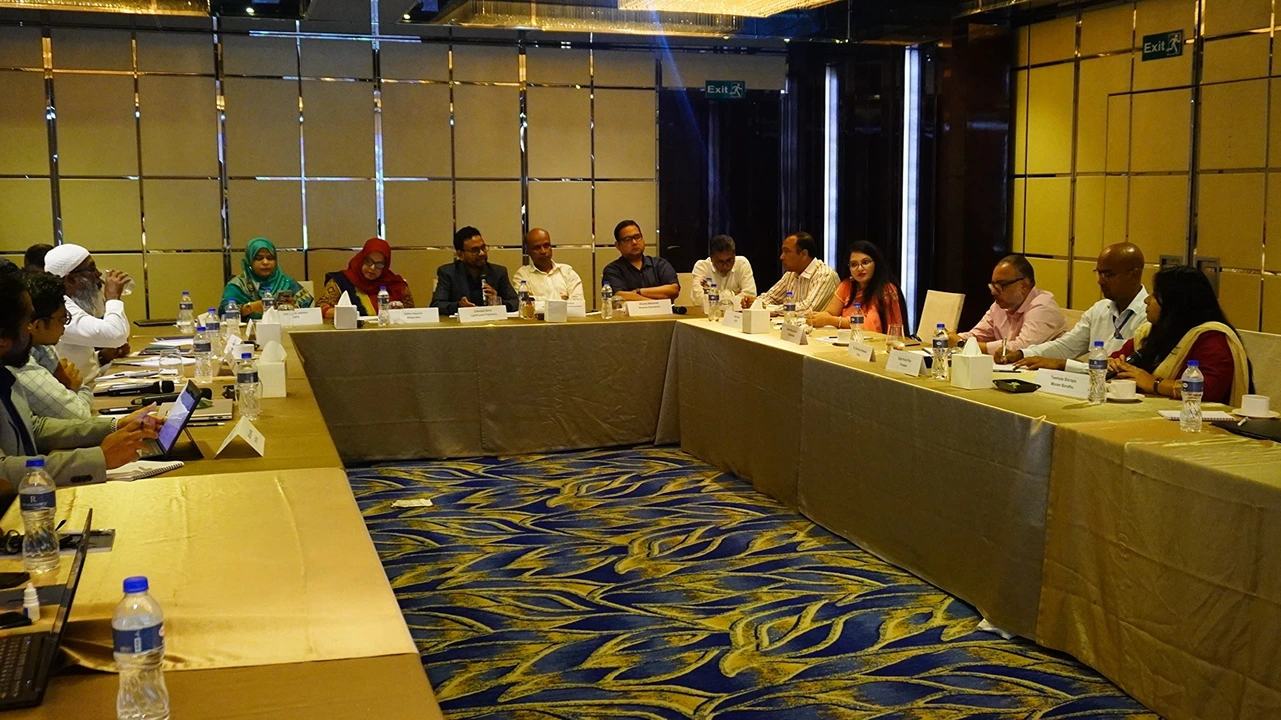
On 9 July 2026, LightCastle Partners convened its fifth and sixth closed-door diagnostic roundtables under Phase 2 of Oporajita. LightCastle Partners titled the sessions “Beyond Wages: Safer Jobs and Better Lives for Workers in the RMG Sector.” LightCastle Partners organized the sessions as part of Bunon 2030 under the Oporajita – Collective Impact on Future of Work: Just Transition for Women in the RMG Ecosystem initiative. The H&M Foundation supports the collective effort, while Sweden and COS co-fund it. The Asia Foundation serves as the backbone organization. LightCastle Partners held the sessions in association with Center for Communication Action Bangladesh (C-CAB).
The roundtables brought together representatives from government agencies, development organizations, industry associations, apparel manufacturers, worker organizations, buyers, and other RMG stakeholders. Participating organizations included the Ministry of Labour and Employment, Department of Inspection for Factories and Establishments (DIFE), Asian Development Bank, Bangladesh Institute of Labour Studies (BILS), RMG Sustainability Council (RSC), International Labour Organization (ILO), United Nations Development Programme (UNDP), and United Nations Population Fund (UNFPA). Other participants included CARE, Save the Children, WaterAid, Solidaridad, BRAC, Gonoshasthaya Kendra, Moner Bondhu, The Asia Foundation, BGMEA, Primark, Stanley/Stella, Shasha Garments, Urmi Group, Plummy Fashions, Towel Tex, Apon Bazar, the Institute of Health Economics, University of Dhaka, the National Coordination Committee for Workers Education, and Bangladesh National Garments Employees League (BNGWEL), among others.
The sessions built on earlier diagnostic discussions on worker health and microinsurance. They expanded the conversation to the wider workers’ wellbeing agenda. Discussions covered healthcare access, health insurance, occupational safety and health, nutrition, reproductive health, maternity protection, mental wellbeing, grievance mechanisms, daycare support, and inclusive workplace practices. The discussions aimed to identify practical and collaborative pathways for advancing safer jobs and better lives for workers in Bangladesh’s RMG sector.
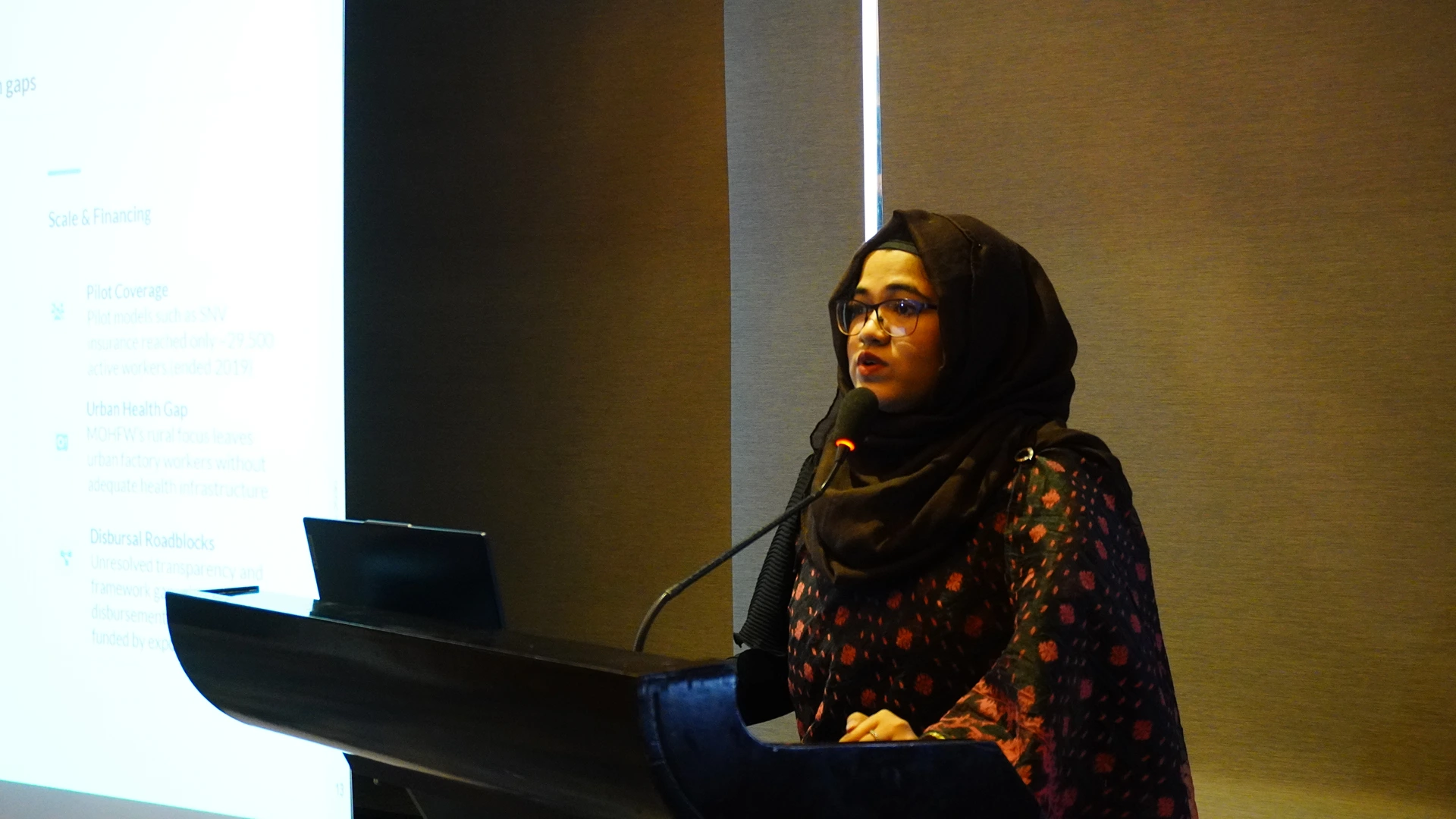
The first session focused on worker health, wellbeing, social protection, and behavioral change. It began with a keynote presentation by Sadia Karim, Business Consultant, LightCastle Partners, who set the context for worker wellbeing in Bangladesh’s apparel sector. The presentation noted that the sector employs around 4 million workers. More than 52% of them are women. The sector also contributes around 84% of Bangladesh’s export earnings. It emphasized that worker wellbeing is not only a social priority. It is also a competitiveness issue linked to productivity, compliance, worker retention, and long-term sector resilience.
The keynote examined major health and social wellbeing challenges facing garment workers, including nutrition insecurity, anaemia among women workers, reproductive health gaps, limited access to health insurance, high out-of-pocket healthcare costs, and mental health pressures. It also highlighted the need for stronger health-protection mechanisms, including pooled health financing, clearer benefit schedules, digital worker registries, and improved coordination among government, industry, and development partners.
As part of the first segment, C-CAB presented behavior change communication and the importance of addressing worker wellbeing through community-level awareness, accessible communication channels, and sustained engagement models. Additionally, the discussion highlighted that worker wellbeing interventions need to move beyond information dissemination. They should focus on long-term behavioral change, particularly around mental health, reproductive health, climate-related vulnerabilities, and access to support services.
Following this, the roundtable discussion explored how conditions inside and outside factories shape worker health. Participants reflected on WASH access, maternal health, reproductive health services, mental health stigma, community-based healthcare support, factory-level grievance systems, nutrition support, eye-care services, worker housing, and practical wellbeing models. Factories and development partners have already implemented several of these models. These examples showed that integrated wellbeing interventions can help reduce absenteeism, improve worker trust, support retention, and strengthen productivity.
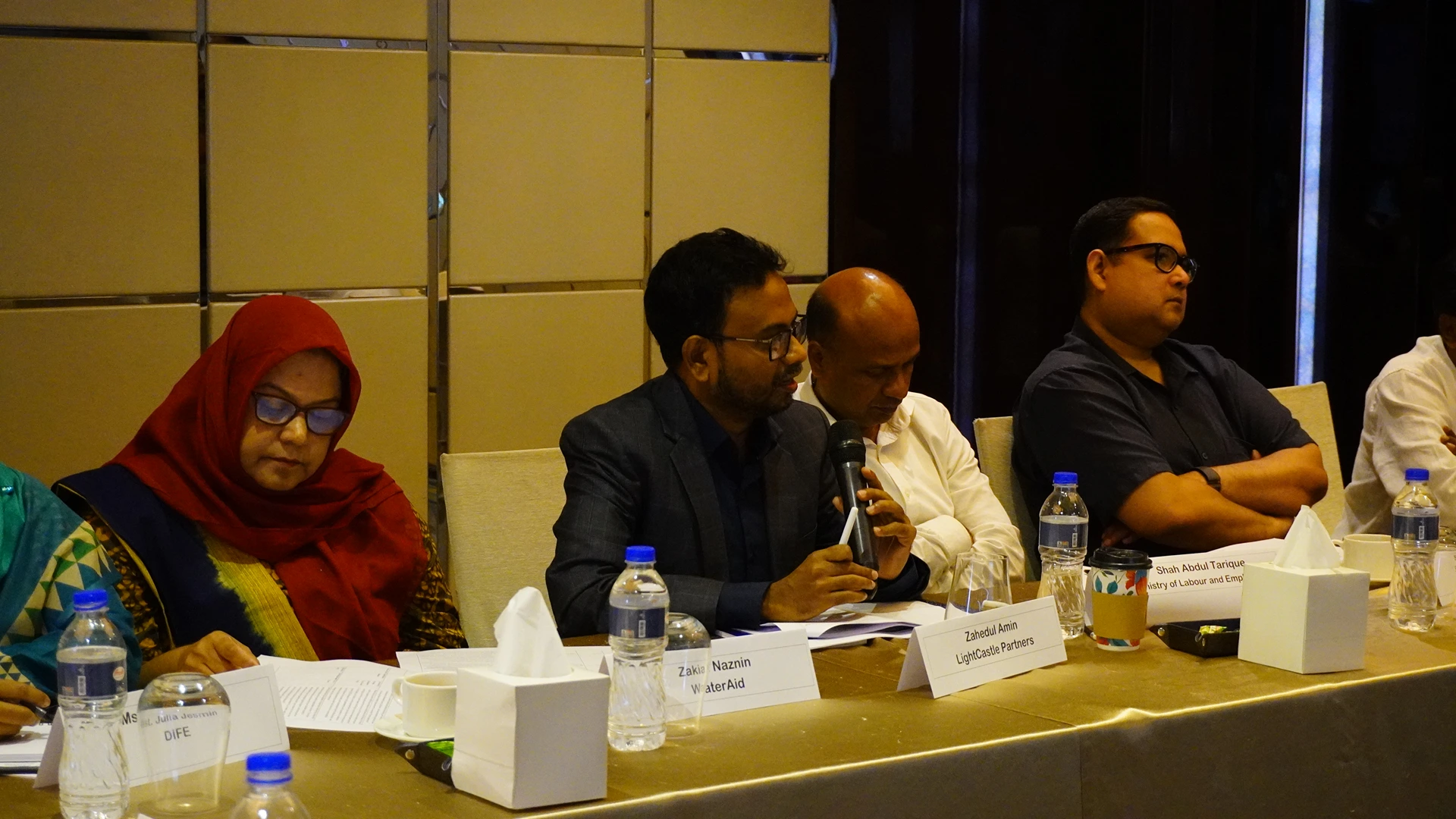
Zahedul Amin, Managing Director, LightCastle Partners, and Zakia Naznin, Programme Lead, WaterAid, co-moderated the first session. Special guests included Shah Abdul Tariq, Additional Director General (Joint Secretary), Ministry of Labour and Employment; Mst. Julia Jesmin, Joint Inspector General, Department of Inspection for Factories and Establishments; Razekuzzaman Ratan, trade union leader, labour rights advocate, and member of the National Coordination Committee for Workers Education; and Shams Mahmud, Managing Director, Shasha Garments.
The second session focused on workplace safety, Occupational Safety and Health (OSH), grievance mechanisms, and support systems for working mothers in the garment sector. It began with a second keynote presentation by Sadia Karim, Business Consultant, LightCastle Partners. The presentation outlined Bangladesh’s workplace safety journey. It covered the Bangladesh Labour Act, post-Rana Plaza reforms, and the current role of the RMG Sustainability Council (RSC). It also emphasized the need to move beyond checklist-based compliance and strengthen safety outcomes that workers can trust.
The presentation also discussed factory inspections, structural remediation, escalation mechanisms, and complaints handling systems. It highlighted the RSC’s role in monitoring factory safety. It also emphasized stronger coordination between factory-level mechanisms, RSC processes, and regulatory enforcement. The discussion also covered both OSH and non-OSH grievance mechanisms, including confidentiality, anti-retaliation protections, investigation processes, and worker access to remedy.
A key part of the second session focused on daycare, maternity protection, and support for women garment workers. The discussion explored legal and practical gaps in childcare provision, breastfeeding spaces, maternity benefits, post-return support, and community-based daycare models. It also examined evidence from Oporajita Phase 1. This included daycare centres in Gazipur and Savar that supported children of garment workers and enabled mothers to rejoin the workforce.
During the second segment, C-CAB screened a documentary portraying the life of an apparel worker. The documentary grounded the discussion in workers’ lived realities. It highlighted migration, family responsibilities, workplace pressures, climate-related vulnerability, and the challenges women workers face in balancing employment and care responsibilities.
Zahedul Amin, Managing Director, LightCastle Partners, and Bijan Chowdhury, Technical Specialist, Save the Children, co-moderated the second session. Participants included Mr. Mahfuzul Bashar, Team Lead, OSH Complaints Unit, RMG Sustainability Council; Mr. Abir Hossen, Team Lead, OSH Training Department, RMG Sustainability Council; Md. Fazlul Hoque, Plummy Fashions; Syed Sultan Uddin Ahmmed, Executive Director, Bangladesh Institute of Labour Studies; and representatives from government, development partners, industry, worker organizations, and buyers.
Overall, participants emphasized across both sessions that worker wellbeing should be treated as a core component of Bangladesh’s RMG competitiveness strategy. Moreover, the discussions underscored that healthcare access, health insurance, occupational safety, grievance redress, daycare, maternity support, nutrition, and mental wellbeing are not isolated welfare issues. They are closely linked to productivity, retention, buyer confidence, and future market access.
Finally, the roundtables reinforced that advancing safer jobs and better lives for RMG workers will require coordinated action beyond any single institution. By bringing together government agencies, factory owners, buyers, development partners, worker representatives, and support organizations, the sessions helped build a shared platform for turning discussion into practical collaboration. Sustained partnership will be critical to strengthening worker wellbeing, improving workplace systems, and supporting a more resilient, competitive, and inclusive RMG sector in Bangladesh.
Our experts can help you solve your unique challenges