



GET IN TOUCH
- Please wait...

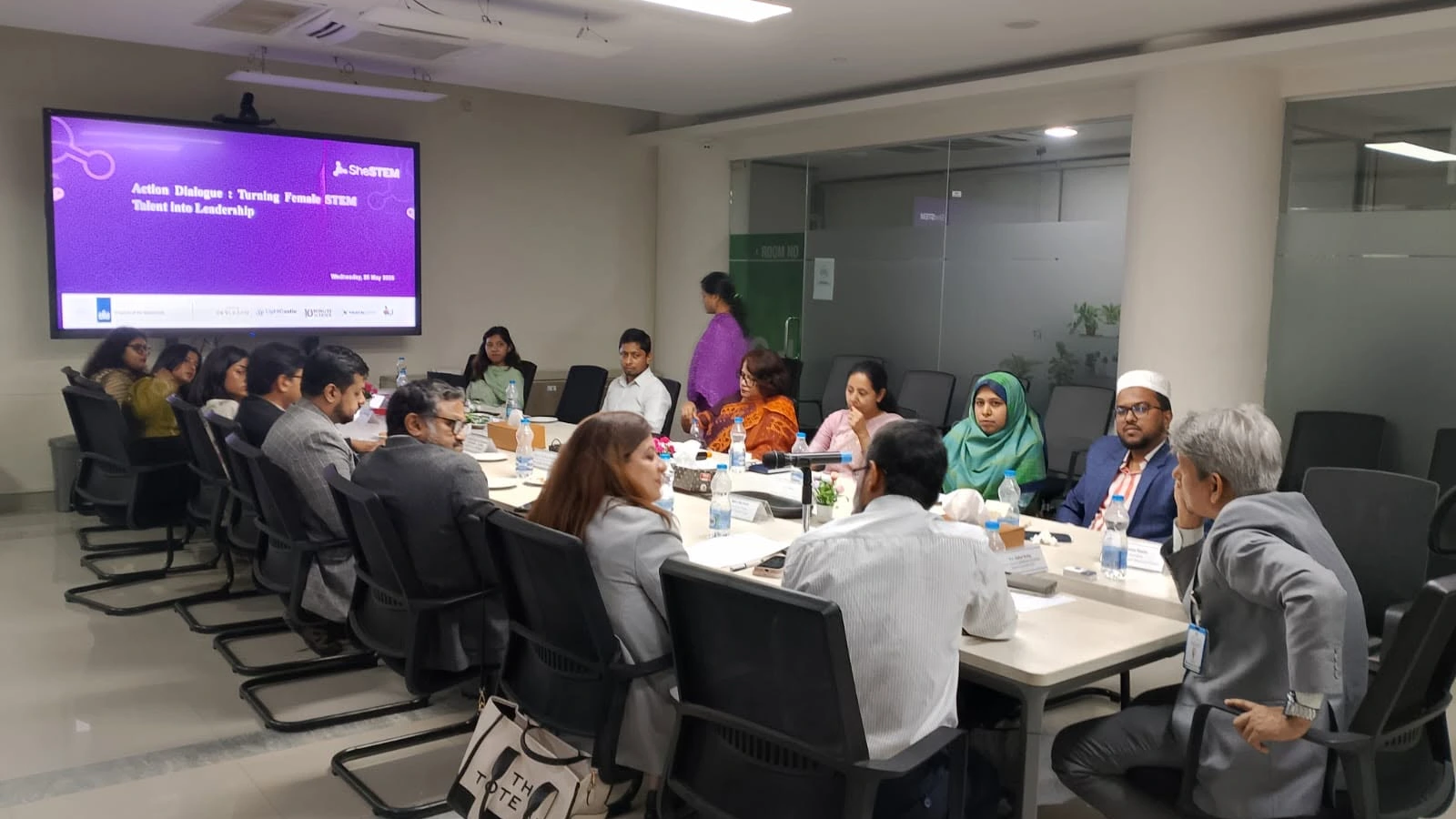
As part of its ongoing efforts to advance gender equity and strengthen pathways for women in STEM, SheSTEM hosted the “Action Dialogue: Turning Female STEM Talent into Leadership” on 20 May at the ICT Tower in Dhaka. The event brought together policymakers, development partners, academics, and ecosystem stakeholders to identify practical strategies for increasing women’s participation and leadership across STEM sectors.
The dialogue provided a platform for translating research findings and lived experiences into concrete actions. In particular, participants explored how institutions and the broader ecosystem can better support women throughout their STEM careers.
The session featured distinguished representatives from the public and development sectors, including Saif Islam, Head of Programme Management Support Unit (PMSU), UNDP; Maha Abu Emeir, International Project Manager, UNDP; Israt Farzana, Deputy Secretary, Ministry of Public Administration; and Dr. Zinat Mahal, Deputy Secretary, Bangladesh Public Service Commission.
Their participation highlighted the importance of cross-sector collaboration. Moreover, it reinforced the need for coordinated efforts to help women transition from education to employment and eventually into leadership roles within STEM fields.
Aspire to Innovate (a2i), under the SheSTEM Consortium, led the discussion. Participants focused on practical interventions that can strengthen the STEM talent pipeline for women. For example, they explored ways to expand internship opportunities, promote equitable recruitment practices, and build institutional support systems that help women enter, remain in, and advance within STEM careers.
In addition, participants discussed the need for organizations to move beyond one-off initiatives. Instead, they emphasized long-term approaches that address structural barriers and create sustainable pathways to leadership.
Throughout the session, participants stressed that increasing women’s representation in STEM leadership requires coordinated action from government agencies, educational institutions, employers, and development partners. As a result, strengthening career pathways, fostering inclusive workplace cultures, advancing gender equity, and ensuring equal access to opportunities emerged as key priorities.
Furthermore, participants highlighted the value of evidence-based decision-making and strong partnerships. These approaches can help address persistent challenges while supporting a more inclusive innovation ecosystem in Bangladesh.
SheSTEM is supported by the Embassy of the Kingdom of the Netherlands in Bangladesh and implemented by a consortium comprising Aspire to Innovate (a2i), 10 Minute School, LightCastle Partners, Policy Exchange Bangladesh, and DevLearn Consultancy. Through initiatives such as this action dialogue, SheSTEM continues to bring together diverse stakeholders to drive meaningful conversations and promote actionable solutions for advancing women’s participation and leadership in STEM.
Our experts can help you solve your unique challenges