


GET IN TOUCH
- Please wait...

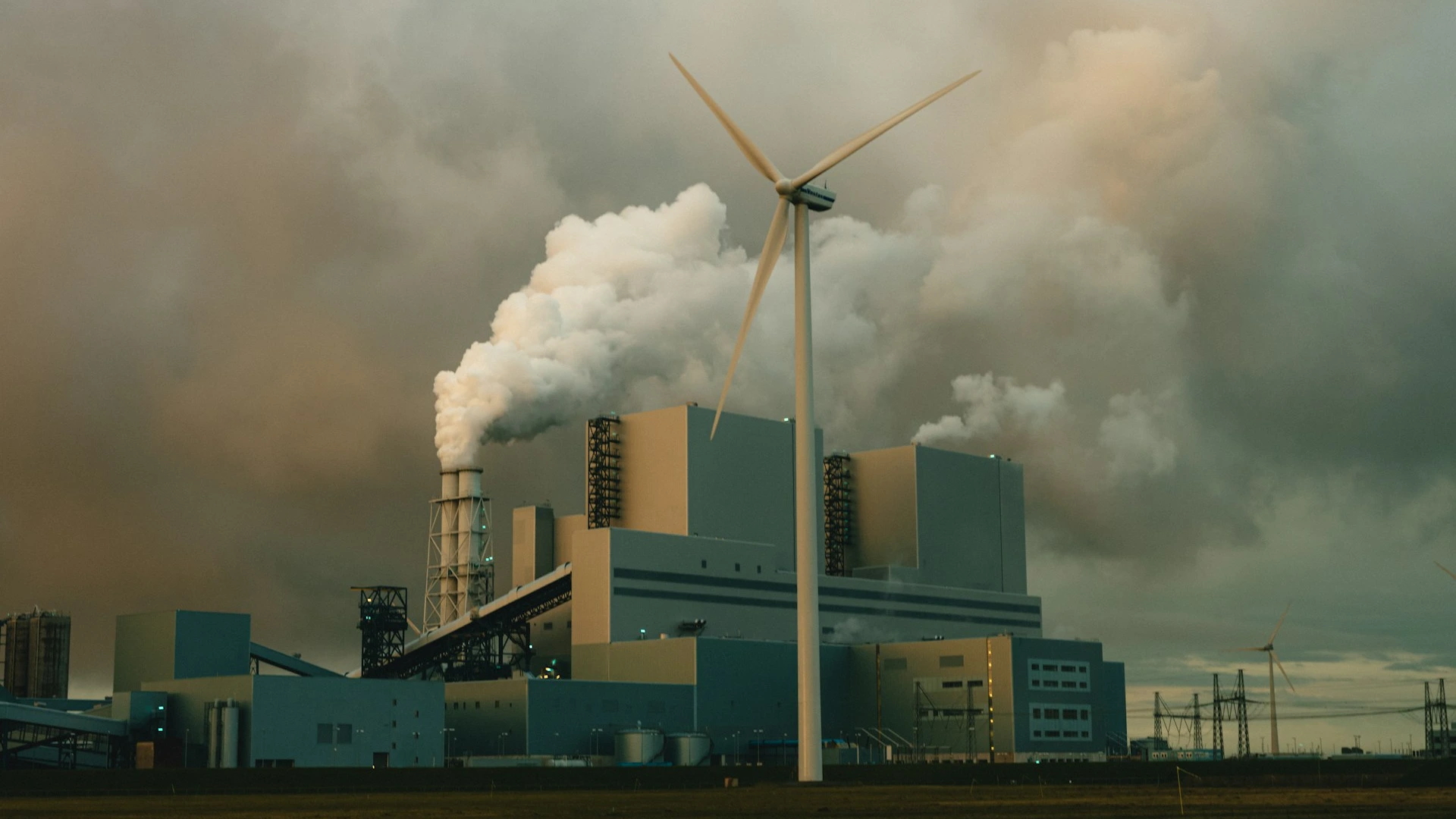
Bangladesh’s power sector has expanded rapidly, yet the structure supporting that growth remains vulnerable. As of early 2026, the country had approximately 33 GW of installed generation capacity, while renewable energy accounted for only 5.56 percent of the total Fossil fuels continued to dominate the power mix, increasing exposure to imported fuel prices and foreign-exchange pressure. At the same time, grid constraints limited the effective integration of new renewable capacity.
The gap between ambition and implementation remained substantial. Bangladesh had set targets of 20 percent renewable generation by 2030 and 30 percent by 2040, but progress was constrained by limited access to finance, fragmented approvals, land scarcity, and inadequate storage infrastructure. These barriers affected both utility-scale investment and the expansion of distributed energy solutions.
The transition also presented a strategic market opportunity. Australia has established capabilities in renewable energy systems, battery storage, grid modernisation, and technical advisory services. These strengths aligned with several of Bangladesh’s emerging infrastructure and technology needs.
Against this backdrop, the Australian Trade and Investment Commission commissioned LightCastle Partners to conduct a market intelligence study on Bangladesh’s renewable energy sector. The study assessed market conditions, identified priority opportunities, and outlined practical pathways for trade and investment. LightCastle Partners served as the local research and market advisory partner.
LightCastle Partners applied a systems-based approach to understand how policy, infrastructure, financing, institutional capacity, and technology readiness shape market development. The study moved beyond a standalone review of individual technologies. Instead, it examined how these factors interact and influence commercial viability.
Building the Evidence Base
The research began with a review of national energy policies, renewable energy targets, regulatory requirements, and current project pipelines. Institutional roles were also mapped to clarify how policy, investment facilitation, generation, transmission, and financing decisions are made.
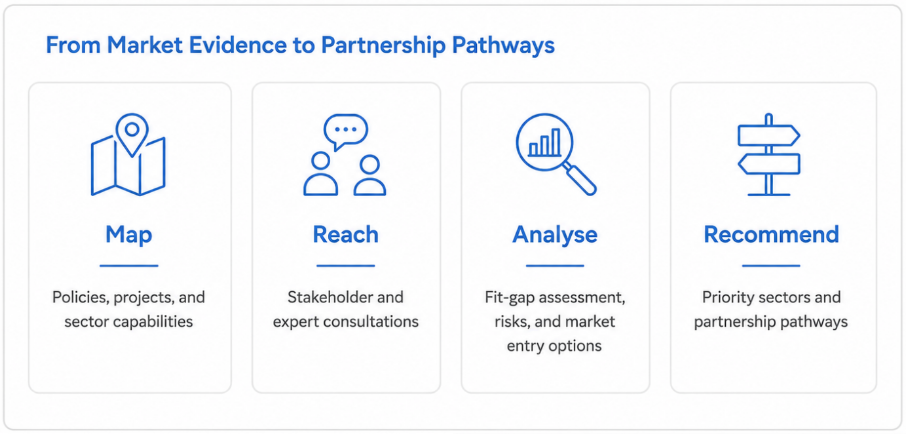
The analytical review was complemented by consultations with public agencies, private developers, financial institutions, technology providers, industry associations, energy users, and sector experts. The research design targeted multiple key informant interviews, allowing published policies and planned projects to be tested against market realities.
Identifying Market Gaps
The consultations revealed a recurring disconnect between renewable energy ambition and implementation capacity. Many projects faced financing constraints, while approval processes remained fragmented. Grid readiness and land availability also influenced the pace at which new technologies could be deployed.
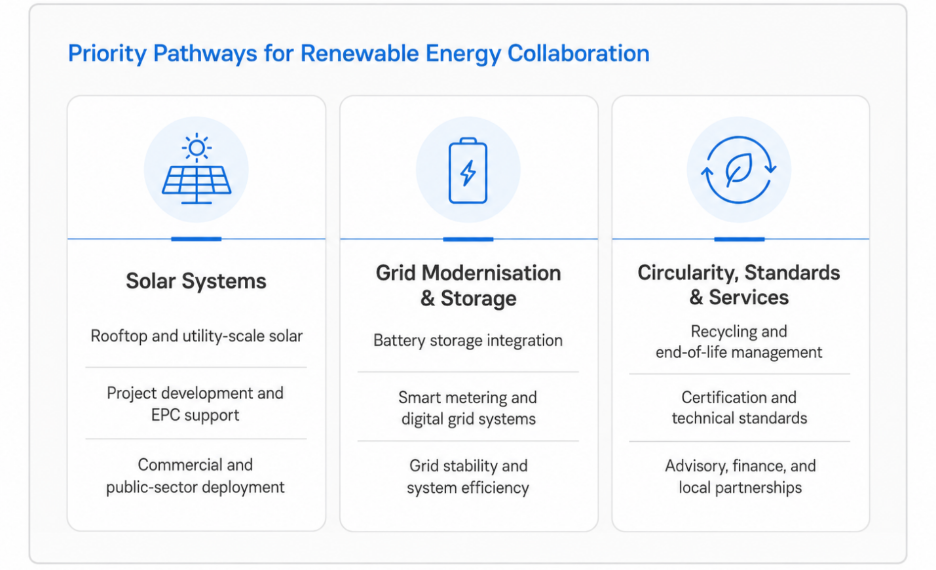
LightCastle Partners translated these findings into fit-gap assessments covering solar energy, battery storage, grid modernisation, and circular renewable energy systems. This analysis identified where local market demand aligned with specialised international expertise. It also showed where successful entry would depend on strong local partnerships.
Defining Entry Pathways
The final roadmap assessed commercial opportunities alongside regulatory, financial, and operational risks. It also outlined potential routes to market through local developers, utilities, financial institutions, public agencies, and development-supported initiatives.
The study demonstrated that Bangladesh’s renewable energy transition will require more than additional generation capacity. Stronger coordination is essential. Clearer institutional roles, more credible project pipelines, and predictable approval processes will be critical to attracting long-term investment.
Near-term opportunities are emerging in rooftop solar, battery storage, smart metering, grid management, and technical services. However, wider adoption will depend on improved financing structures and greater regulatory certainty.
Blended finance, credit guarantees, and foreign-exchange risk instruments could improve project bankability. Clear standards for equipment, recycling, storage, and grid integration would further reduce uncertainty and support market confidence.
The broader opportunity lies in linking Bangladesh’s energy security priorities with technologies that strengthen reliability and industrial competitiveness. With stronger governance and more investable projects, the country can convert renewable energy targets into a commercially viable clean-energy market.
Our experts can help you solve your unique challenges