


GET IN TOUCH
- Please wait...

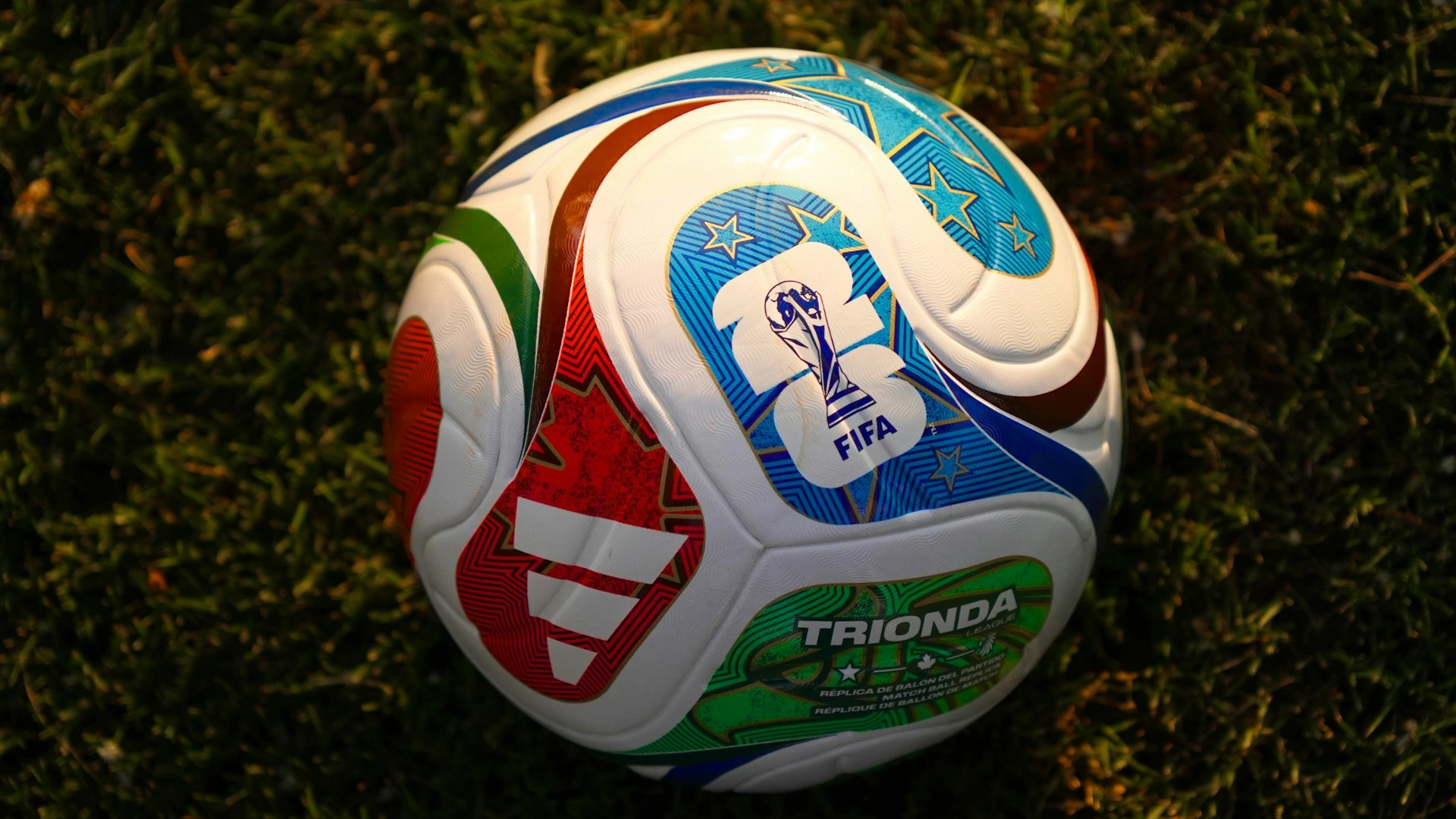
Every four years, the FIFA World Cup presents itself as more than a tournament. For host nations, it offers a chance to reshape how billions of people see them. Governments spend tens of billions of dollars pursuing hosting rights, treating the tournament as a strategic investment in global perception. Germany’s 2006 tournament, remembered as the “Sommermärchen,” remains a model case. The country used the event to soften its international image. Yet hosting can also expose a country’s weaknesses. Migrant workers often build stadiums under exploitative conditions, while governments use the tournament as political leverage. Qatar 2022 made these risks visible on a global scale. The 2026 tournament showed that an established democracy can face similar risks in a different form. Saudi Arabia’s uncontested 2034 bid suggests the pattern remains unresolved.
Labor rights violations and political interference continue to expose structural risks in FIFA’s hosting model. These issues are not isolated scandals. Together, they reveal the true cost of hosting a World Cup, much of which rarely appears in official bid books.
Sportswashing combines a well-run tournament with a deliberate public relations effort to reshape perceptions of the host. The strategy is not new, even if the term is relatively recent. Argentina’s 1978 World Cup, held under a military government that had seized power two years earlier, remains an early modern example. The government invested heavily in infrastructure, hired an international PR firm and staged the tournament amid severe domestic repression. The strategy has not changed much since 1978. What has changed is its visibility. Today’s tournaments face real-time scrutiny from human rights groups, journalists and social media users worldwide. Argentina largely avoided that level of global scrutiny.
Qatar’s bid faced controversy before construction even began. FIFA awarded Qatar the 2022 World Cup in December 2010, choosing it over the United States, Australia, Japan and South Korea. Critics questioned the decision because Qatar had a small population, limited football infrastructure and extreme summer heat. FIFA later moved the tournament to November. In 2015, the US Department of Justice indicted several FIFA executive committee members on corruption charges linked to the 2010 votes for the 2018 and 2022 hosts. FIFA investigator Michael Garcia also found that Qatar’s Aspire Academy had built goodwill with voting committee members, creating what he called “the appearance of impropriety.” FIFA’s ethics committee decided that these issues did not justify reopening the bidding process. Garcia publicly disputed that conclusion before resigning.
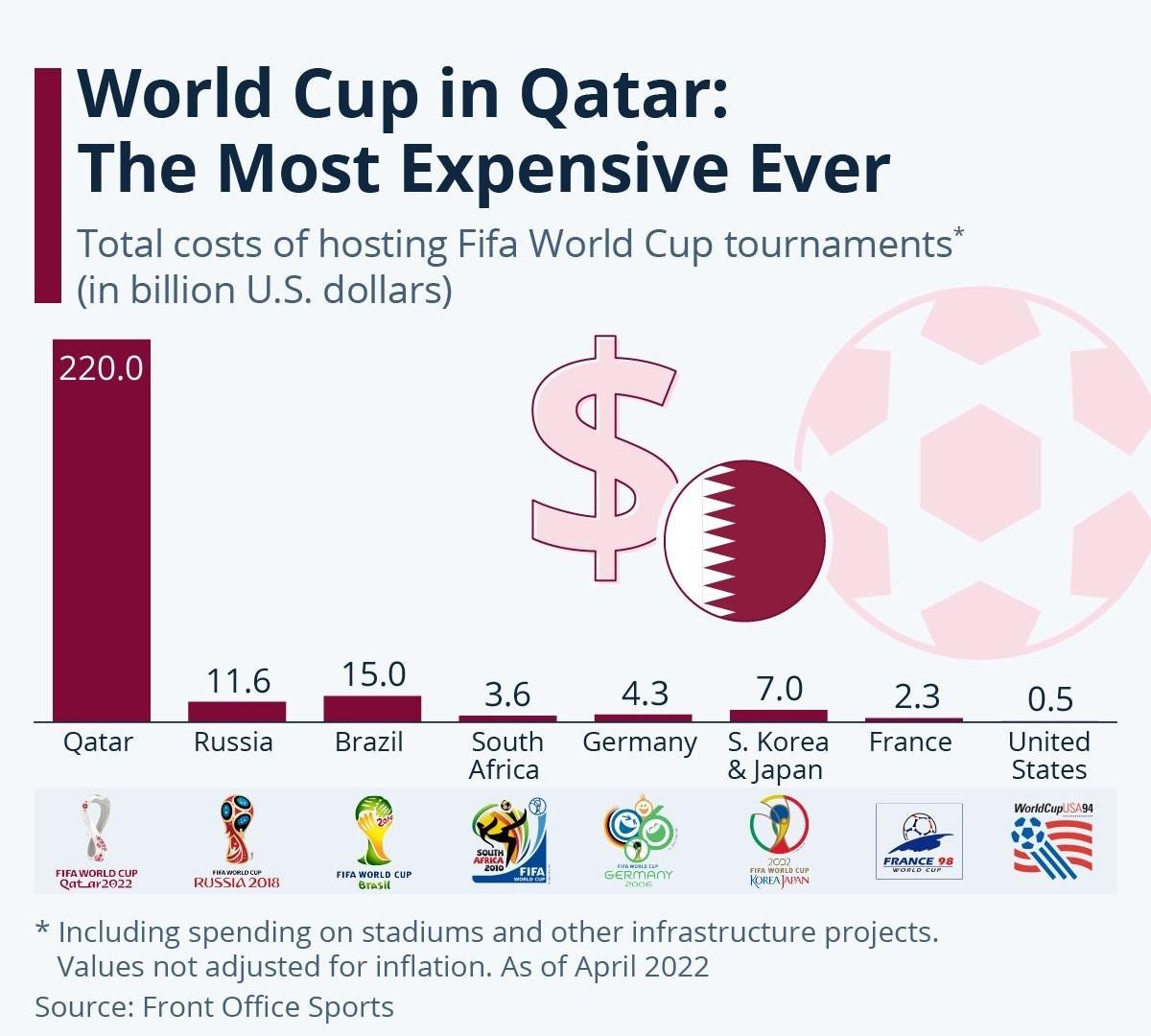
Qatar spent an estimated $220 billion on World Cup infrastructure, much of it built by migrant workers under the kafala sponsorship system. The system tied workers’ legal status to one employer and restricted their ability to change jobs or leave the country without permission. It also created conditions that enabled wage theft, unsafe work and limited legal recourse. Amnesty International documented forced labor, unpaid wages and excessive working hours among migrant workers involved in the country’s World Cup preparations.
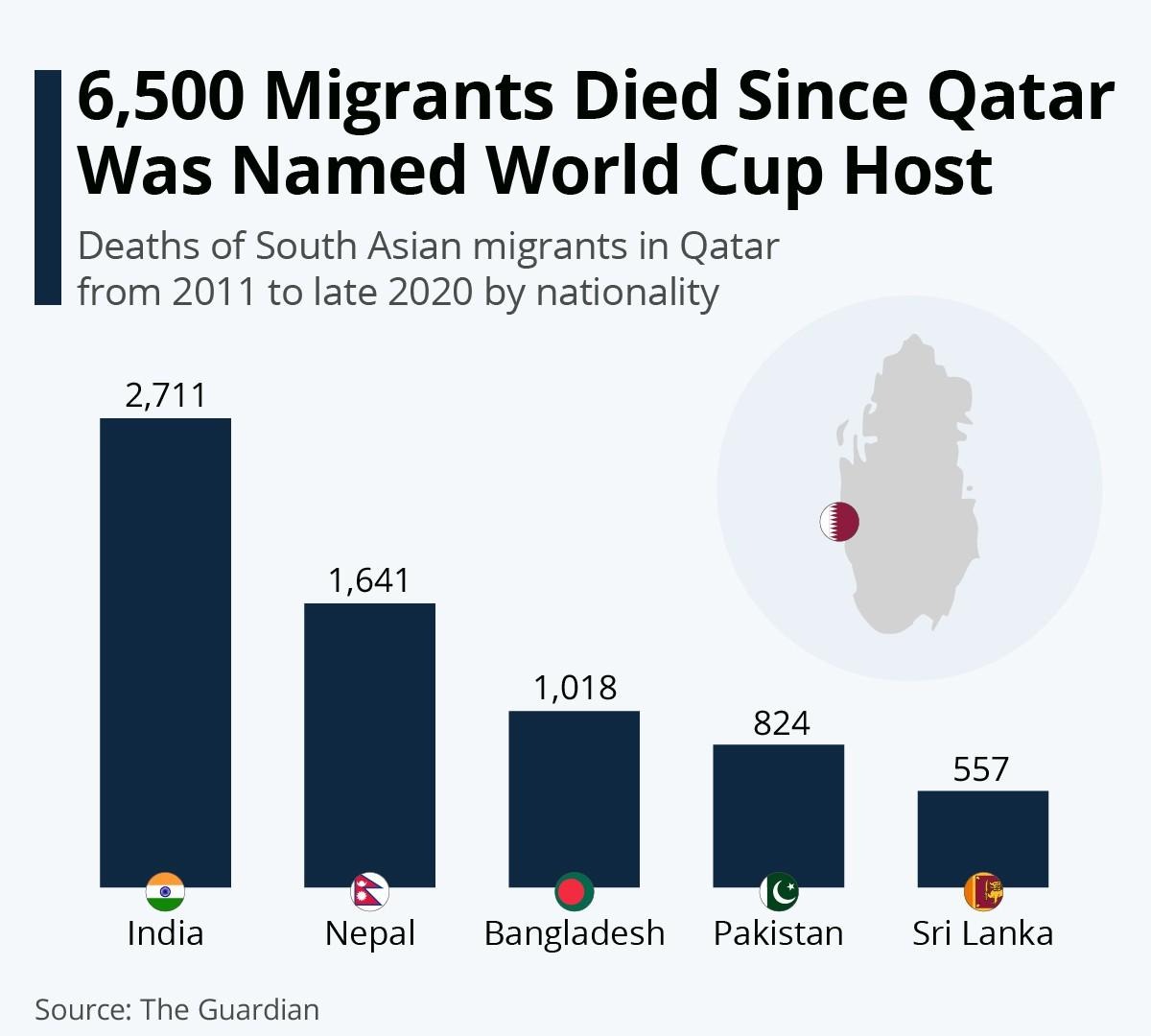
The human cost remains difficult to establish. A 2021 Guardian investigation found that more than 6,500 migrants from five South Asian countries died in Qatar between 2011 and 2020. However, that figure covered all causes of death nationwide rather than deaths directly linked to World Cup construction. Qatar’s Supreme Committee reported much lower figures. In 2022, secretary-general Hassan al-Thawadi acknowledged a World Cup-linked estimate of 400 to 500 deaths.
Qatar and FIFA highlighted reforms, including a minimum wage and changes to the kafala system. Qatar also introduced measures that allowed most migrant workers to change jobs and leave the country without their employer’s permission. However, Amnesty International found that implementation remained weak. Its 2021 Reality Check report documented continued wage withholding, barriers to changing jobs and other abusive practices.
Qatar’s hosting cycle established a recurring pattern: a controversial bid, a labor system vulnerable to abuse, claims of reform and independent monitors exposing gaps between policy and reality. That gap matters more than any single abuse. It continued to shape the debate over the tournament’s legacy even after the final whistle.
The 2026 World Cup, the first tournament jointly hosted by three countries, exposed a different problem from sportswashing. Mexico and Canada’s portions passed without comparable controversy. The concerns here focus on the United States, where the host government directly shaped how some participants entered and took part in the tournament. A World Cup gives a host an ideal platform to project soft power. It offers a captive global audience for weeks, alongside a powerful story built around infrastructure and organization. Yet that platform can magnify a government’s conduct as quickly as its achievements. The US portion of the tournament showed how quickly that dynamic can change.
Iran’s participation offered the clearest example. Amid tensions between Washington and Tehran, the US denied visas to several Iranian staff and officials, while the players received visas to compete. The team stayed in Tijuana between matches and entered the United States only shortly before games. The arrangement covered matches in Los Angeles and Seattle. Iranian players and officials also faced lengthy travel and security checks. Iran’s federation criticized the restrictions, while US officials cited security concerns and links to Iran’s Islamic Revolutionary Guard Corps.
The concerns extended beyond one delegation. More than 120 organizations formed the Dignity 2026 coalition, led by the AFL-CIO and ACLU. They urged FIFA to keep immigration enforcement away from host cities and warned that ICE activity near stadiums could put fans and workers at risk. Human Rights Watch also called for a “World Cup ICE truce.” FIFA reportedly urged a moratorium on enforcement raids during the tournament, but authorities announced no formal changes.
Political interference also reached the competition itself. FIFA suspended a one-match ban on USMNT forward Folarin Balogun after Trump personally asked Infantino to review it. FIFA ultimately allowed Balogun to play after suspending the sanction for one year on probation. UEFA called the decision “incomprehensible and unjustifiable,” arguing that it raised concerns about the integrity of the competition.
The episode followed a broader pattern. FIFA had hosted Trump at the tournament draw and awarded him its inaugural Peace Prize. That close relationship became more significant when the president intervened in a disciplinary matter involving the host nation’s team. The issue was not simply whether FIFA’s decision followed its rules. It was whether a sitting president’s intervention should influence a decision involving his own country’s World Cup campaign.
This case raises a different concern from Qatar or Saudi Arabia. The events unfolded in a democracy that did not need a World Cup to launder its reputation. Qatar and Saudi Arabia operate under political systems designed for this kind of image management, although that does not excuse their conduct. The United States showed that a government does not need an authoritarian system to influence FIFA. A sitting president called FIFA’s president and requested a review of a disciplinary decision. A rival nation’s players faced exceptional entry restrictions. Neither action required a repressive political system. They required a government willing to push and a governing body willing to respond.
The uncomfortable finding is that FIFA’s independence may depend less on its rules than on how firmly governments challenge them. The United States, despite its institutional safeguards, showed that political pressure can still reach the heart of the world’s most prominent sporting competition.
By its next hosting decision, FIFA had already faced a decade of criticism over Qatar. It had also witnessed direct government interference during the 2026 tournament. Saudi Arabia’s bid shows what happens when those consequences fail to change FIFA’s incentives. The same trade-off returns, but with less resistance.
Qatar’s bid drew controversy over how it won. Saudi Arabia’s bid drew controversy because it faced no real competition. FIFA’s bidding process left Saudi Arabia as the sole eligible candidate, and FIFA confirmed it as host in December 2024. Its evaluation gave the bid a 4.2 out of 5 technical score, the highest ever for a World Cup bid, while rating its human rights risk as “medium.” FIFA argued that hosting the tournament could help drive reforms.
Human rights groups strongly disputed that assessment. Eleven organizations, including Amnesty International and Human Rights Watch, criticized the human rights assessment produced by AS&H Clifford Chance. They argued that the report excluded major areas of concern, including freedom of expression, discrimination, trade union rights and abuses against migrant workers. They also noted that the assessment did not meaningfully consult independent human rights groups, trade unions or people affected by potential abuses.
Amnesty argued that FIFA should have halted the bidding process. It warned that Saudi Arabia’s planned construction could expose migrant workers to serious exploitation. The concern extends beyond stadiums to the country’s wider infrastructure programme, including NEOM and other Vision 2030 projects. Human Rights Watch has documented wage theft, recruitment fees, restrictions on changing jobs and inadequate protection from extreme heat among migrant workers on Saudi giga-projects.
The bid also fits into Saudi Arabia’s wider sports strategy. Vision 2030, driven by the Public Investment Fund, has supported investment in Formula 1, LIV Golf, boxing and the WTA Finals. Together, these investments form a coordinated sports portfolio designed to reshape the country’s global image. At the same time, criticism over labor rights and civil liberties remains largely unresolved.
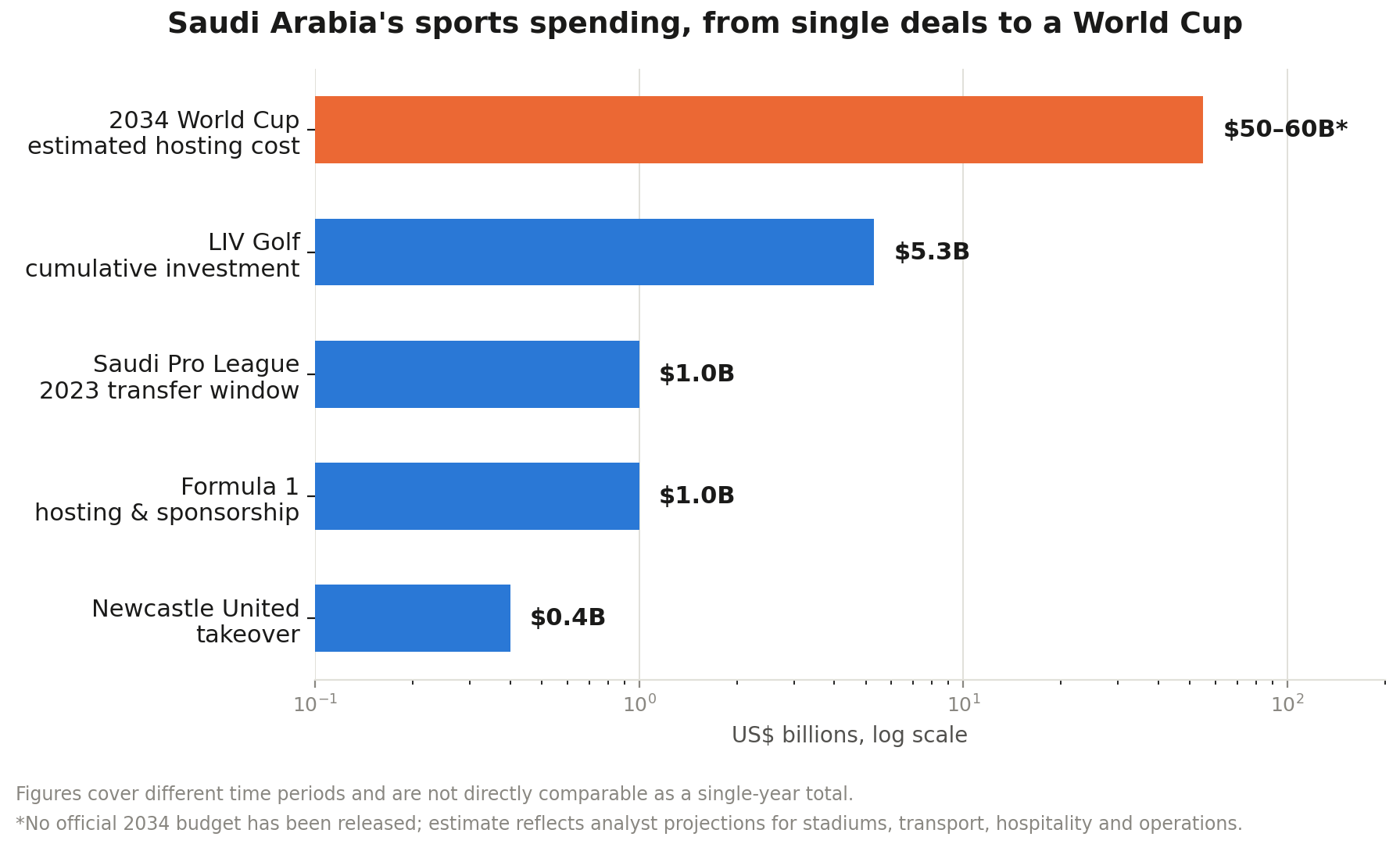
Saudi Arabia therefore presents a different version of the same problem seen in Qatar. The question is no longer whether FIFA can overlook serious risks when awarding a tournament. It is whether an uncontested bid, strong technical score and promises of reform have made those risks easier for FIFA to accept.
Every hosting decision comes with a visible ledger: tourism receipts, new stadiums, transit links, broadcasting rights, sponsorship deals and weeks of global exposure. FIFA and host governments actively promote these benefits. What the ledger leaves out are the costs that rarely appear in bid books because the people approving the bid do not bear them. Qatar’s migrant workers absorbed the human cost through withheld wages and unsafe conditions. Saudi Arabia’s evaluation process absorbed a credibility cost when a “medium risk” rating did not affect the outcome. The United States absorbed an institutional cost by showing that even a democracy can influence a global sporting body’s decisions. These costs do not appear in FIFA’s balance sheet or a host government’s tourism projections. Workers, monitors and institutions bear them instead.
Qatar, Saudi Arabia and the 2026 tournament involve different mechanisms: a compromised bid, an uncontested bid and government pressure on FIFA’s authority. Yet weak governance and poor incentives do not tell the whole story. FIFA does not merely fail to stop this behavior; it can also become part of the process. Awarding Trump its inaugural Peace Prize was not simply a ceremonial act. FIFA used its own platform to amplify a head of state’s preferred narrative. In that sense, it performed a function similar to the one host governments seek through sportswashing.
The problem extends beyond football. Rising private capital and commercialization have pushed sport toward platforms that can project power and shape public image. FIFA’s Peace Prize and Saudi Arabia’s multi-sport portfolio reflect the same shift. Sport’s global reach now serves as a messaging tool as well as a source of commercial revenue.
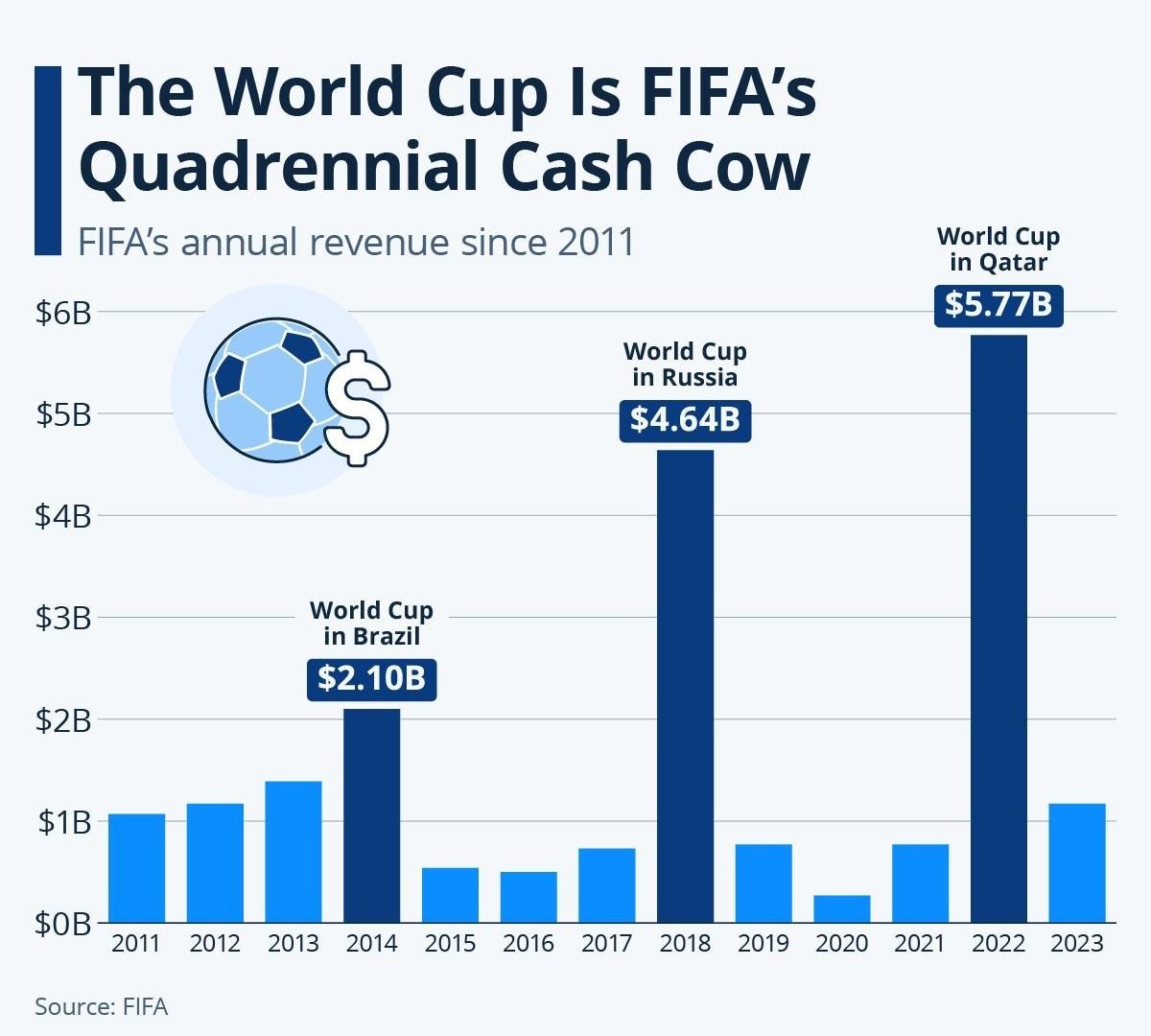
The financial mechanics reinforce this dynamic. FIFA relies heavily on broadcasting, marketing, licensing, hospitality and ticketing rights. Its 2026 budget projects $8.9 billion in revenue, with broadcasting rights alone accounting for $3.9 billion. This commercial model gives FIFA and host governments strong reasons to protect the value of the tournament. Sponsors face a similar calculation. The reputational risk of a controversial host can appear smaller than the commercial upside of reaching a global audience.
Money alone, however, does not explain FIFA’s relationship with Trump. The organization also made active choices to deepen it.
The clearest evidence of where this is headed came weeks after the tournament ended. In July 2026, Infantino unveiled a plan to sell roughly a 20 percent stake in a new $20 billion entity controlling the World Cup and other FIFA competitions, seeking around $4.2 billion for that stake, with investors close to the Trump administration reportedly involved, including Joshua Kushner’s fund. The proposal collapsed within days under near-universal opposition, UEFA calling it a “shabby, back room, opaque deal” that put the sport’s “soul” up for sale. As calls grew for Infantino to resign, Trump publicly backed him, warning that replacing him would be a “terrible mistake.”
Laid out in sequence, that pattern is hard to read as coincidence. The same body that gave Trump a Peace Prize, then suspended a red card after his call, was weeks later publicly propped up by him to survive a governance crisis of its own making. It has the shape of two parties scratching each other’s backs: FIFA hands out legitimacy and favorable treatment, and gets political cover in return.
Whether that amounts to an explicit exchange of favors can’t be established from outside, and FIFA has never described it that way. But the sequence raises a legitimate governance question regardless of intent: has FIFA’s leadership become so entangled with one head of state that its independence is now conditional on that relationship staying favorable? An institution built to run a neutral global tournament shouldn’t need a sitting president’s public backing to survive an internal governance dispute, however that backing came about.
If that concern holds, the world’s most beloved game is no longer just occasionally caught up in politics. Hosting rights, disciplinary rulings, awards, and now the tournament’s own ownership structure have all become entangled with the same political relationships, closely enough that it’s increasingly hard to say where FIFA’s institutional interests end and a head of state’s political interests begin. What connects Argentina 1978 to Qatar 2022, the 2026 tournament, and Saudi Arabia 2034 isn’t any single actor behaving badly. It’s a hosting model that keeps creating opportunities for this kind of entanglement, with FIFA an increasingly willing participant rather than a reluctant one.
The article was authored by Akeef Khan, Trainee Consultant at LightCastle Partners. For further clarifications, please contact: [email protected]
1. Britannica — 2015 FIFA Corruption Scandal
2. ESPN — FIFA Releases Full Garcia Report Into Corruption in 2018, ’22 World Cup Bids
3. The Guardian — Revealed: 6,500 Migrant Workers Have Died in Qatar Since World Cup Awarded
4. Statista — 6,500 Migrants Died Since Qatar Was Named World Cup Host
5. Statista — World Cup in Qatar: The Most Expensive Ever
6. Human Rights Watch — Saudi Arabia: Flawed Assessment of World Cup Bid
7. Sport & Rights Alliance — Flawed Human Rights Assessment of Saudi Arabia’s Bid for 2034 FIFA World Cup
8. Al Jazeera — Why FIFA’s Balogun Red Card Suspension After Trump Call Is So Controversial
9. Wikipedia — 2026 Trump–FIFA Red Card Controversy
10. Al Jazeera — Iran’s World Cup Squad Lands in Mexico Amid US Visa Row
11. AFL-CIO — AFL-CIO Demands FIFA Protect Workers, Keep ICE Out of Host Cities
12. ACLU — World Cup 2026: FIFA Needs to Act on Human Rights
13. FIFA — President Trump Awarded “FIFA Peace Prize – Football Unites the World”
14. Statista — The World Cup Is FIFA’s Quadrennial Cash Cow
15. HISTORY — When Argentina Used World Cup Soccer to Whitewash Its Dirty War
16. Al Jazeera — FIFA’s Infantino Sought Trump Backing After Failed World Cup Stakes Sell-Off Plan
17. CNN — FIFA Plan for Privatizing World Cup Meets Fury From UEFA
18. CNN — Donald Trump Jumps In to Support Gianni Infantino as FIFA President Clings On to Power
Our experts can help you solve your unique challenges
Stay up-to-date with our Thought Leadership and Insights