


GET IN TOUCH
- Please wait...


Across Bangladesh, approximately six million electric three-wheelers have radically transformed urban and peri-urban transportation. Domestically known as “auto rickshaws” or e-rickshaws, these transports are a part of a broader regional market poised to grow from $4.32 billion in 2023 to over $10 billion by 2030 [1]. They provide an essential service in a region where less than 40% of the urban population has convenient access to formal public transport [2].
However, this mobility revolution presents a profound developmental paradox. While e-rickshaws have transformed livelihoods for the marginalized, the toxic pollution from their batteries has created a silent public health emergency, especially for the children’s cognitive health. E-rickshaws and lead pollution in Bangladesh now faces a critical choice between the well-being of its next generation and affordable transportation.
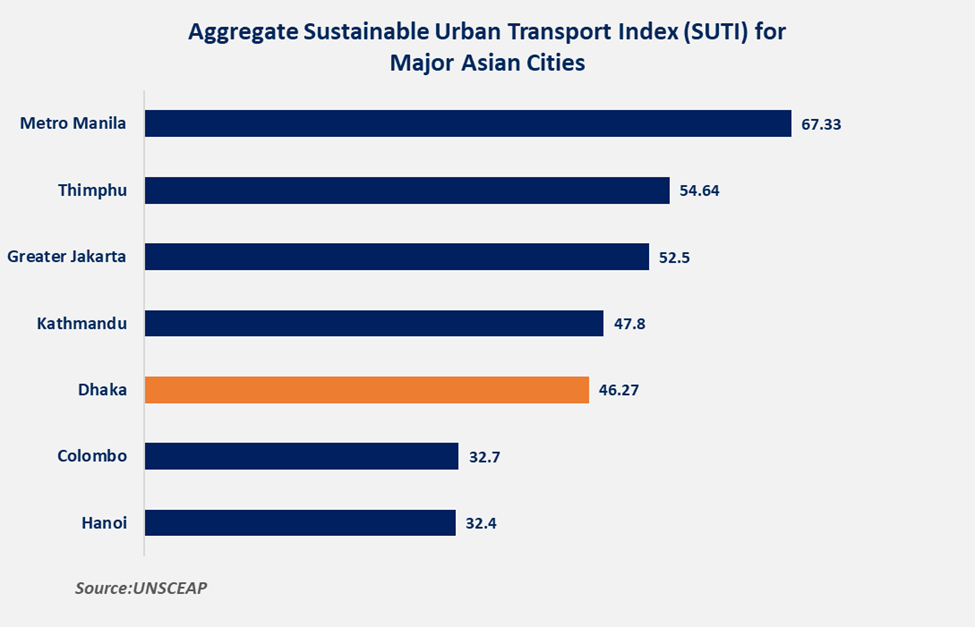
E-rickshaws have succeeded where formal infrastructure has failed by filling critical gaps in urban and rural connectivity. They typically serve distances ranging from one to seven kilometers and cost passengers only one-third to half the price of formal ride-sharing platforms. This success, however, emerges from systemic failure. Dhaka’s Sustainable Urban Transport Index (SUTI) score of 46.27 places it among the lowest-performing major Asian cities, trailing Manila, Jakarta, and even Kathmandu [3].
This comparison focuses on cities facing similar population density and urbanization pressures. Hence, e-rickshaws have become the primary transport solution not by design but by necessity. Additionally, because the sector requires no formal education and lacks formal registration mechanisms, it has become a vital safety net for low-income and climate-displaced communities [4]. This ease of entry allows individuals to own or lease vehicles to start their own small enterprises.
From an environmental perspective, these vehicles offer seemingly impressive “green” credentials. They produce zero operational emissions and represent a 90 to 95% reduction in lifetime emissions compared to diesel-powered alternatives [5]. They also significantly reduce noise pollution in crowded urban corridors. In recognition of this grassroots innovation, government officials have even termed the vehicle the “Tesla of Bangla”. Unfortunately, this label masks a severe toxic reality in the battery supply chain.
E-rickshaw’s environmental promise is undermined by its reliance on lead-acid batteries (LABs). Each vehicle requires four to six of these heavy batteries to operate. While lithium-ion (Li-ion) alternatives offer better performance and a longer lifespan, they cost approximately $150 per kWh compared to just $60 for LABs [6]. High import tariffs of up to 89% further incentivize the use of cheap, domestically recycled lead batteries.
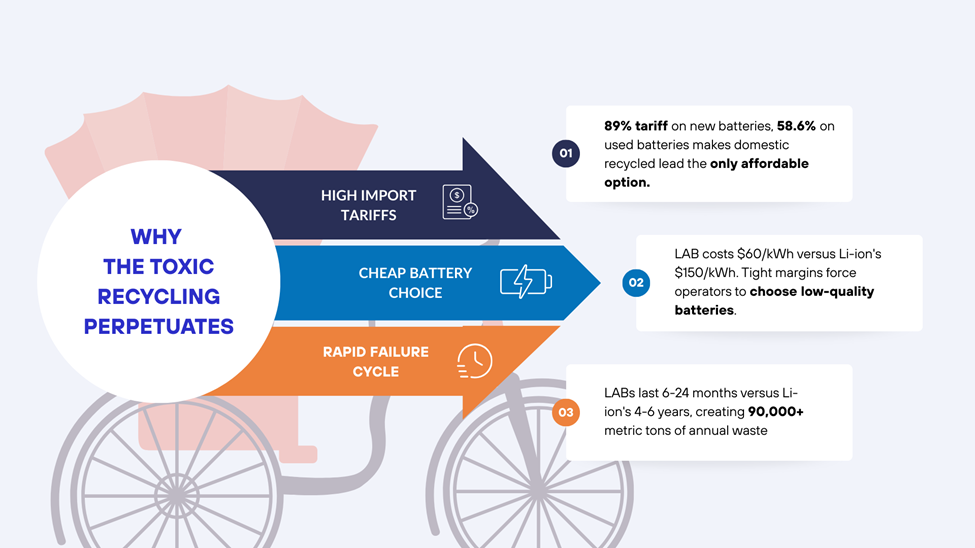
The technical limitations of LABs create a constant stream of hazardous waste. These batteries typically last only six months to two years before they must be replaced. E-rickshaws are responsible for generating 77% of all used lead-acid battery (ULAB) waste in the country. Annually, this creates between 90,000 and 118,000 metric tons of toxic refuse [7]. Each individual battery contains between 14 and 21 kilograms of lead. This high volume of waste fuels a dangerous and largely unregulated recycling industry.
The recycling of these batteries is a tale of two sectors. The formal sector, led by companies like Rahimafrooz, handles only 20% of the market using licensed, safe facilities. The remaining 80% is managed by an informal network of over 1,100 smelting sites known as “bhattis” [8]. These informal shops dominate because they offer cheaper services and higher buy-back prices for old batteries. They employ over 100,000 people who often work without any personal protective equipment.

The process in these bhattis is primitive and efficient at spreading poison. Workers manually open the batteries, releasing sulfuric acid and lead dust into the soil. Open-air smelting near residential areas and riverbanks, result in 15-20% of the lead vapor and particulates settling into the environment. Lead dust is then carried into homes on workers’ clothing or vehicle tires, exposing entire communities. The public health consequences are catastrophic.
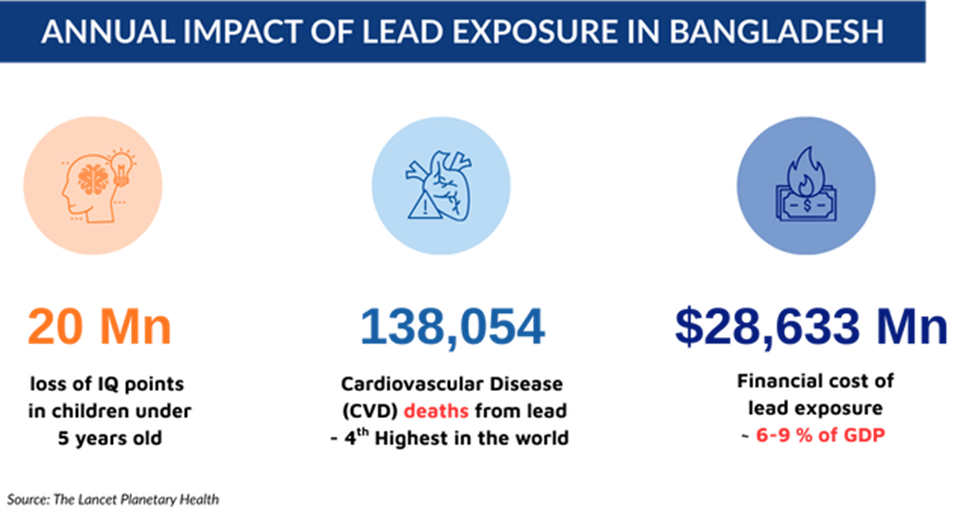
Lead is a permanent neurotoxin that causes IQ loss, hearing impairment, and developmental delays in children. Currently, 35 million children in Bangladesh have blood lead levels exceeding 5 micrograms per deciliter (μg/dL) and over 9.7 million surpassing 10 μg/dL, whereas the exposure should be near zero [9].
Moreover, the country has the fourth highest death rate globally from lead exposure. Economically, this translates to an annual GDP loss of $28.63 billion due to the reduction in human cognitive potential [10].
The crisis exists due to a vacuum of coherent policy. The Road Transport Act 2018 does not formally define or license e-rickshaws, leaving them in legal limbo. Similarly, the 2021 Hazardous Waste Rules focus on household batteries but ignore the massive volume of batteries used for transportation. Even the nation’s Energy Master Plan, which targets 50% electric vehicles by 2050, currently excludes e-rickshaws from its projections.
This policy incoherence means there is no accountability for contamination sites. Government attempts to ban these vehicles have consistently failed because they meet an essential demand that formal transit cannot fulfill. Consequently, 70% of the battery market is supplied by unregistered factories operating without environmental oversight.
This informality costs the government an estimated $91 million annually in lost tax revenue from the unregistered vehicle and battery sectors [11]. The Conservation Act exist as a regulatory law, but rarely used against those violating safety standards.
Transitioning away from this toxic cycle requires a harmonized regulatory approach. The government has recently drafted the ‘Electric Three-Wheeler Management Policy 2025’ [12] to register these vehicles and restrict them to designated routes. This policy mandates all rickshaws be converted to safer models within the year. However, technical safety is only one part of the equation.
To truly address the lead contamination crisis while preserving livelihoods, experts recommend five key interventions. These recommendations align with proven regional successes and expert consensus on formalizing the ULAB sector:
These policy interventions offer a pathway forward, but implementation remains the critical challenge. The technology and policy models for safe recycling are in place and proven in other regions. Countries including India, the Philippines, and Thailand have implemented battery tracking systems and formalized recycling protocols that Bangladesh can adapt to its context [13].
What remains missing is the sustained political will to confront entrenched informal economies and provide a clear pathway for the “Tesla of Bangla” to become truly green. The cost of affordable transportation is becoming unbearable when measured in permanent cognitive loss. Bangladesh must act now to bridge the gap between mobility and health, or the legacy of its e-rickshaw revolution will be written in lead.
This article was authored by Safin Sadique, a Business Analyst at LightCastle Partners. For further clarifications, contact here: [email protected].
[1] Electric Three Wheeler Market Size, Share & Industry Analysis
[2] 2030 Agenda for Sustainable Development, United Nations Statistics Division (UNSD)
[3] Tracking Sustainable Mobility In Asia-pacific Cities, UNESCAP
[4] Climate-induced Displacement: Loss and Damage in Bangladesh
[5] Reducing Air Pollution: How Best E-Rickshaws Can Benefit the Environment
[6] A Comparative Study of Electrochemical Battery for Electric Vehicles Applications
[7] Impact of China’s National Sword Policy on waste import:A difference-in-differences approach
[9] The Toxic Truth: Children’s exposure to lead pollution undermines a generation of potential
[11] Factsheet: Rapid e-mobility transition, lead poisoning, and Market & Policy Opportunities
[12] Govt moves to impose stricter rules on battery-run rickshaws
[13] Battery circularity in India: Policy, regulations, and implementation strategies
Our experts can help you solve your unique challenges
Stay up-to-date with our Thought Leadership and Insights