


GET IN TOUCH
- Please wait...

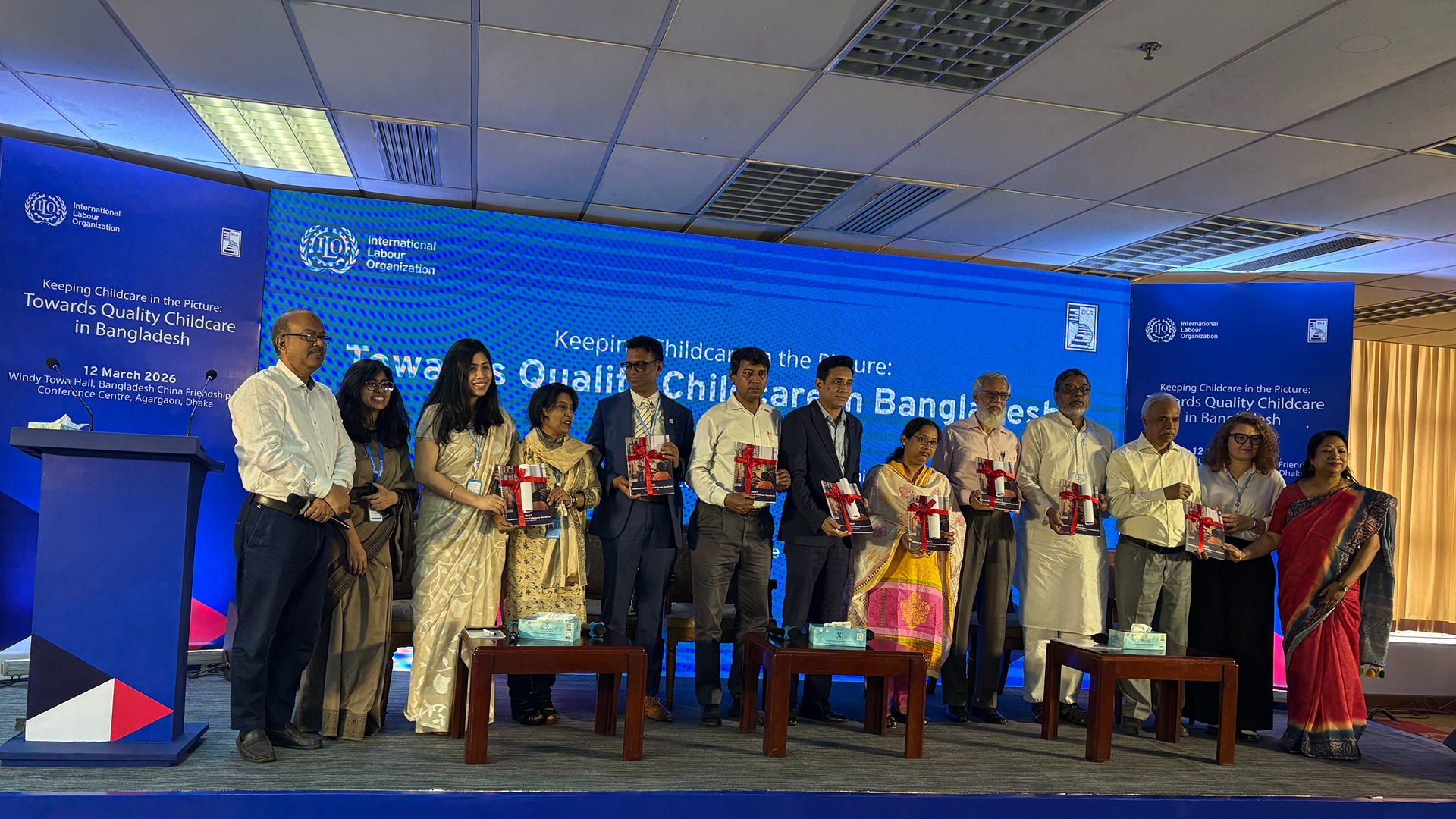
On 12 March 2026, LightCastle Partners, in collaboration with the International Labour Organization (ILO) and the Bangladesh Institute of Labour Studies (BILS), organized a national dissemination event titled ‘Keeping Childcare in the Picture: Towards Quality Childcare in Bangladesh’. The event took place at the Bangladesh-China Friendship Conference Centre in Dhaka.
The session brought together representatives from government bodies, workers’ organizations, employers, research institutions, and development partners. In addition, childcare workers, parents, and childcare center representatives joined the discussion. Together, they explored research findings and policy recommendations to improve childcare services in Bangladesh.
At the opening session, Syed Sultan Uddin Ahmed, Executive Director of BILS and Chairman of the Labour Reform Commission, set the tone for the event. He emphasized that accessible childcare enables women to participate in the workforce. Moreover, he highlighted its role in strengthening broader social and economic systems.
To provide context, Anne Drong, National Project Coordinator at the ILO, explained key challenges in the sector. She noted that the lack of affordable childcare often forces women, especially mothers, to leave the labor market.
She also outlined five childcare models in Bangladesh. These include government, private (for-profit), NGO-supported, home-based, and factory-based centers. However, she stressed that service quality remains a major concern across all models.
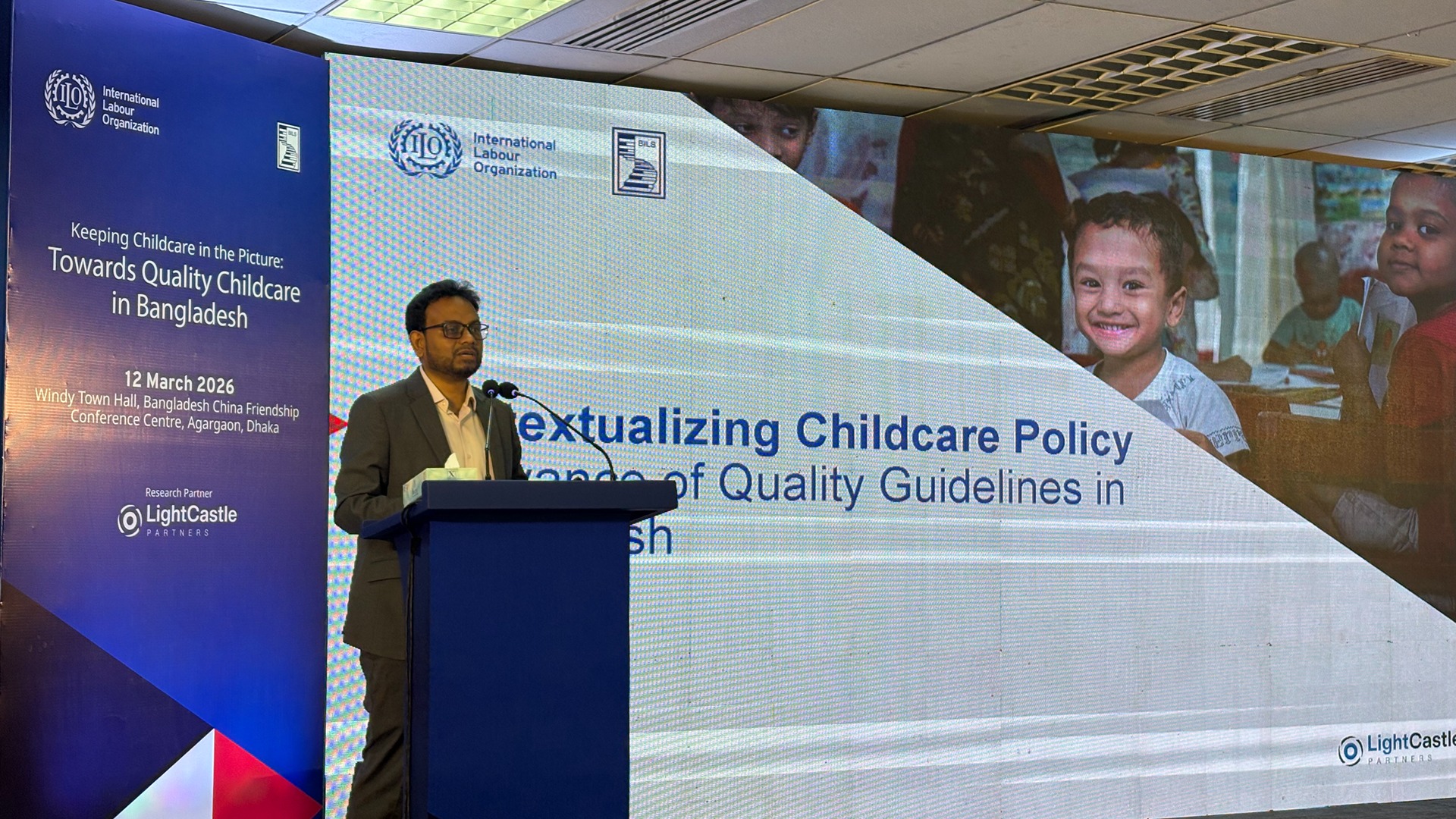
Building on this, Zahedul Amin, Co-founder and Managing Director of LightCastle Partners, presented the research findings. He stated that only 38% of women participate in the workforce. As a result, many leave employment between the ages of 30 and 35.
In addition, he highlighted gaps in policy implementation. Although labor law mandates childcare facilities in organizations with more than 40 female workers, many remain non-functional. Others operate below acceptable standards.
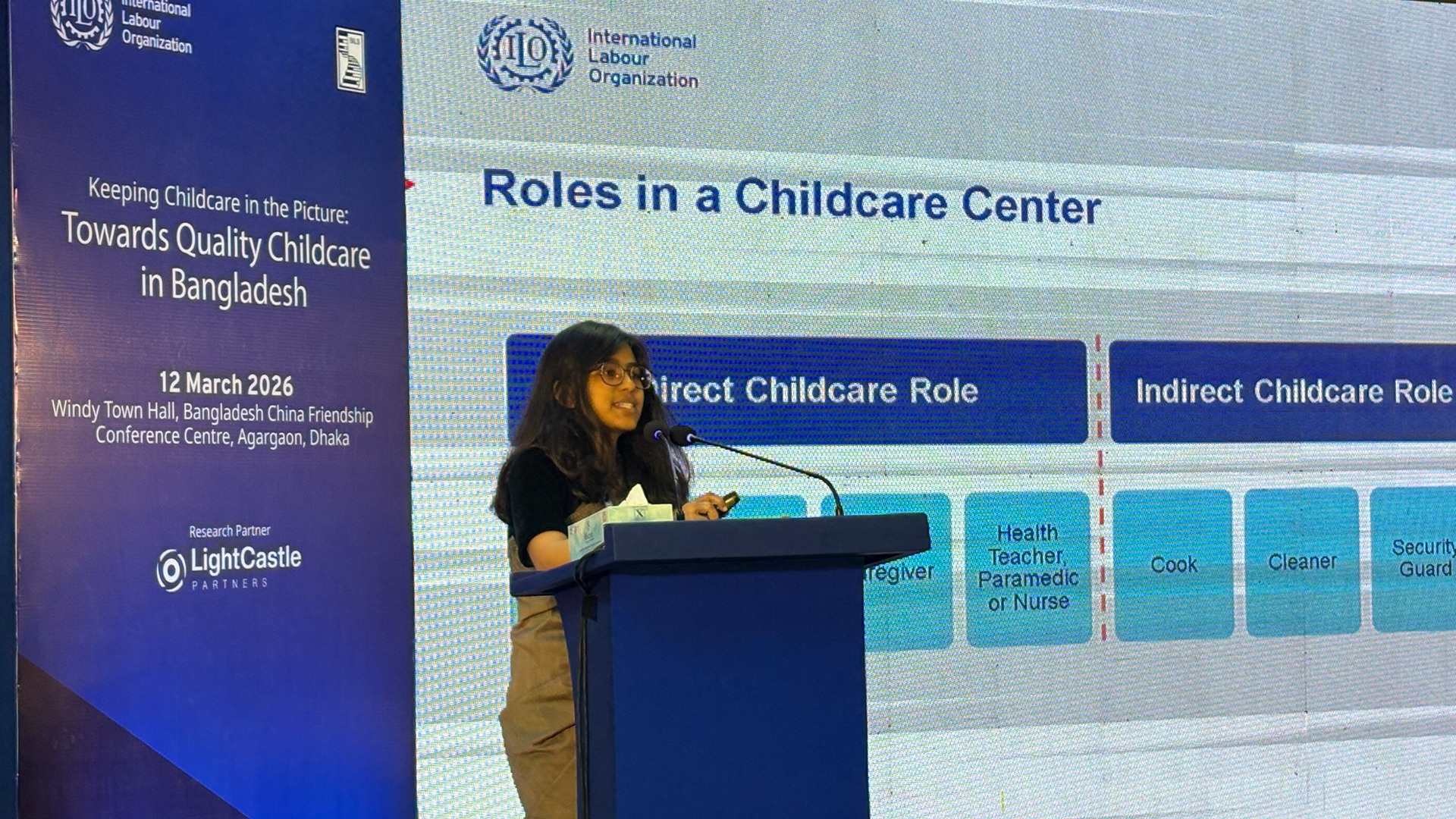
Taking the discussion further, Ainan Tajrian, Senior Business Consultant at LightCastle Partners, presented insights from the childcare sector. She introduced the drafted Guidelines for National Minimum Standards for childcare in Bangladesh.
As part of this effort, she discussed a pilot at the “Kichir Michir” childcare centre in Mirpur. Karmojibi Nari manages the center. The pilot focused on three areas: resource expansion, capacity enhancement, and process standardization.
These interventions improved several core areas. These include education, nutrition, health, safety, physical environment, and operations. For example, the center introduced a structured early childhood curriculum. It also upgraded meal plans and installed CCTV and fire safety systems.
Furthermore, the team conducted a 15-day certified training program for childcare workers.
Following the presentation, a panel featured stakeholders from Kichir Michir. The session included parents and the center supervisor.
Rabita Islam, Deputy Director at Karmojibi Nari, highlighted financial challenges faced by community-based centers. She also shared how partnerships can help address these constraints.
Meanwhile, Sheikh Shahanaz, Supervisor of Kichir Michir, explained her role as a trade union representative. She noted that this role helps build trust with parents. As a result, it improves worker management and accountability.
Turning to policy, Barrister Abu Mehedi Imam, Consultant at BILS, presented key recommendations. He emphasized the need to recognize childcare as a universal labor right.
He also urged policymakers to shift from “child rooms” to comprehensive “childcare services.” In addition, he recommended operationalizing national minimum standards. He further stressed the importance of linking childcare with social protection systems.
Importantly, he highlighted the need for shared financial responsibility. This includes contributions from government, employers, and workers.
Subsequently, a second panel brought together worker groups, employer bodies, and government representatives. The discussion focused on practical challenges and solutions.
Naimul Hasan Jewel (NCCWE) noted that many factory childcare rooms exist only for compliance. Therefore, he recommended cluster-based childcare centers.
Similarly, Ahsan Habib Bulbul (SKOP) emphasized early childhood development. He also called for recognizing caregiving as a formal profession.
From the employers’ side, Sayeedul Islam (Bangladesh Employers’ Federation) stressed three priorities. These are affordability, accessibility, and quality.
On the government side, Humayun Kabir, Additional Secretary at the Ministry of Labour and Employment, acknowledged regulatory gaps. He also expressed openness to incorporating these recommendations into future amendments.
Finally, the event concluded with the formal handover of the draft guidelines and policy recommendations. Government representatives received the documents. An interactive Q&A session followed. Participants raised key implementation challenges. These included limited childcare spaces and the need for financial incentives. Overall, the discussion reinforced a clear message. Bangladesh must invest in accessible, high-quality childcare to support working families and inclusive growth.
Our experts can help you solve your unique challenges