

GET IN TOUCH
- Please wait...

Bangladesh’s crop agriculture sector remains central to national food security, rural livelihoods, agro-industrial growth, and export potential. While the sector has made significant progress in production, it is now facing a more complex set of challenges. Shrinking arable land, climate stress, post-harvest losses, and weak market infrastructure are placing increasing pressure on the sector’s growth model.
Over the years, public spending in agriculture has played an important role in protecting production and supporting farmers. However, the next stage of agricultural progress will require stronger investment beyond production support. Higher output must be complemented by modern production practices, improved logistics, market linkage and climate adaptation.
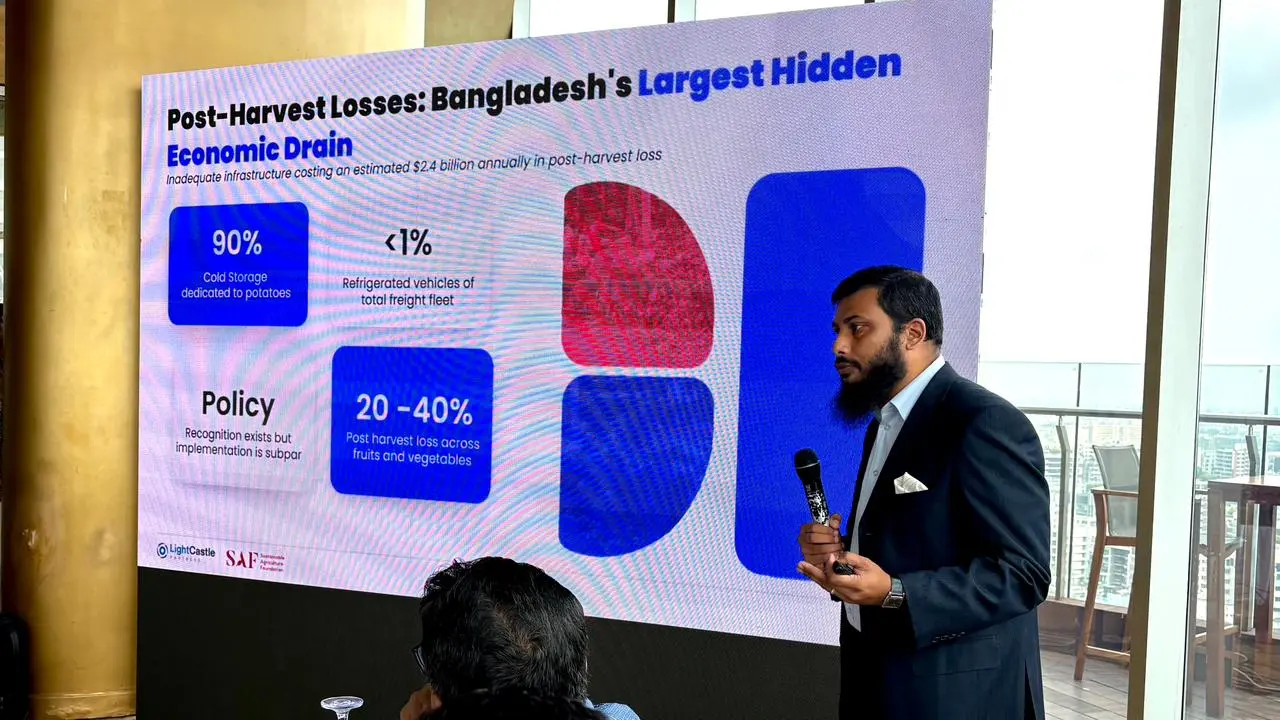
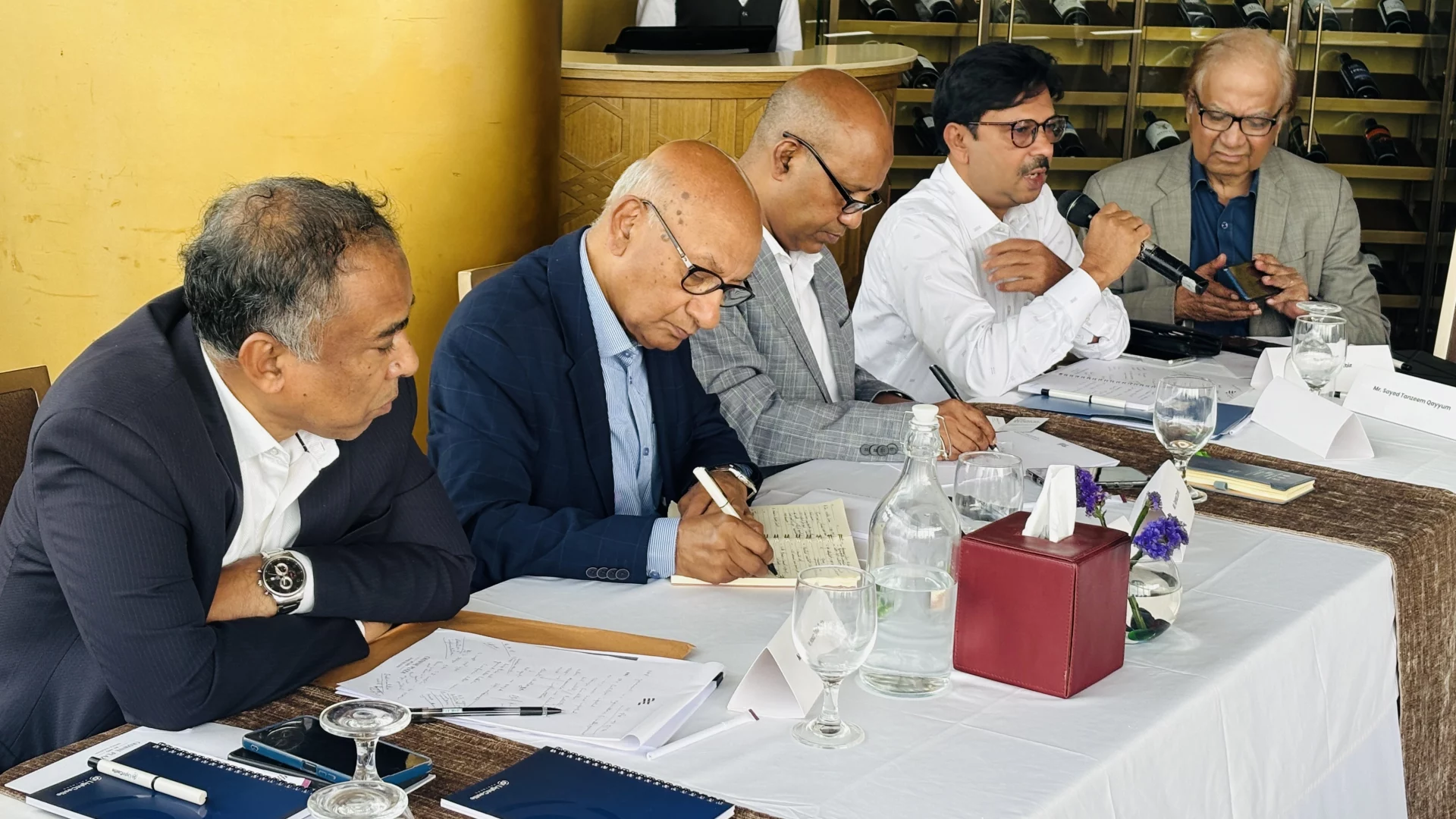
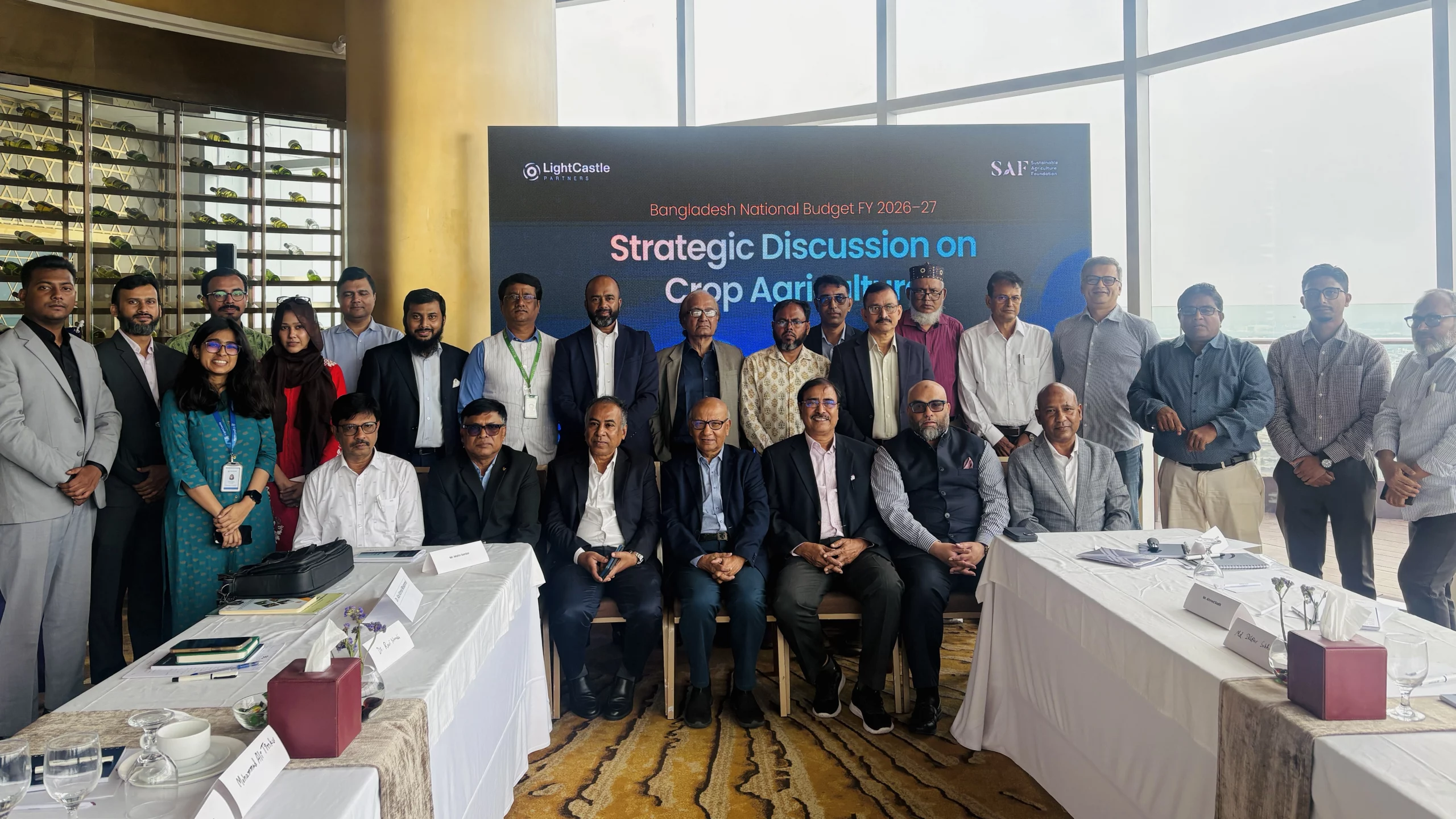
Against this backdrop, LightCastle Partners and Sustainable Agriculture Foundation (Bangladesh) co-hosted a strategic roundtable titled “National Budget FY 2026–27: Strategic Discussion on Crop Agriculture” at Crowne Plaza Dhaka Gulshan. The discussion brought together representatives from the public sector, private sector, development community, research institutions, financial institutions, and the broader agriculture ecosystem.
The roundtable focused on how the FY27 crop agriculture budget can be translated into practical and actionable implementation pathways. Participants discussed the need to improve budget execution, strengthen coordination among agencies, align public investment with private sector capacity, and ensure that support reaches farmers more effectively at the local level.
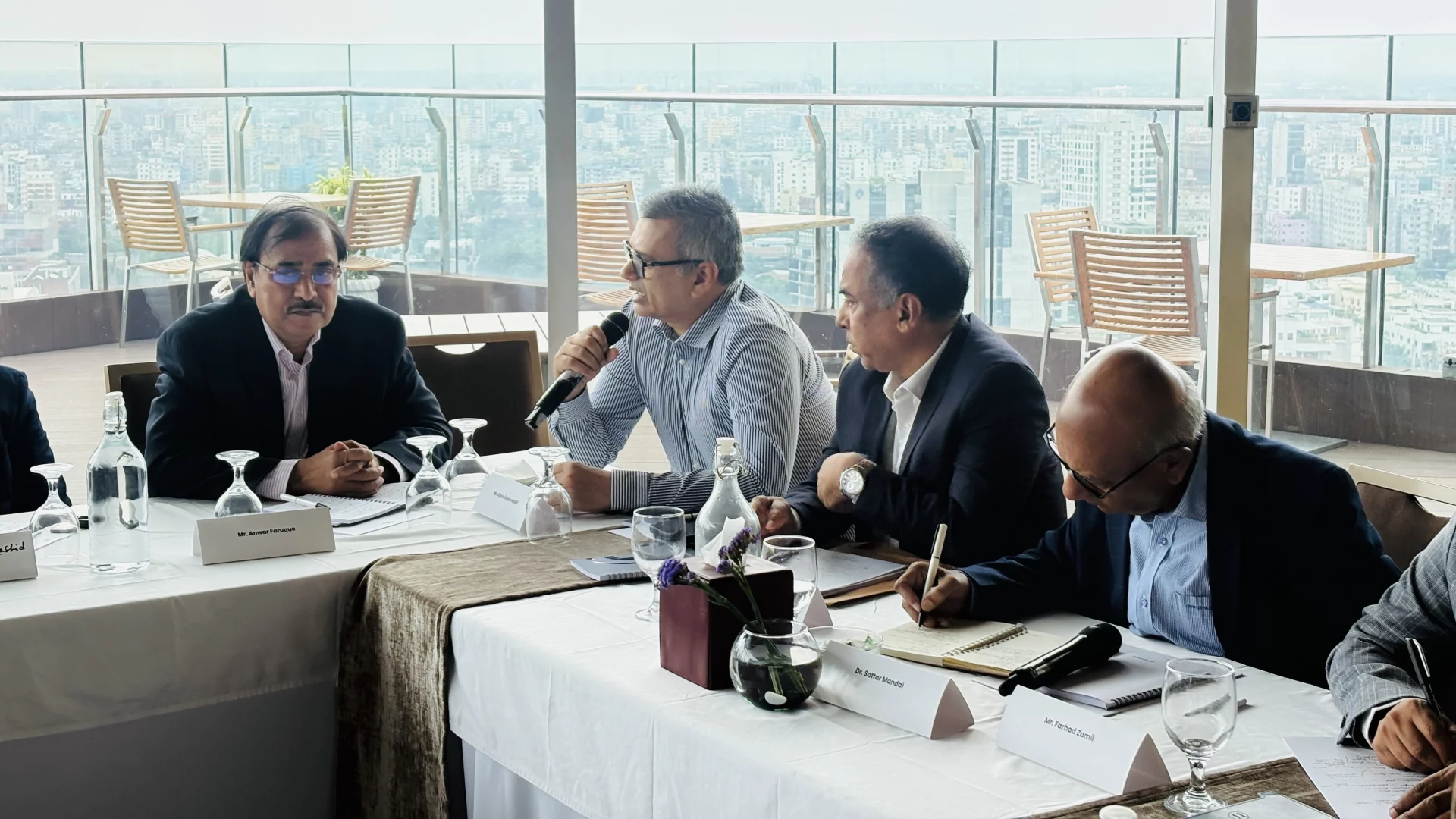
A major point of discussion was the development-oriented signal in the FY27 budget. The development allocation for the Ministry of Agriculture has nearly doubled to Tk 7,945 crore from Tk 4,043 crore in the revised FY26 budget. Participants noted that this shift indicates a stronger focus on infrastructure, delivery systems, and long-term sector capacity, rather than a narrow production push.
The budget’s emphasis on mechanization revival, Farmer Cards, solar-based irrigation, canal excavation, climate-resilient crop varieties, cold storage expansion, specialized mango storage in the Barind region, and upgrading of the Central Packing House quarantine lab was viewed as timely. Reflecting on the importance of translating budget commitments into field-level outcomes, Mr. Anwar Faruque, Board Director, Bangladesh Krishi Bank, said, “The reduction of duties on essential commodities, fertilizer-related tariffs, and the introduction of the Krishak Card are positive signals. But the real test will be whether these measures translate into direct benefits for farmers at the field level.”
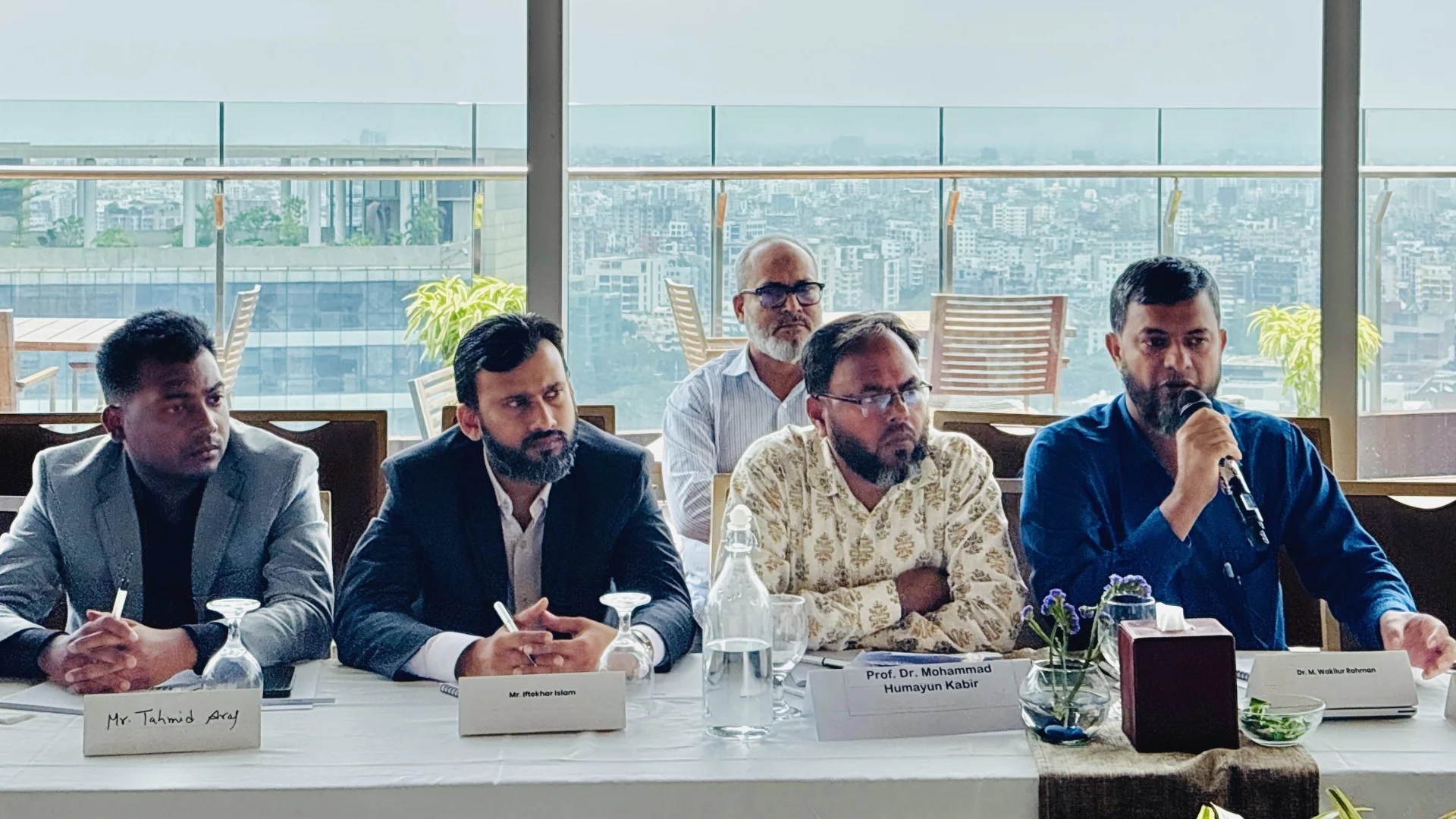
Participants also emphasized the need to strengthen private sector participation in protected cultivation, post-harvest management and agro-processing. In this regard, Mr. Ataus Sopan Malik, Managing Director, AR Malik Seeds, said, “Protected cultivation, including polynet houses, drip irrigation, and liquid fertilizer application, can significantly improve productivity while reducing resource use. With the right long-term incentives and benefits from the government, larger private players will be encouraged to invest in this space.”
The roundtable was jointly moderated by Prof. Dr. M. A. Sattar Mondol, First Emeritus Professor at Bangladesh Agricultural University, and Mr. Md. Farhad Zamil, Executive Director of SAF Bangladesh. Among the attendees were distinguished representatives including Mr. Hasan Zafir Tuhin, Chairman of Barind Multipurpose Development Authority; Mr. Anwar Faruque, Board Director of Bangladesh Krishi Bank; Dr. M. Wakilur Rahman, Professor at Bangladesh Agricultural University; Dr. Wais Kabir, Former Executive Chairman of Bangladesh Agricultural Research Council; Sayed Tanzeem Qayyum, Program Manager at International Finance Corporation; Mr. Iftekhar Islam, Finance Controller at Green Delta Insurance Ltd.; A. K. Osman Haruni, Senior Policy Advisor for Food Security and Agriculture at the Embassy of the Kingdom of the Netherlands in Bangladesh; Dr. Sayed Md. Rafiqul Amin, former Director and Managing Director of Hortex Foundation; and Mr. Matin Sardar, Advisor at Eco-Social Development Organization, among others.
Our experts can help you solve your unique challenges