


GET IN TOUCH
- Please wait...


Bangladesh’s Ready-Made Garment (RMG) sector, the $39.35 billion export engine contributing over 82% of national earnings, is currently navigating its most complex external environment in decades. With the LDC graduation now widely expected to be deferred to November 2029 and global demand softening, as evidenced by a 3.41% decline in export earnings this year, the FY2026-27 budget faces a critical crossroads. The FY2026–27 budget, totaling BDT 9.38 lakh crore (13.7% of GDP), sends a mixed but broadly cautious signal for the sector: stability where it counts, silence where it stings.
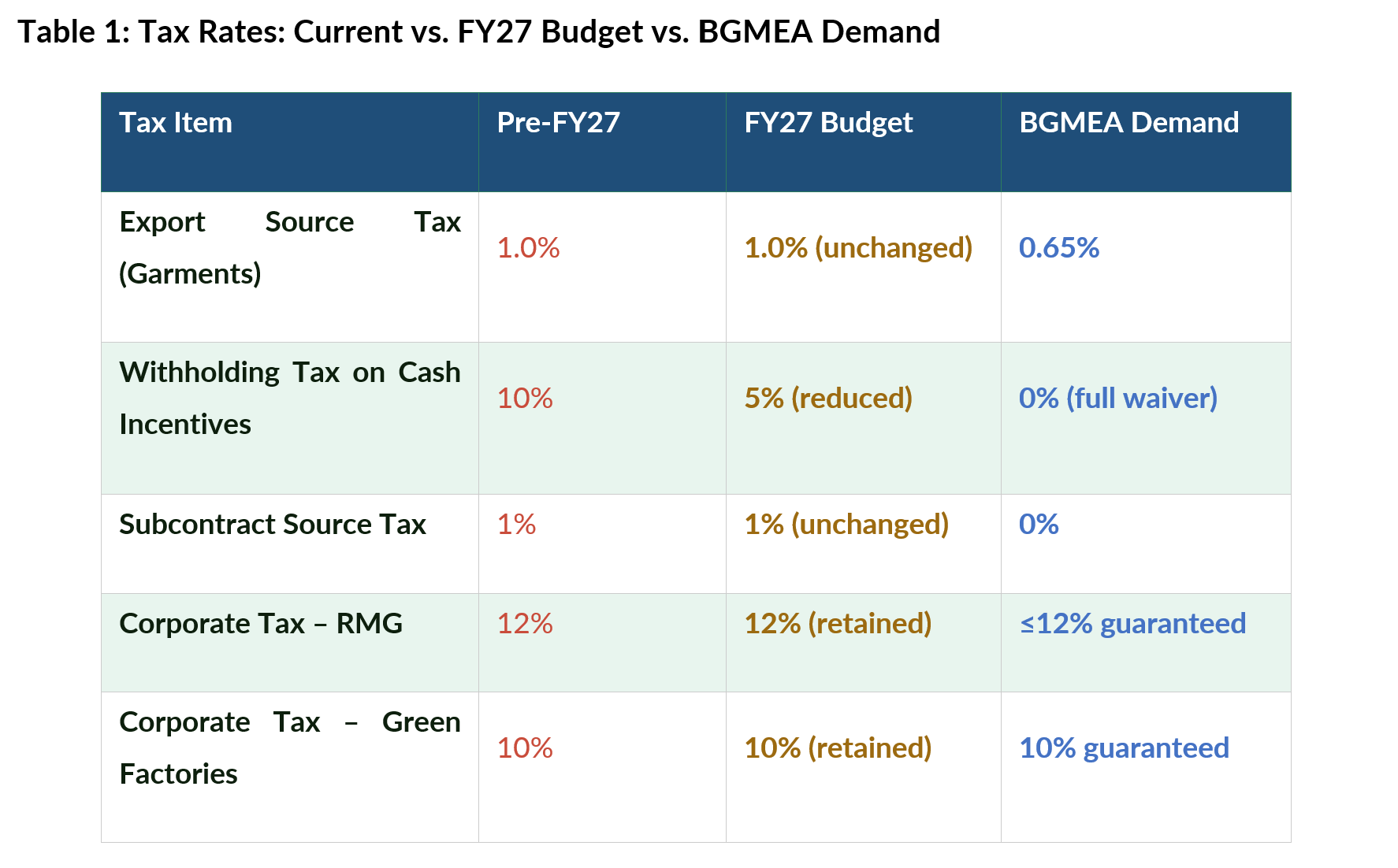
The budget places a strong emphasis on policy predictability and cost stability for the RMG sector. Retaining the corporate tax rate at 12%, alongside the preferential 10% rate for green-certified factories, provides an important confidence signal to both local investors and international buyers, particularly at a time when non-performing loans in the banking sector stood at 30.60 percent till the end of December 2025.
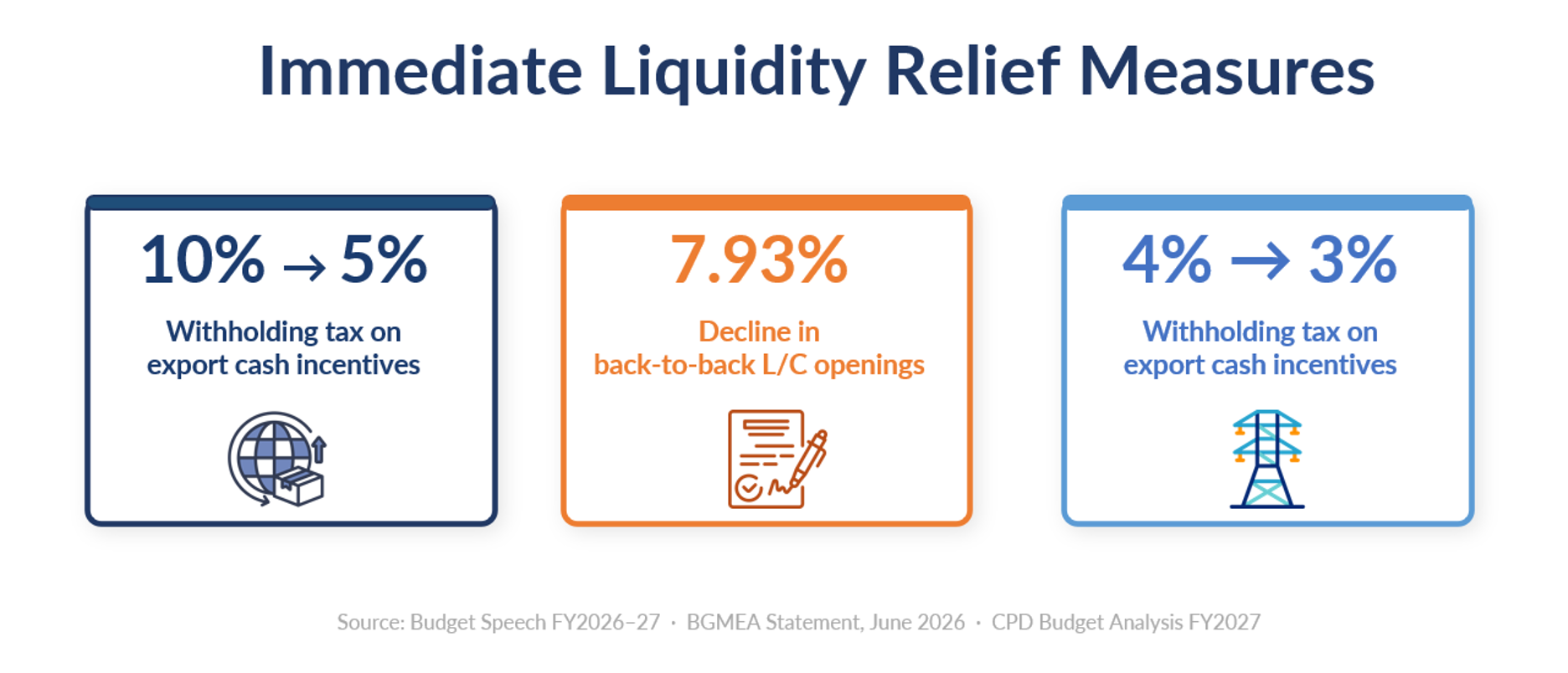
To ease immediate liquidity pressures, the budget has reduced the withholding tax on export cash incentives from 10% to 5%. This measure provides direct cash-flow support to manufacturers amid weakening apparel demand, reflected in a 7.93% decline in back-to-back letter-of-credit openings. The proposed reduction in withholding tax on electricity payments to power generation companies, from 4% to 3%, is also expected to help lower factory operating costs.
Energy price stability provides some cost predictability, but an inadequate electricity and natural gas supply remains a major constraint for the RMG sector. Bangladesh requires around 3,825 million cubic feet per day (mmcfd) of gas, while the recent average supply has remained substantially lower, creating persistent shortages for power generation and industrial production.
BIDA has identified energy, particularly natural gas scarcity, as the single biggest challenge facing local and foreign investors, with factories among the hardest hit. Although the budget prioritizes domestic gas exploration, renewable energy, and infrastructure development, these measures will take time to improve supply reliability. A new floating storage and regasification unit alone may require at least 18 months, with meaningful relief expected only around 2027–28.
The budget also supports the sector’s green transition. Incentives include a zero per cent tax rate for the solar power sector until 2035 and the removal of import duties on key solar-power components until June 2031.
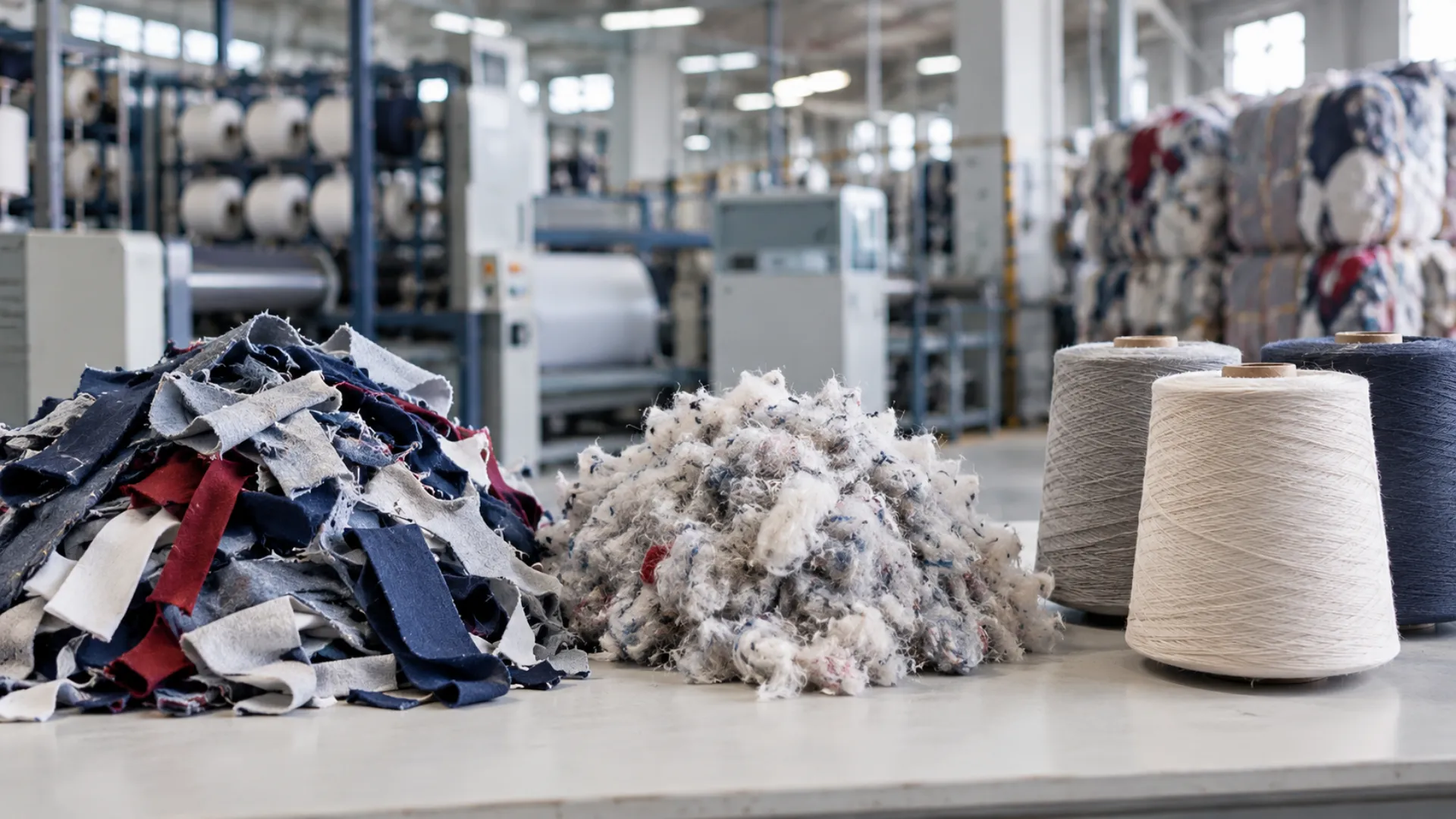
These measures align with the sustainability goals of the RMG industry and have been welcomed by the Bangladesh Garment Manufacturers and Exporters Association. The reduction of the tax rate on recycled products from 3% to 1% further supports the sector’s gradual shift towards circular production models.
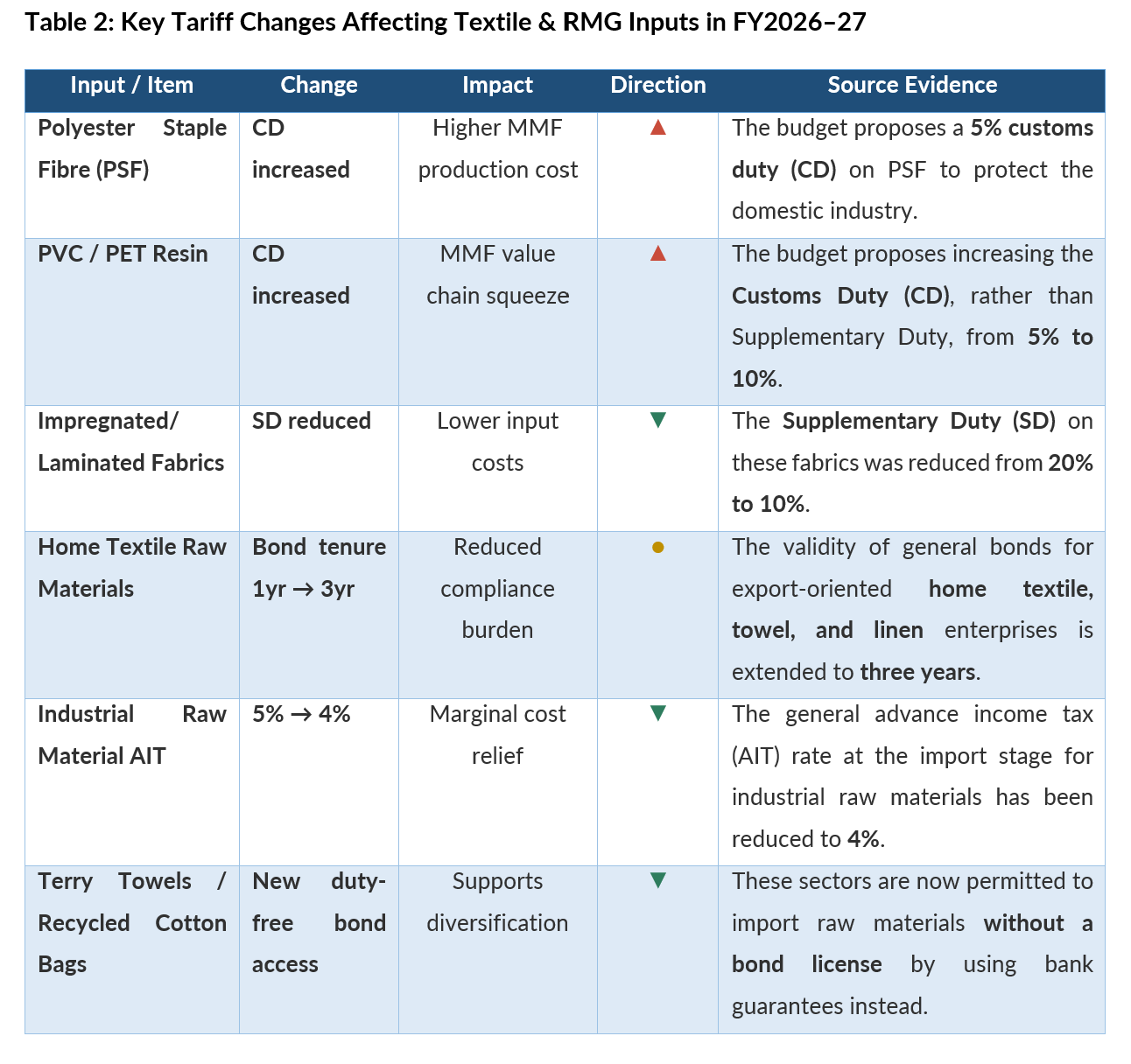
Beyond tax and energy measures, the expansion of customs-bond facilities to all export-oriented sectors and the proposed digital single-window licensing system, with services to be delivered within seven days, signal a broader effort to reduce the cost of doing business and improve regulatory efficiency.
Despite these positives, the budget leaves several strategic flanks exposed. While the industry is desperate to pivot toward high-value Man-Made Fiber (MMF), the budget imposed a new 5% import duty on Polyester Staple Fibre (PSF) and spandex.
Industry leaders argue this hike inadvertently raises production costs for high-demand MMF-based garment exports, hampering the very diversification the government seeks and putting strain on dependency on cotton-based raw materials. Additionally, the budget did not fulfil the industry’s demand to reduce the export source tax from 1% to 0.65%, leaving a significant fiscal burden on exporters during a period of contraction.
Analytical scrutiny also reveals the absence of a dedicated LDC graduation transition fund. Rather than presenting a phased tariff-rationalization roadmap, the government has requested a three-year deferral of the graduation itself. While solar equipment was granted a 0% tax rate until 2031, the budget remains weak on dedicated green finance for factory retrofitting, a necessity as the EU’s Corporate Sustainability Reporting Directive (CSRD), the Ecodesign for Sustainable Products Regulation (ESPR), and the Corporate Sustainability Due Diligence Directive (CSDDD) all move towards operational enforcement, together reshaping what buyers can source and from whom. Finally, although the electricity subsidy was increased to BDT 37,000 crore, it primarily covers state agencies’ losses rather than directly lowering industrial power costs.
The FY2026–27 budget offers the RMG sector some short-term stability, but key concerns remain around export taxation, man-made fibre costs, green finance, and graduation preparedness. Bangladesh has also requested that its graduation from least developed country status be deferred from November 2026 to November 2029.
The United Nations Committee for Development Policy has reportedly responded favourably and indicated that an extension would be appropriate, although the revised date remains subject to the formal United Nations process.
The additional three years could allow the RMG sector more time to prepare for the gradual loss of LDC-related trade preferences and strengthen compliance, productivity, product diversification, and market access. However, the Committee has also emphasized that the extension period should be used to address Bangladesh’s structural weaknesses.
For the RMG sector, a delay in LDC graduation would provide valuable adjustment time, but it would not remove the underlying competitiveness challenge. Its impact will depend on how effectively the government and industry use the period to expand man-made fibre production, improve productivity and technology adoption, strengthen environmental and labour compliance, and secure post-graduation market access.
With 75% of exports still cotton-based, the sector must align more closely with growing global demand for synthetic and man-made fibres (MMF). Two priority interventions stand out. First, transitional financing must be scaled up. A USD 4.8 billion financing gap remains for the green and MMF transition, which the current refinancing scheme is far too small to bridge.
Expanding the scope and budgetary allocations of the Bangladesh Bank’s refinancing window, specifically targeting factory retrofitting, energy-efficiency upgrades, and MMF input substitution, would provide a credible mechanism for closing this gap. Second, backward linkage in MMF must be strengthened. The government should provide targeted incentives for domestic yarn production in synthetic and man-made fibres, reducing dependence on imported PSF and spandex.
Higher value addition through MMF not only raises unit price realization but also strengthens Bangladesh’s case for GSP+ eligibility in post-graduation trade negotiations. Future policy support should therefore extend well beyond tax stability to anchor diversification, circular production, workforce development, and higher-value manufacturing as long-term structural goals.
The budget provides an important foundation; the priority now is to translate this into a clearer, longer-horizon pathway, one that extends well beyond the LDC graduation window to embed competitiveness, sustainability, and structural diversification as permanent features of Bangladesh’s RMG sector.
This article was authored by Faiza Tahiya, a Business Analyst at LightCastle Partners.
For further clarifications, contact here: [email protected]
Our experts can help you solve your unique challenges
Stay up-to-date with our Thought Leadership and Insights