


GET IN TOUCH
- Please wait...

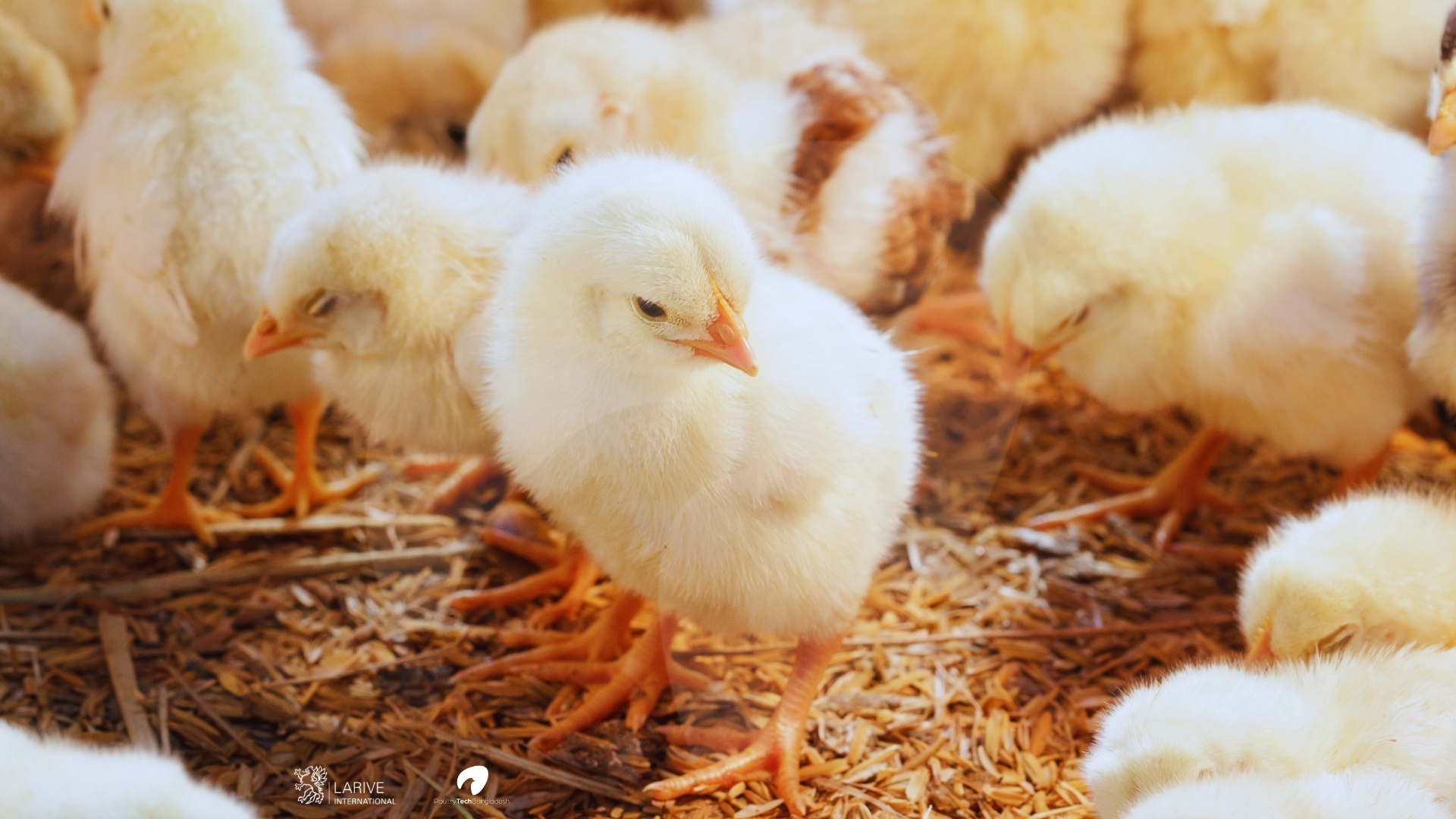
Poultry is an essential part of Bangladesh’s food economy. The sector employs roughly 2.5 million people, keeps the country largely self-sufficient in meat and eggs, and supplies a critical share of household protein. Yet the sector’s importance to national nutrition and livelihoods has long outpaced the quality of investment it receives. Modernising Bangladesh’s poultry sector remains critical to unlocking this potential. The result is a sector that feeds a nation with productive potential that has yet to be fully explored..
The sector is also dealing with challenges that are structural and interconnected. Mortality rates in poultry flocks had climbed as high as 30% due to frequent disease outbreaks, driven by poor biosecurity practices, inadequate disinfection protocols, and open-water systems that most small and medium farmers remain unaware of. Feed, which accounts for roughly 70% of total production costs for a farmer, fluctuates in cost and quality because feed millers depend heavily on imports and lack adequate expertise of efficient formulation, nutrition science, and storage.
Access to finance is concentrated among large integrated players, whereas smaller and mid-sized farmers struggle to meet loan requirements and lack the information needed to evaluate what investments are worth making. And despite the existence of a policy framework for the sector, enforcement has yet to be strengthened, skilled personnel are scarce, and poultry farming has yet to be demonstrated as a reliably attractive business model for the next generation.
In Bangladesh, most poultry farms operate at the household or small-scale level. While it is a starting point, without access to better knowledge, modern technologies calibrated to local conditions, and functional connections across the value chain, too few farms move beyond this point.
To strengthen the food security of the country, Bangladesh’s government has set goals to increase sustainable food production, reduce malnutrition, and grow agri-food exports. Realising those goals in the poultry sector requires a different kind of intervention, one that brings global expertise into direct contact with local realities, demonstrates what is possible in practice, and builds the human and institutional capacity to sustain change after the project ends.
This has been the mandate of PoultryTechBangladesh (PTB), a five-year public-private partnership co-funded by the Embassy of the Kingdom of the Netherlands in Bangladesh and the Netherlands Enterprise Agency (RVO), bringing together a consortium of Dutch and Bangladeshi leading poultry and poultry-specific technology companies through the coordination of Larive International and LightCastle Partners.
The PoultryTechBangladesh project intervened simultaneously at every stage of the poultry value chain, from feed mills and hatcheries to broiler and layer farms, with the goal of creating practical points of market systems development that the rest of the sector could replicate. The project operated across four integrated pillars: technology demonstrations, capacity enhancement, knowledge building, and forging connections.
Drawing on the importance of hands-on understanding of advanced technologies, the project developed four operational demonstration interventions, each designed to showcase modern poultry production under Bangladeshi conditions, while simultaneously serving as a training site for the surrounding sector.
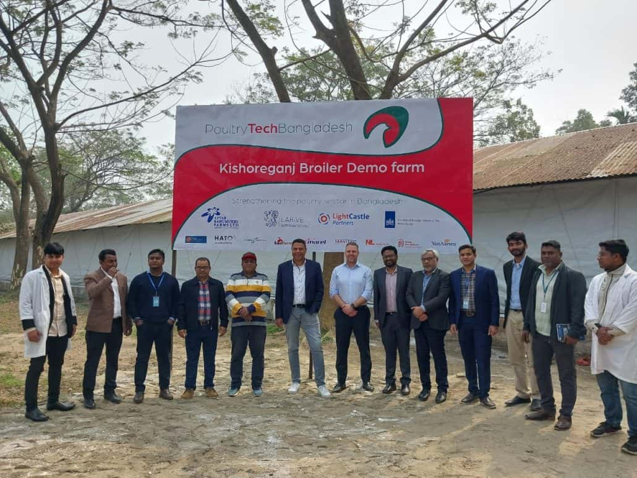
All these facilities operate as practical reference points for farmers across the country, hosting ongoing workshops and demonstrations long after the project’s close, to enable accessibility to such technologies for interested farmers at all levels of the value chain.
To effectively transfer knowledge on advanced poultry management and relevant technologies, the project built lasting reach through a multi-tiered capacity development approach, covering:
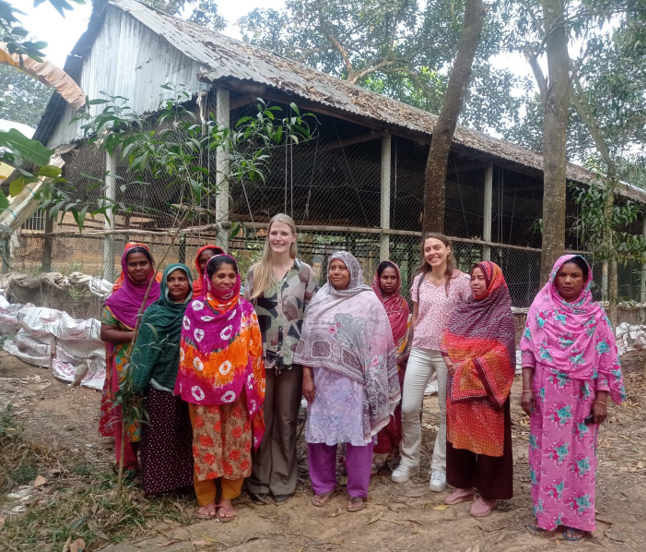
More than 80 master farmers from leading poultry companies were trained over the five years on broiler and layer management through a structured curriculum led by Aeres Training Centre International, with each master farmer equipped to train local farmers in their own networks.
Over the five-year project period, more than 80 master farmers from leading poultry companies were trained in broiler and layer management through a structured curriculum delivered by Aeres Training Centre International. Each master farmer was equipped to transfer their knowledge to local farmers within their own networks, creating a cascading model of capacity building. In addition, a three-day Training of Trainers (ToT) session was conducted by Aeres for 29 trainers from multiple divisions of the Department of Youth Development. The session strengthened the government’s capacity to integrate poultry sector knowledge into its national youth training infrastructure, ensuring the continued transfer of skills through public training channels beyond the project’s lifespan.
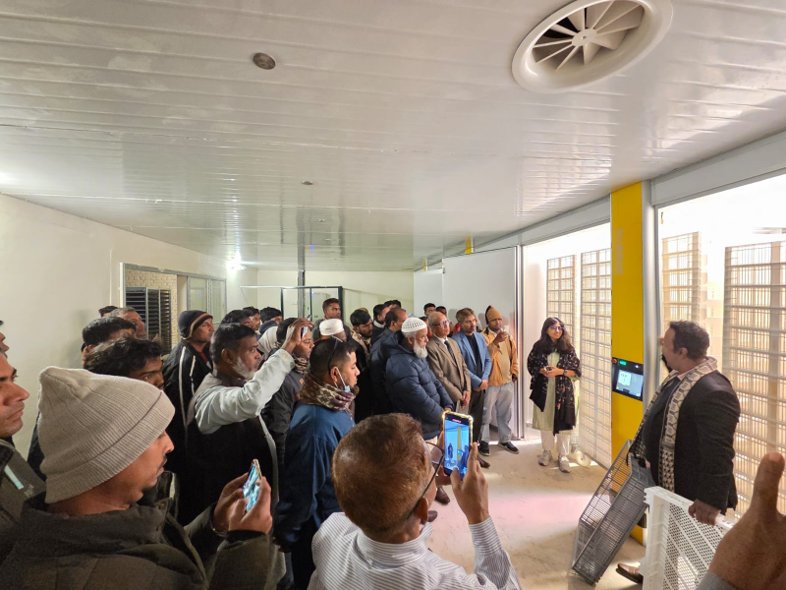
Specialised training programmes addressed the rest of the value chain in parallel. Royal Pas Reform delivered breeding and hatchery management training to 55 professionals from leading poultry companies, covering incubation fundamentals, hatchery climate control, embryology, egg handling and transfer processes, and hatching egg quality evaluation. Focusing on advancing poultry processing in Bangladesh, a workshop was conducted by Marel with 30 poultry processing professionals. Van Aarsen conducted a major workshop engaging more than 30 Bangladeshi feed sector stakeholders, training 15 feed mill managers in energy efficiency, hygiene, and sustainable production.
Through the project, more than 1,750 small farmers from key poultry production regions have been trained in sustainable agricultural production practices, expanding the reach of the project’s impact footprint at the grassroots level through collaborations with BPICC and district livestock offices, where strategic interventions are needed the most.
Over the years, the project has developed a body of applied research and sector intelligence that extends its impact beyond the individual firms and farms it directly supported.
These knowledge outputs developed through the project have generated in-depth insights into different aspects of the sector and supported important strategic engagements among the key stakeholders of the sector.
To strengthen the Dutch-Bangladesh partnership in the poultry sector, the project facilitated relationships, visibility, and market connections. Three impact tours brought Dutch and Bangladeshi sector actors together on the ground in Bangladesh for field visits,
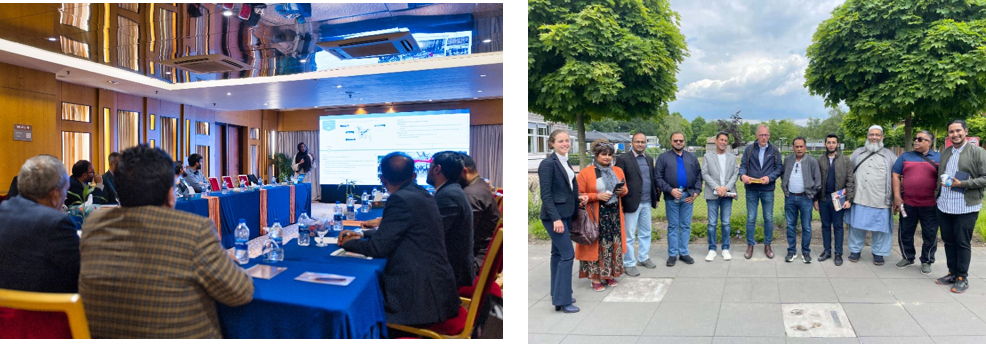
networking, and partnership agreements. A Bangladeshi delegation of leading industry representatives also visited the Netherlands, touring leading Dutch poultry companies including Van Aarsen, Hato Agricultural Lighting, Royal Pas Reform, Marel Poultry, and Nutreco, and participating in the Bangladesh-Netherlands Agri-Business Conclave.
Eight stakeholder dinners and seven roundtable sessions convened the sector’s most influential companies and policymakers for structured dialogue on growth opportunities. Across the five years, the project directly engaged 696 Dutch and Bangladeshi stakeholders and reached more than 10,440 indirectly through media coverage, cascading training networks, and continued workshop attendance.
These have been achieved through building meaningful collaborations with the Department of Youth Development of the Ministry of Youth and Sports, One Health Poultry Hub, Bangladesh Poultry Industries Central Council, and Channel i, significantly amplifying the impact network of the project.
Through direct and indirect contributions of the project, the Bangladesh poultry sector had visible new ties to Dutch breeders, equipment manufacturers, feed technology providers, hatchery specialists, and lighting innovators. 13 Dutch companies were engaged with supported plans to invest, trade, or provide services in Bangladesh.
By the time PoultryTechBangladesh concluded, the question of whether modern poultry production is viable in Bangladesh had been answered with operational evidence. The demonstration facilities continue to function, generating data, hosting visitors, and proving that improved climate control, post-hatch feeding, rendering technology, and modern hatchery systems can work commercially under Bangladeshi conditions.
The SASSO breed trials opened a concrete pathway for introducing a profitable and more environmentally resilient genetics into mainstream production. The feed assessments guide the sector towards a stronger foundation for contributing to quality feed production and alignment with global standards. And a trained cohort of local farmers, feed millers, hatchery managers, and poultry professionals continues to carry modern practices through their own farms and networks.
While the project has created impacts on different segments of the poultry value chain, wider adoption of modern technology by small and mid-sized farmers will depend on financing solutions and payment facilitation that current credit markets offer in a limited capacity. Shifting the sector toward formal slaughtering and processing will require regulatory action and shifts in consumer preference that require strong collaboration within the ecosystem.
As economic pressure has caused some farms to close in recent years, the macroeconomic resilience of the small poultry farmer remains a structural concern that capacity building alone cannot address. Future sector interventions will benefit from combining technical investment with deliberate policy engagement and access-to-finance solutions to move the value chain at its most constrained points.
Bangladesh’s poultry sector now stands on a clearer foundation. The operational demonstration sites, the trained workforce, the cross-border partnerships, and the technical evidence base together create a platform for sector-wide modernisation. Realising that potential will depend on sustained collaboration among government, private sector, and development partners, and on translating proof of concept into policy and financing instruments that allow the 2.5 million people who depend on this sector to fully share in its growth.
Our experts can help you solve your unique challenges