


GET IN TOUCH
- Please wait...

Bangladesh is set to graduate from the Least Developed Country (LDC) category in three years, once the UN General Assembly formally approves the new date recommended by the UN Committee for Development Policy (CDP). While this might be later than the originally extended timeline of 2026, Bangladesh has met every UN Criterion for graduation more than once. Despite that, we saw the timeline move twice due to reasons that aren’t dependent on the criteria themselves.
Bangladesh first met all three UN criteria for graduating from the Least Developed Country (LDC) category in 2018[i], with the UN initially scheduling formal graduation for November 2024[ii]. Since then, the timeline has been deferred twice. The first deferral moved it to 2026, while the Government of Bangladesh requested a second extension to November 2029 in response to successive domestic and global shocks[iii]. The CDP’s own 2024 review concluded that extending Bangladesh’s preparatory period beyond 2026 was unnecessary[iv]. However, the shocks of 2025 and 2026 eventually reversed that position. While these extensions have largely received support as much-needed relief, they have only changed Bangladesh’s administrative timeline. Global trade has continued to move as buyer expectations rise and trade rules evolve.
The European Union’s (EU) Generalised Scheme of Preferences Plus (GSP+), the facility Bangladesh falls back on once its Everything But Arms (EBA) access ends, covers a narrower 66% of tariff lines than EBA does today. Meanwhile, the EU concludes its Free Trade Agreements (FTA) with India, and Vietnam secures zero-tariff EU access from January 2027[v], narrowing the window of opportunity for Bangladesh. Without proper action, Bangladesh will eventually lose some of the preferential market access supporting an estimated $17.5 billion in annual exports[vi].
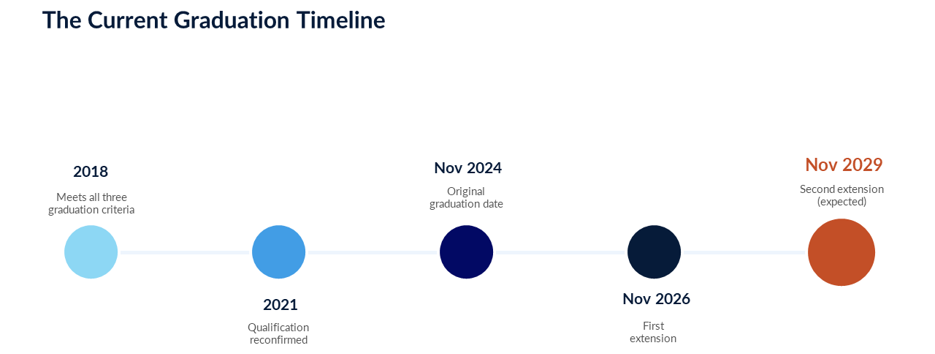
Figure 1: Expected LDC Graduation Timeline of Bangladesh
Even before the second deferral received confirmation, domestic business bodies were already calling for a further delay to 2032. Sixteen major chambers spanning pharmaceuticals, garments, and banking made this request jointly in August 2025. This tendency reflects the country’s level of readiness to graduate from the LDC category. Therefore, the extension becomes a critical window only if Bangladesh uses it to address the structural constraints affecting graduation readiness.[vii][viii]
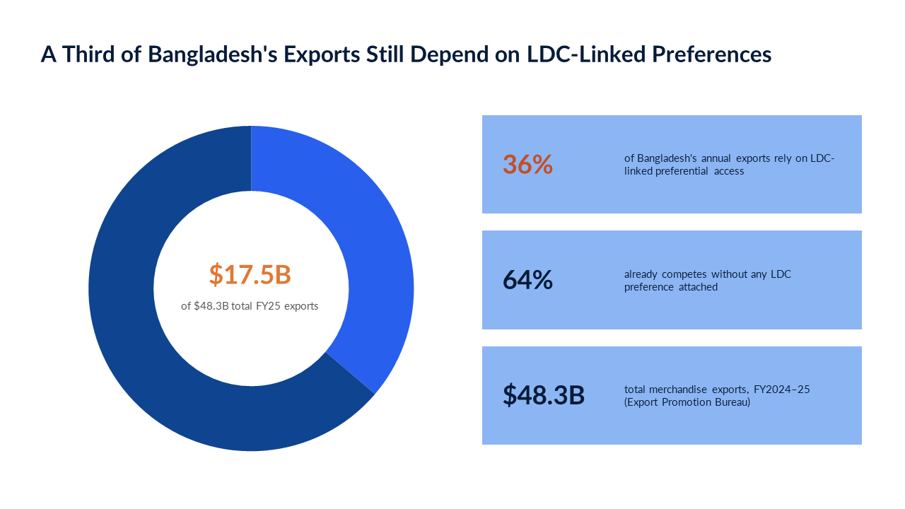
Figure 2: Trade Supported by LDC Preferential Market Access
Even though there are discussions around postponement, Bangladesh’s underlying vulnerabilities remain. Bangladesh cleared all three graduation thresholds in three consecutive reviews across 2018, 2021 and 2024. In theory, Bangladesh could have avoided a third extension if it had used the additional time more efficiently. Many of the challenges have existed for several years or were foreseeable outcomes. The global economic downturn and shifts in the international trade environment may have added new pressures. Nevertheless, Bangladesh still has scope to strengthen its preparation.
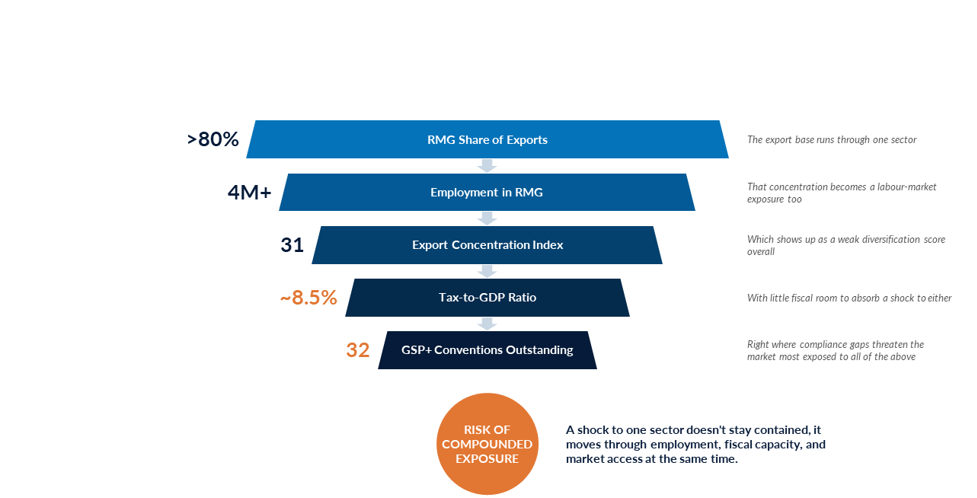
Figure 3: Risk of Bangladesh’s Structural Vulnerabilities
The trend inside the numbers tells a less reassuring story than the headline pass-or-fail result. The Economic and Environmental Vulnerability Index (EVI), the criterion that captures much of what worries exporters and investors, remained comfortably below the 32-point ceiling at each review. It stood at 21.9 in the 2024 triennial review, which the CDP itself described as “a positive trend” at the time[ix]. By the CDP’s February 2025 monitoring update, the score had moved to 22.13[x]. This was essentially flat, leaving Bangladesh exposed to vulnerabilities. Sitting comfortably below the threshold and improving are two different things. Meanwhile, the Human Assets Index increased over the same window, from 77.5 to 77.8[xi]. Thus, the softening is concentrated in the vulnerability score specifically, not across all three criteria.
That pattern also holds in the individual numbers behind the composite score. The export-concentration sub-index stands at just 31[xii], comparable to countries with dangerously narrow trade bases. In addition, the tax-to-GDP ratio of roughly 8.5%, among the lowest in the world, leaves limited fiscal space to absorb post-graduation shocks. Ready-made garments still account for more than 80% of export earnings while employing over four million workers. Moreover, Bangladesh has only partially fulfilled the 32 international conventions spanning governance, labor protection, environmental protection and other areas that it needs to secure continued access under the EU’s GSP+ framework.
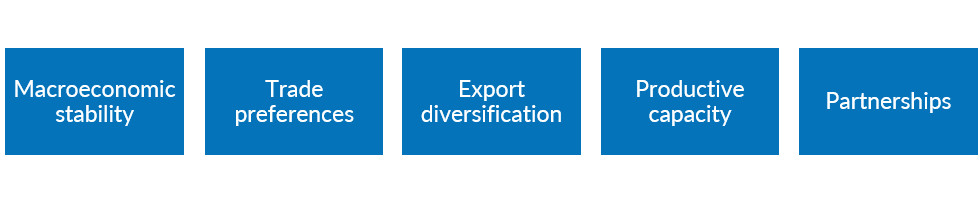
Figure 4: Five Pillars of the Smooth Transition Strategy of Bangladesh
Bangladesh’s own Smooth Transition Strategy (STS), completed in December 2024, is organized around five pillars. On paper, that is a comprehensive roadmap. In practice, the monitoring structure remains process-heavy, with enforcement-light steering committees and progress reports. However, no mechanism yet establishes strong accountability for relevant ministries when they miss targets[xiii]. The CDP’s own 2025 assessment points to a related but distinct factor. It attributes lowered momentum and private-sector confidence specifically to the political upheaval following the 2024 change in government[xiv]. This is separate from the accountability gap above, but it compounds it.
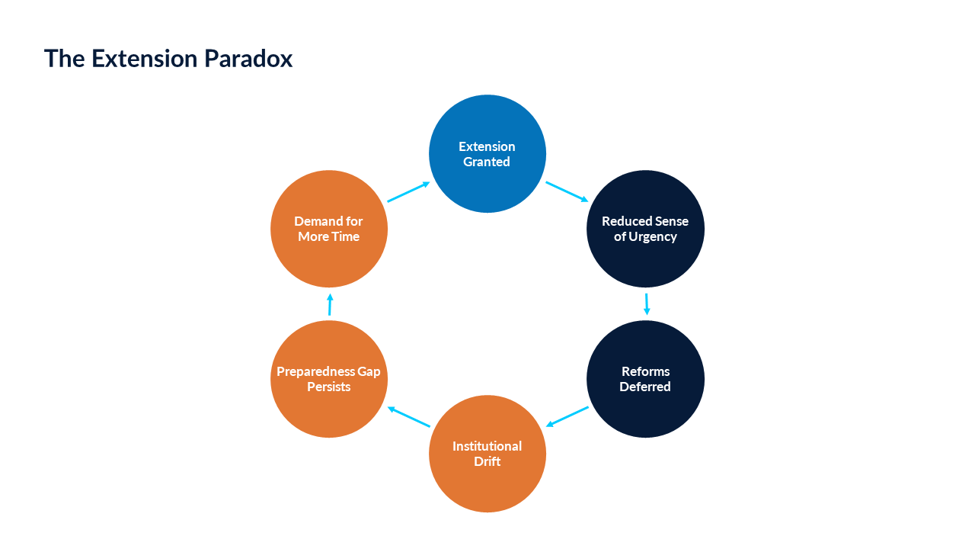
Figure 5: The Extension Paradox
The business lobby’s request is worth taking on its own terms rather than reading only as a signal. The sixteen chambers involved cited specific, sector-level exposure. Pharmaceutical exporters stand to lose TRIPS patent flexibilities that currently keep production costs manageable. Meanwhile, several export sectors face estimated tariff increases in the 6–14% range once preferential access ends. Asking for more preparation time under those conditions is a defensible position. However, the pattern this creates matters, irrespective of intent. A second deferral request came before the first extension had run its course. Similarly, a private-sector call for a third extension arose before the second was even confirmed. This points towards a timeline where the deadline keeps moving before the current window gets completed or tested.
Bangladesh remains very much exposed to these vulnerabilities. The next three years are crucial. They can either serve as a period to prepare for graduation by building further national capability or become another coping period for existing challenges, similar to the current deadline of 2026.
As Bangladesh attempts to reform institutional weaknesses and constraints, global trade continues to evolve. While Bangladesh has spent the past several years extending its graduation timeline, its major trading partners have continued to reshape the rules determining market access. Therefore, the implication is straightforward: the extension delays neither changing trade regimes nor the standards Bangladesh will eventually have to meet.
The changing landscape is already visible across Bangladesh’s four largest trade relationships. Some partners are opening pathways for continued access after graduation, while others are moving toward stricter, more conditional terms. This signals that preferential access is becoming a less viable option than competitiveness and negotiated market access.
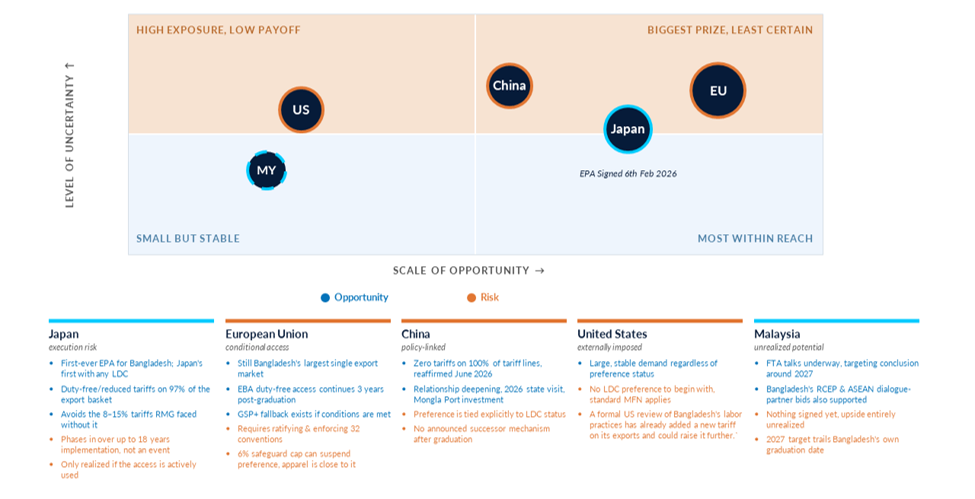
Figure 6: Bangladesh’s Major Trade Relationships after LDC Graduation
These differing arrangements reveal an important shift from preferential access to standard compliance and competitiveness. This shift is most evident in the European Union, where continued market access won’t just depend on eligibility but also on sustained implementation of international commitments. This includes a safeguard that can suspend preference for any product once a single supplier exceeds 6% of EU imports in that category[xv]. Bangladesh’s clothing exports are already approaching this threshold.
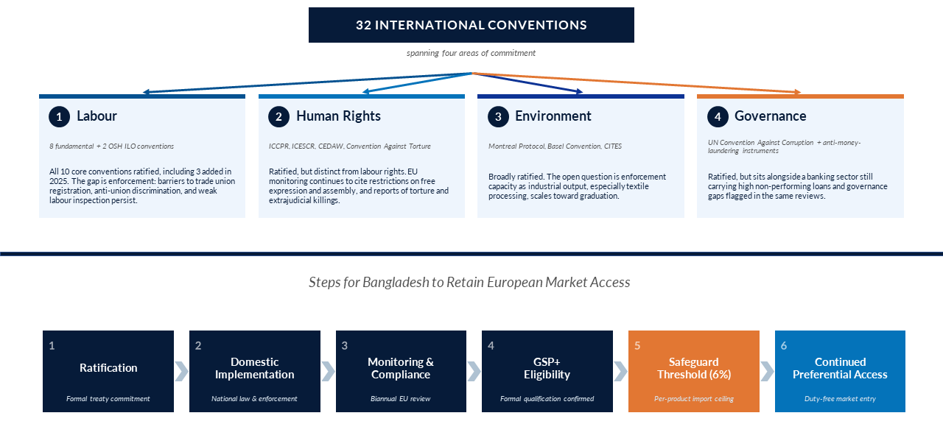
Figure 7: Requirements for Bangladesh to Retain European Union Markets
Vietnam illustrates the exemplary path here. Competing without preferential EU treatment, it grew its EU apparel share from 2% to 4.7% between 2010 and 2023 through productivity, investment, and industrial upgrading. In the US, where Bangladesh and Vietnam face almost identical tariffs with no preference for either, Vietnam’s share of US apparel exports climbed from under 1% to nearly 18%. Bangladesh’s share also rose, reaching 9% over the same period[xvi]. This provides direct evidence that competitiveness can substitute for lost preference.
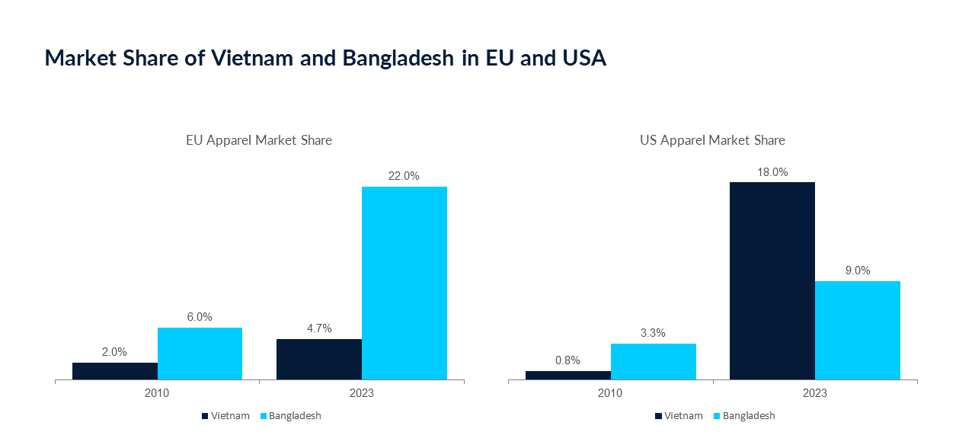
Figure 8: Market Share of Vietnam and Bangladesh
Bangladesh is now negotiating deeper trade arrangements with Japan, Malaysia, China and South Korea. These agreements can become instruments for building competitiveness before graduation. They can also soften the consequences of delayed preparation.
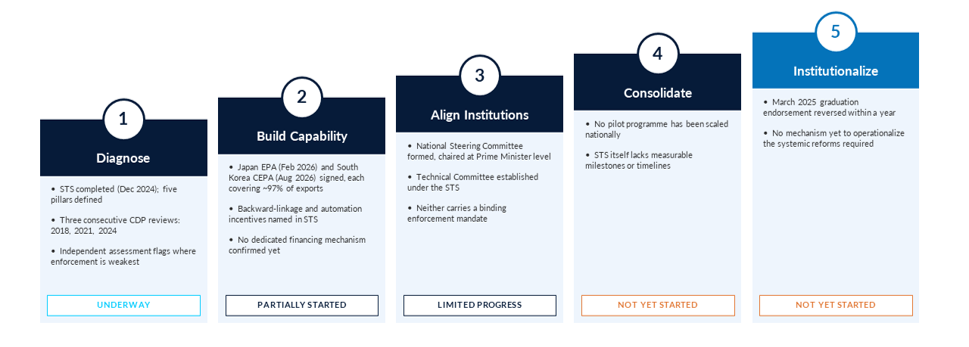
Figure 9: The Five Step Forward Roadmap for Bangladesh
To build capability by using the time efficiently, Bangladesh needs to leverage the agreements it is negotiating and has already signed. Bangladesh has already signed the EPA with Japan and Comprehensive Economic Partnership with South Korea. Meanwhile, negotiations are ongoing with Malaysia to secure a free trade agreement[xvii]. Bangladesh is also deepening its relationship with China, while completing the compliance track required to secure GSP+ facilities from the EU.
Among all the agreements, the Japan EPA will be the clearest test of what leveraging an agreement actually requires. The EPA’s own tariff reductions phase in over periods running as long as eighteen years, which means the agreement itself assumes implementation is a decade-long project[xviii]. As Tareq Rafi Bhuiyan, President of the Japan-Bangladesh Chamber of Commerce and Industry, stated, “Trade agreements create opportunities, but implementation determines the outcome.”[xix] The real work is ahead. It starts with some concrete gaps rather than a general diagnosis. The most visible gaps are:
Closing these gaps means converting diagnosis into capability in strategic areas. Additionally, focus needs to remain on the priorities mentioned by the STS that could become binding commitments, such as:
The strategic shift towards enhancing capabilities needs a collaborative approach among government, exporters, investment agencies, researchers, and others whose incentives currently pull in different directions. Meanwhile, the ongoing trade relationship formalization processes and discussions can serve as shared national infrastructure. Bangladesh needs to institutionalize them through strong accountability and monitoring mechanisms. Borrowed time only becomes borrowed competitiveness once something is built to outlast the borrower, which is only possible through proper institutionalized change.
The article was authored by Muhammad Bakhtiar, Business Analyst at LightCastle Partners. For further clarifications, please contact: [email protected]
i. Committee for Development Policy. (2018). Bangladesh meets LDC graduation criteria: 2018 triennial review findings. UN Department of Economic and Social Affairs.
ii. United Nations General Assembly. (2021). Resolution adopted by the General Assembly on 24 November 2021: A/RES/76/8.
iii. The Business Standard. (2026, February 21). UN CDP sets up process to review Bangladesh’s request for LDC graduation deferment. The Business Standard
iv. Committee for Development Policy. (2024). Monitoring report on the graduating countries: Bangladesh. UN DESA. UN DESA report
v. The Daily Star. (2026, April 1). LDC graduation could cost Bangladesh $17.5b in exports: UNCTAD. The Daily Star
vi. The Business Standard. (2026, June 8). Bangladesh risks $17.5b export hit after LDC graduation: Commerce minister. The Business Standard
vii. The Daily Star. (2025, August 24). Businesses request Yunus for LDC deferment to 2032. The Daily Star
viii. UNB. (2025, August 14). Business leaders urge six-year extension for Bangladesh’s LDC graduation. UNB
ix. Committee for Development Policy. (2024). Monitoring report on the graduating countries: Bangladesh. UN DESA. UN DESA report
x. Committee for Development Policy. (2025). 2025 monitoring report: Bangladesh. UN DESA. UN DESA report
xi. Committee for Development Policy. (2025). 2025 monitoring report: Bangladesh. UN DESA. UN DESA report
xii. Permanent Mission of Bangladesh to the United Nations, New York. (2025). LDC graduation. Permanent Mission of Bangladesh to the United Nations
xiii. Raihan, S. (2025). Navigating uncertainty: Bangladesh’s LDC graduation, deferral debate, and the future of reform. SANEM & Australian High Commission Policy Paper Series.
xiv. Committee for Development Policy. (2025). 2025 monitoring report: Bangladesh. UN DESA. UN DESA report
xv. Razzaque, M. A., Rahman, J., & Islam, S. (2025). The EU-Vietnam Free Trade Agreement: Implications for Bangladesh’s export competitiveness.
xvi. Razzaque, M. A., Rahman, J., & Islam, S. (2025). The EU-Vietnam Free Trade Agreement: Implications for Bangladesh’s export competitiveness.
xvii. Joint Statement between Malaysia and Bangladesh. (2026, June 22).
xviii. Khatun, F., et al. (2026). Bangladesh-Japan EPA: Opportunities, challenges, and future outlook. Centre for Policy Dialogue.
xix. The Daily Star. (2026, March 15). EPA set to redefine Bangladesh-Japan trade landscape. The Daily Star
Our experts can help you solve your unique challenges
Stay up-to-date with our Thought Leadership and Insights