

GET IN TOUCH
- Please wait...

A lack of environmentally friendly practices and social compliance remains a major challenge to strengthening export-oriented Small and Medium Enterprises (SMEs) in Bangladesh. This includes businesses in the home textiles and leather sectors. According to the Bangladesh Bureau of Statistics’ Economic Census 2024, Bangladesh has approximately 11.7 million economic units. These units engage around 30.6 million people, while SMEs contribute an estimated 25 per cent of GDP. Moreover, inadequate waste management, limited technical solutions and finance could undermine SME competitiveness after Bangladesh’s graduation from the Least Developed Country (LDC) category. The UN General Assembly’s three-year extension has moved the graduation date to 24 November 2029.
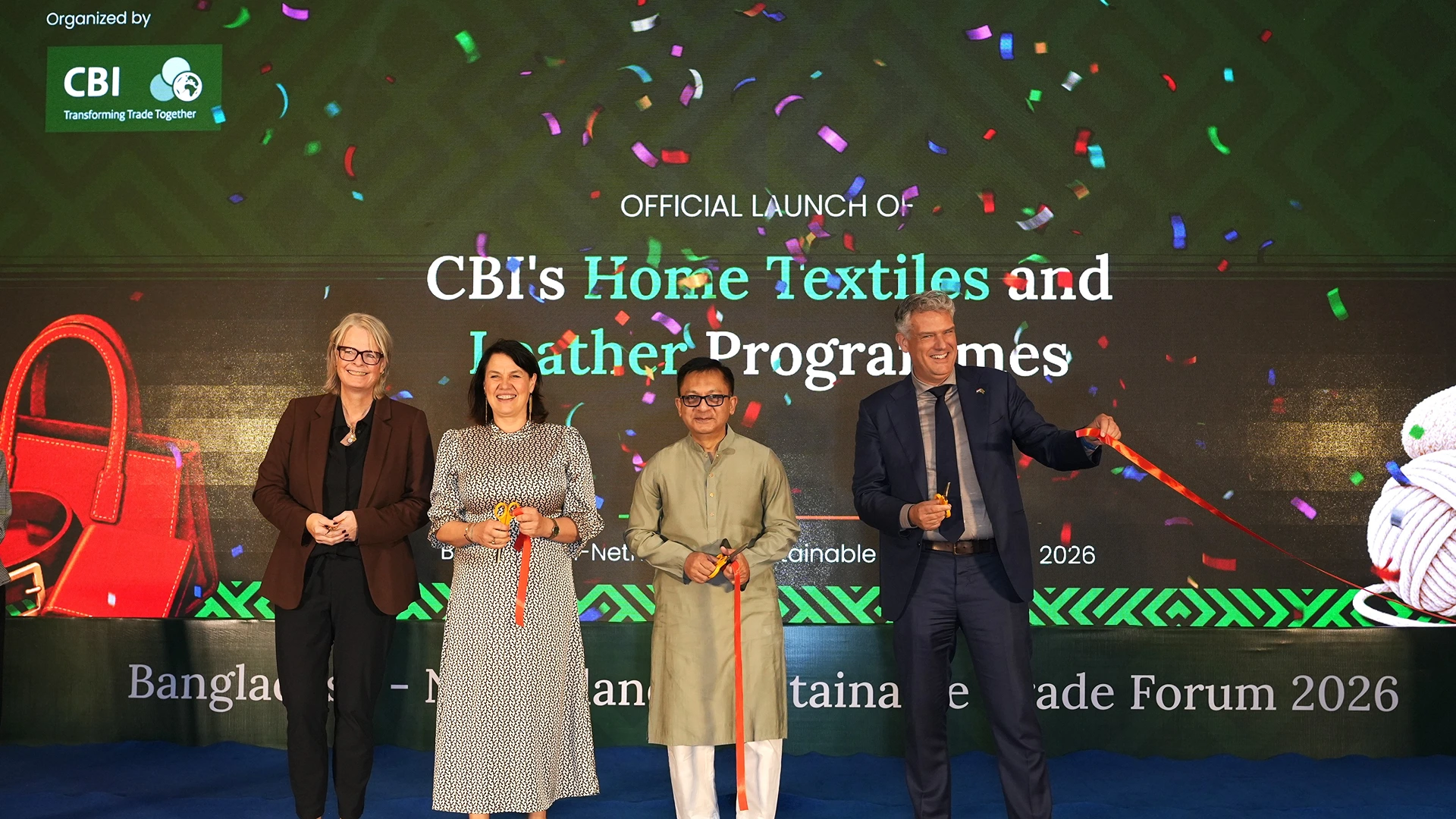
Speakers shared these views at the Bangladesh-Netherlands Sustainable Trade Forum 2026 on Wednesday, 11 November 2026, at a hotel in Banani, Dhaka. CBI, which is part of the Netherlands Enterprise Agency (RVO), organised the forum under a commission from the Netherlands Ministry of Foreign Affairs. During the event, two CBI programmes officially launched: “Home Textiles: Sustainable Home Textiles Bangladesh (2025–2030)” and “Leather: Bangladesh Leather x Decent Work (2025–2029).”
The Home Textiles Programme will help SMEs adopt sustainable production practices. Specifically, it will focus on water management, natural dyeing and alternative materials. Additionally, the programme will include three pilots: natural dyeing, Effluent Treatment Plant (ETP) solutions for small craft-based SMEs, and ETP financing. Meanwhile, the Leather Programme will work with SMEs producing small leather goods. It will strengthen social compliance and readiness for European markets, prioritising workplace conditions, worker representation and gender inclusiveness.
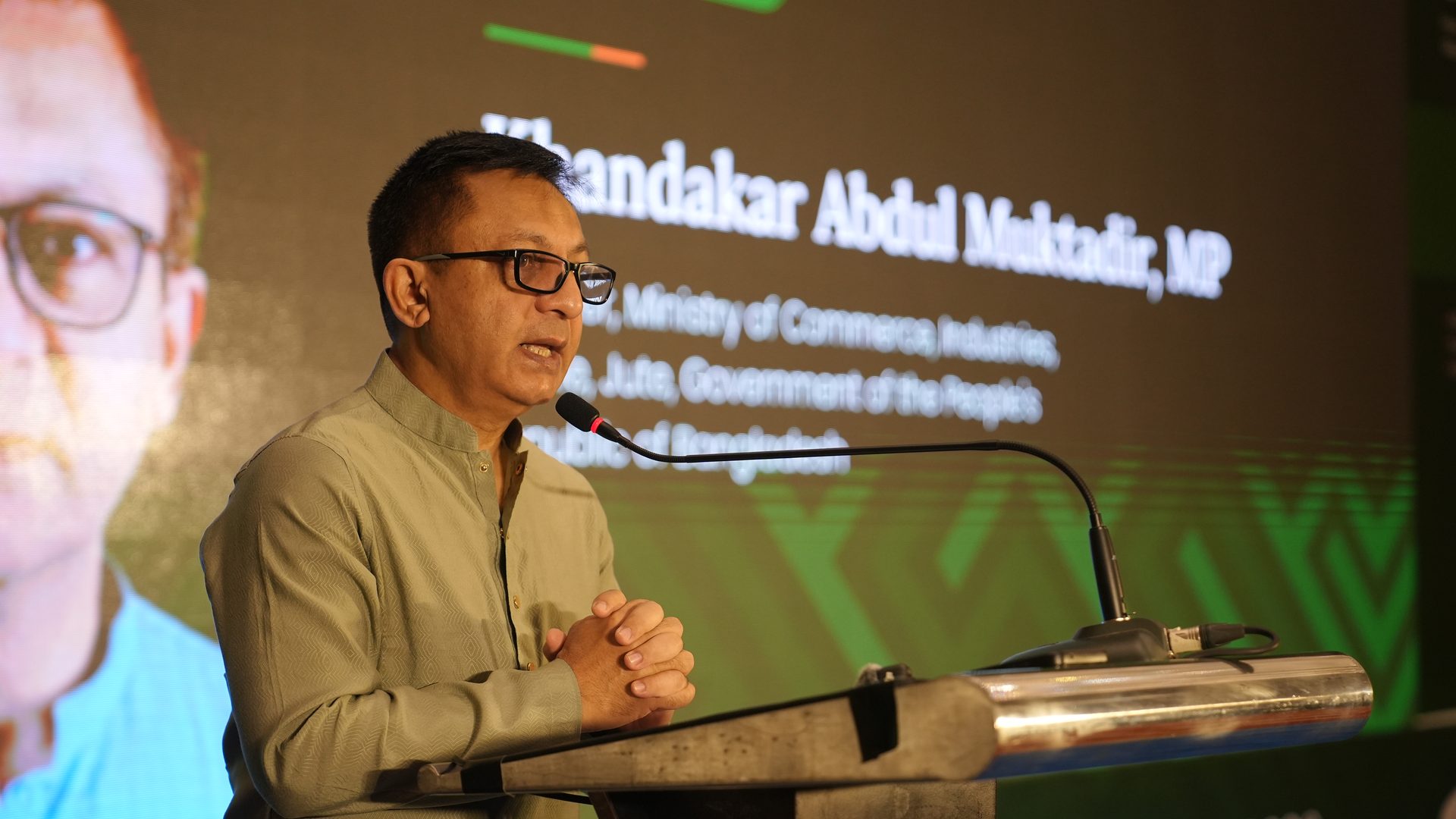
Chief Guest Khandakar Abdul Muktadir, Honourable Minister, Ministry of Commerce, Industries, Textiles and Jute, Government of the People’s Republic of Bangladesh, said: “The European Union is a very desired export market for Bangladesh. We need a real working partner there, and the Netherlands has come forward to help our CMSMEs (Cottage, Micro, Small and Medium Enterprises) find new opportunities and smoother access in that market.”
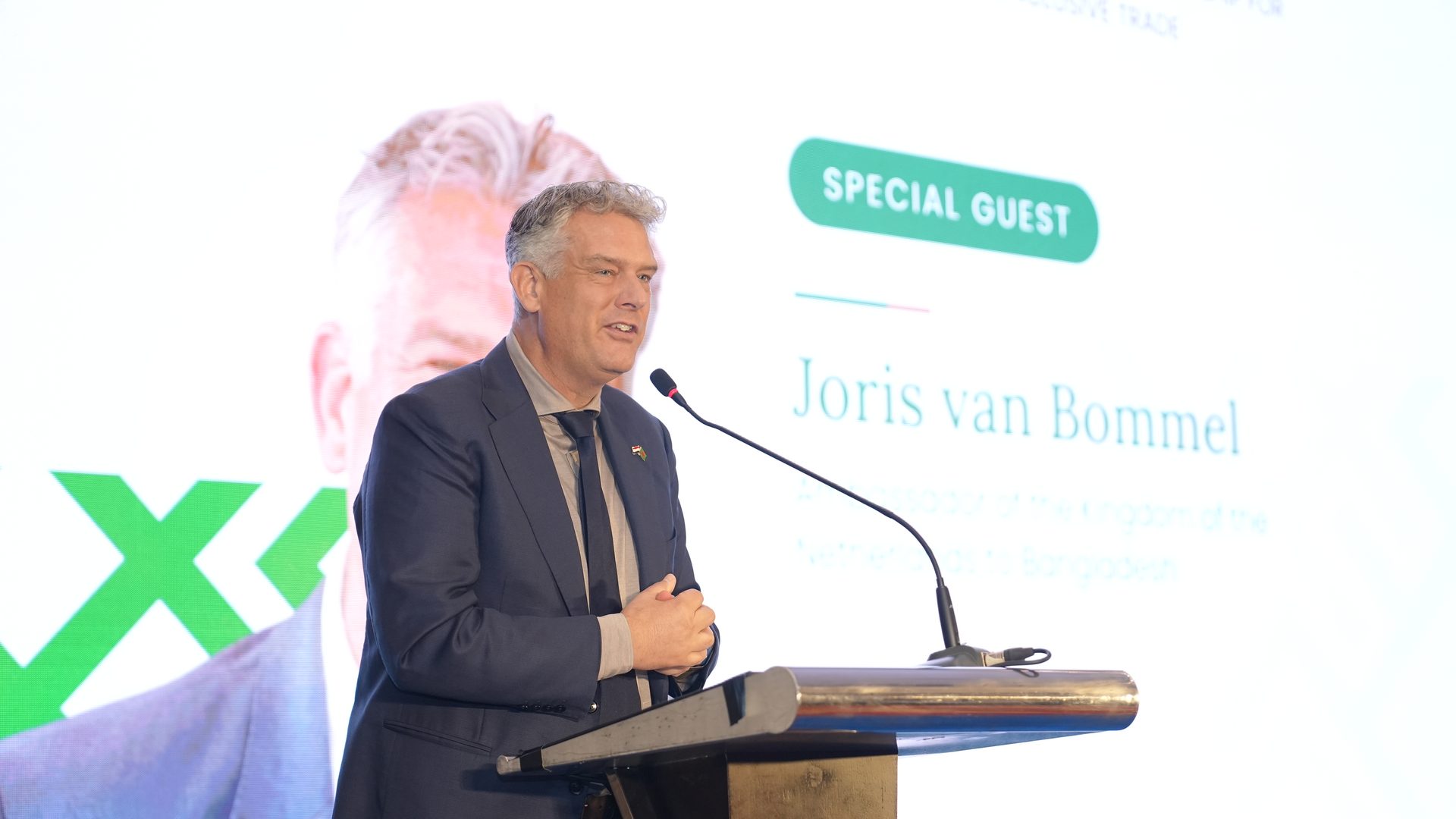
Special Guest H.E. Joris van Bommel, Ambassador of the Kingdom of the Netherlands to Bangladesh, said: “Some see these compliance requirements as a barrier, as an issue, but we, as the Netherlands, see it as an opportunity, a way for companies to do things in the right way, to stand out, and to move up into higher-value markets.”
In her welcome remarks, Judith Arends, Managing Director of CBI, said: “We will work along with SMEs on strengthening their social compliance and their position in the European market: working on occupational health and fire safety, fair and inclusive working conditions for women and men, and a real voice for workers. My message to the Dutch and European business community is simple. These suppliers are getting ready. Come and meet them, buy from them, invest with them, share what you know.”
Following the launches, Jim Tersteeg, CBI’s Organisational Development Expert and Consultant, presented “CBI’s Home Textiles Programme in Bangladesh: Scope and Opportunities for SMEs.” Subsequently, the first panel discussion took place, titled “From Compliance to Competitiveness – Unlocking Sustainable Growth in Bangladesh’s Home Textiles Sector.” He then presented “CBI’s Leather Programme in Bangladesh: Scope and Opportunities for SMEs.” The second panel followed, titled “Building a Sustainable and Competitive Leather Sector – Pathways to Higher-Value Global Markets.”
Most home textiles SMEs want to improve dyeing and wastewater management. However, European buyers are limiting ranges to undyed natural fibres because most SMEs do not meet wet-processing standards. Although natural dyeing is promising, its consistency, colour fastness and costs are yet to be established. Meanwhile, demand for jute remains strong.
The leather sector generates approximately 850,000 direct and indirect jobs, with women a substantial share of the workforce. However, women entrepreneurs face barriers to formal finance. Historically, Europe was a key destination for Bangladesh’s leather exports. Therefore, stronger workplace safety and worker representation could help SMEs meet social compliance requirements and unlock European markets.
The forum brought together government, private sector, financial institutions, development organisations and industry experts. Overall, around 170 participants attended the event.
Our experts can help you solve your unique challenges