



GET IN TOUCH
- Please wait...

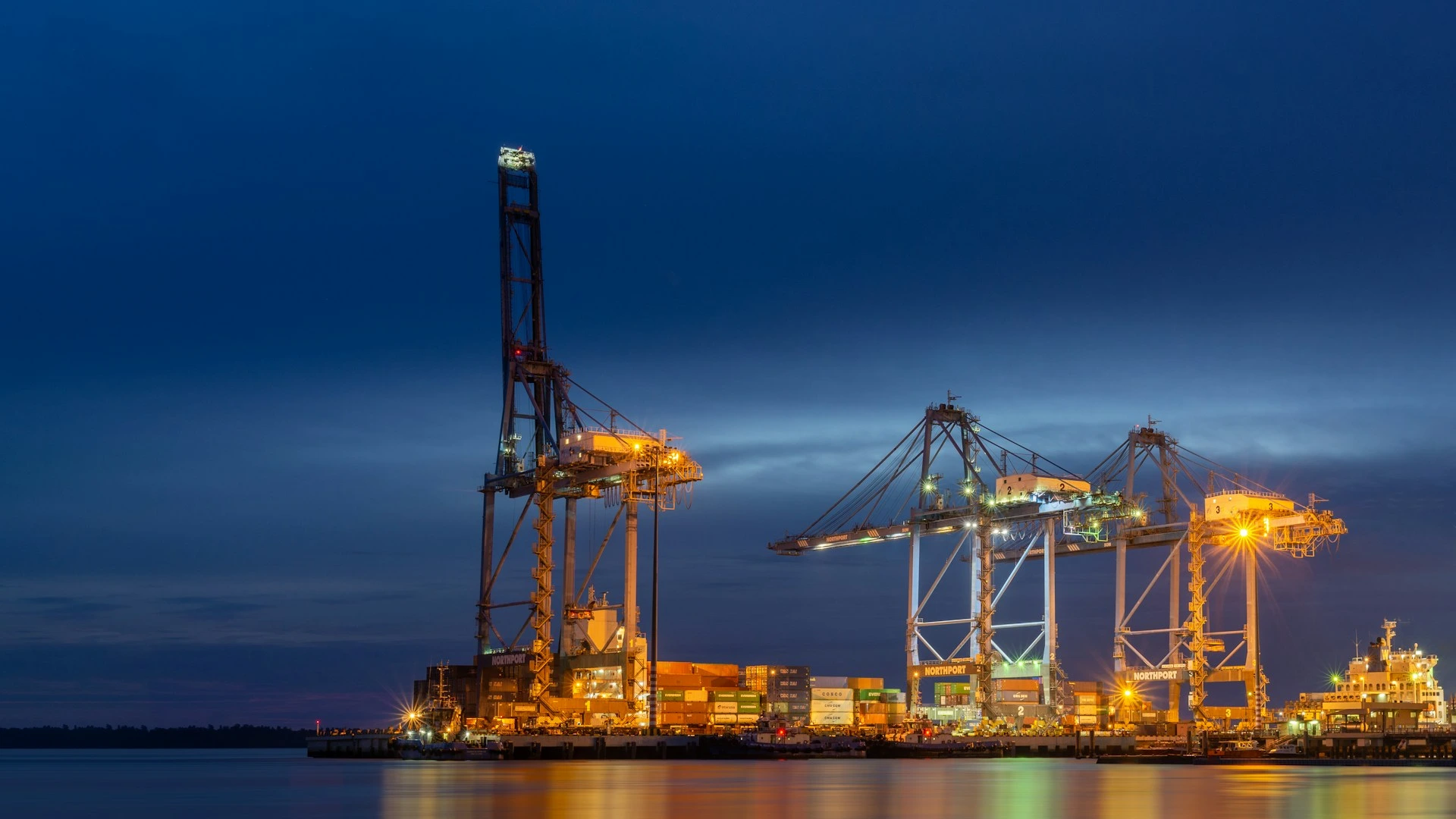
Rotterdam’s terminals routinely move cargo through a highly coordinated port system. Containers arriving at Chattogram can instead spend days in the yard before exiting the terminal. The port handles roughly 90% of Bangladesh’s seaborne trade and an estimated 98% of its containerised cargo.¹ The difference has less to do with cranes or concrete than with how each port manages its logistics.
Rotterdam didn’t get here through geography alone. It got here through specific institutional choices, clear role definition, defined risk allocation, and functional specialisation. These determine who owns the infrastructure, who carries the financial risk, and who answers for delay.
Those choices are the transferable lesson, not the port itself. Bangladesh’s coastline could never replicate Rotterdam, but it can learn from the institutional design behind it. For Bangladesh, closing that gap is now an economic priority. Every extra day a container sits in the yard adds cost for exporters competing on thin margins.
This piece looks at what Rotterdam actually did and how it compares with how Bangladesh runs its ports today. More importantly, it considers how much of that institutional model Bangladesh can realistically adopt given its budget, geography, and politics.
Rotterdam sits at the mouth of the Rhine, which made it Europe’s natural gateway once industrial cargo needed to move inland by water. But the port that exists today was built in deliberate stages and moved steadily seaward.
After German forces destroyed roughly seven kilometres of quay in 1944, post-war reconstruction created an opportunity to redesign the port rather than simply repair it. The 1957 founding of the European Economic Community then drew multinational firms toward a deep-water industrial site with political stability.
The port kept expanding to meet changing demand. Botlek emerged in the 1950s for petrochemicals, Europoort in the 1960s for oil tankers too large for the old harbour, and Maasvlakte 1 in the 1970s on reclaimed land at the sea’s edge. This kind of long-term infrastructure development became central to Rotterdam’s growth.
Maasvlakte 2, opened in 2013, is the newest and most ambitious extension. It added roughly 2,000 hectares of new land directly into the North Sea, expanding the port’s footprint by around 20%. A sea wall reinforced with some 7 million tons of rock and roughly 230 million cubic metres of dredged sand protects the site.²
PUMA, a joint venture between Dutch dredging firms Boskalis and Van Oord, built the project. Roads, rail, and quay walls were constructed alongside the land itself. This allowed the site to become usable as soon as construction finished rather than years later.
What matters more than the engineering is how Maasvlakte 2 was financed and governed. Rather than treating it as a conventional annual-budget infrastructure project, Rotterdam structured and financed it as a commercial investment case.
The Port of Rotterdam Authority is a corporatised, commercially run entity. The Municipality of Rotterdam holds roughly 70% of its shares and the Dutch state roughly 30%.³ The Authority built Maasvlakte 2 with backing from a €900 million European Investment Bank loan.⁴ It absorbed the reclamation cost and risk rather than passing them through a state budget line.
The Authority also used a deliberately flexible, long-term design brief. “Capacity for future growth” was its own description of the approach. It reserved capacity for sectors it could not yet fully specify and pre-leased much of the new land before construction finished.
APM Terminals and Rotterdam World Gateway signed contracts years ahead of opening. A dedicated offshore-industry zone also captured demand that the original plan had not anticipated.
This combination of patient capital, spare capacity held for future users, and long lease terms gave tenants the confidence to invest in cranes and equipment. It also helped attract outside expertise and foreign investment onto the site.⁵
The expansion also intruded on a protected marine conservation area. The Authority was therefore legally required to conduct comprehensive environmental impact assessments before construction began.
It followed these with statutory compensation, new seabed protection zones, dune habitat, and nature reserves elsewhere on the coast. By internalising that ecological cost from the outset, the project gained greater regulatory certainty and public legitimacy.
For a multi-billion-euro project, this reduced the risk of years of litigation and delay. The approach offers a useful lesson for Bangladesh as it balances infrastructure needs with climate resilience.
1. It separated ownership from operation
This is the single most important structural fact about Rotterdam. It follows the “landlord port” model that port economists point to as the canonical example.
The Port Authority owns the land, quays, and channels. It then leases operating rights to competing private terminal companies such as APM Terminals, DP World, Hutchison, and others under long concessions.
The Authority plans and manages the infrastructure. Private operators run the cranes and yards while competing for market share on the same waterfront. This separation between public infrastructure and private operation resembles the broader logic behind attracting global capital without transferring every risk to the state.
2. It operates on a self-financing basis
In 2024, the Port Authority earned €882 million in revenue. Roughly €509 million came from land leases and €337 million from port dues. It generated €274 million in net profit and funded €321 million of fresh investment.⁶
That self-financing loop helped make Maasvlakte 2 possible without an annual budget fight. The Authority reinvests its own lease and dues income rather than waiting on a ministry for capital approval. The structure offers a useful comparison for Bangladesh’s wider push toward investment-led growth.
3. It runs on two complementary digital systems, not one
Rotterdam’s digital layer is often described as a single backbone, but two distinct systems perform different roles.
Portbase provides information-sharing and port-community infrastructure. It is a non-profit Port Community System established jointly by the Rotterdam and Amsterdam port authorities.
The system connects thousands of logistics companies and government agencies, including Dutch Customs, through a shared data layer. Pre-arrival cargo notification, customs document verification, and container release move through it automatically rather than on paper.
Portbase’s own leadership has put its annual value to the Dutch logistics chain in the hundreds of millions of euros.⁷ This type of interoperability closely reflects the logic behind Digital Public Infrastructure.
PortXchange performs a different function. It manages vessel visits and just-in-time coordination.
The system grew from an earlier project called Pronto, with Maersk and Shell as its first customers. It draws on a live sensor network tracking tides, currents, and vessel movements.
This gives inbound ships a shared, continuously updated arrival slot once their ETA becomes known.⁸ Ships can then slow down at sea instead of rushing toward the port only to idle at anchorage.
Rotterdam reports meaningful reductions in vessel waiting time and truck turnaround time as a result. The two systems complement each other rather than forming a single platform: one processes the information, while the other moves the ship.
Cargo throughput depends on both working together. Bangladesh’s own logistics ecosystem would similarly benefit from stronger digital integration.
4. It automated its newest terminals and built rail directly into them
Rotterdam’s newest deep-sea terminals are not simply larger than the older ones. They also operate with limited manual intervention.
At APM Terminals’ Maasvlakte II facility, opened in 2015, around 80% of crane movements are automated. A fleet of battery-electric automated guided vehicles moves containers between the quay and automated stacking cranes in the yard. Each vehicle runs roughly eight hours per charge before docking at a battery-exchange station.⁹
The remaining manual work takes place remotely rather than on the container floor.
Rail forms part of that same automation logic rather than being added afterward. The terminal’s rail yard connects directly to the Betuweroute.
Container and train details move electronically through Portbase before a train arrives, allowing cranes to start working as soon as it reaches the track.
Around 400 international rail connections operate from Rotterdam. The Port Authority is also building a new rail yard at Maasvlakte South to keep pace with growth.¹⁰ The lesson is straightforward: even a highly developed port continues adding capacity before demand creates a bottleneck.
5. It thinks in decades and connects the hinterland accordingly
A deep-water berth offers little value if cargo then sits in a truck queue. Rotterdam built the Betuweroute, a dedicated freight-only rail line to the German border. Container trains therefore do not wait behind passenger services.
As a binding condition of Maasvlakte 2’s approval, the government capped trucks at 35% of container movements and pushed the rest toward barge and rail.
Barge traffic has come close to its target, although rail has lagged its own goal. Even Rotterdam has not solved every logistics problem.
The port is also positioning itself as a European hydrogen import and distribution hub. Plans include a green-hydrogen shipping partnership with Spain, a local electrolyser pilot, and the Porthos project.
Porthos aims to capture and permanently store around 2.5 million tonnes of CO₂ a year from port industry. Whether all of this lands on schedule remains uncertain, and related pipeline infrastructure has already slipped by a few years.¹¹
But that uncertainty does not undermine the broader pattern. Rotterdam plans for the next demand cycle before the current one peaks. Bangladesh faces the same need for long-term investment planning.
Chattogram sits on the tidal Karnaphuli River. That geography places a structural constraint on vessel size and draft and prevents modern ultra-large container ships from calling directly.
Larger vessels must transship through Colombo, Singapore, or Port Klang before smaller feeder ships carry cargo into the Bay of Bengal. This adds time and cost while making Bangladesh dependent on transit hubs outside its control.
That risk became visible when Sri Lanka’s 2022 economic crisis disrupted port operations in Colombo. Similar vulnerabilities continue to shape Bangladesh’s exposure to international trade disruptions.
The operational data reflect these constraints. In the World Bank’s 2023 Logistics Performance Index, Bangladesh ranked 88th of 139 countries with a score of 2.6 out of 5.¹²
This represented a genuine improvement from its 2018 standing, but the country still trailed on the customs and infrastructure components specifically.
A separate World Bank briefing on Bangladesh’s port sector attributes Chattogram’s low productivity partly to a highly fragmented labour environment, involving around 25 separate unions. It also identifies corruption risk in customs processing as a persistent constraint on performance.
Reported container dwell time ranges from roughly a week to well over ten days, depending on exactly what is being measured. The global benchmark is closer to three to five days.
Yard occupancy has also been reported well above 80% during peak congestion periods, approaching gridlock by industry standards.¹³ These weaknesses directly affect Bangladesh’s export competitiveness.
Bangladesh’s newer ports show both the opportunity and the risk of getting infrastructure decisions wrong.
Payra was dredged to 10.5 metres at a cost of roughly Tk 6,500 crore and handed over in 2024. Within months, the channel had silted back to around 6 metres, and foreign mother-vessel calls fell sharply.¹⁴
The experience is an important warning about building major infrastructure where sedimentation creates a persistent maintenance burden.
Matarbari presents a different case. It sits on naturally deep water and is being developed as a genuine deep-sea port from the outset.
The project includes a 14.3-kilometre, 350-metre-wide channel dredged to 16 metres, reaching around 18.5 metres with tidal support. A roughly $1.09 billion JICA loan supports a total project cost near $1.5 billion.
Its first phase targets capacity of roughly 600,000 to 1.1 million TEU, with room to scale substantially over the following decade. The port is also designed to berth vessels carrying 8,000 TEU or more directly.
That could reduce, and for a growing share of cargo potentially eliminate, Bangladesh’s dependence on transshipment. JICA’s own project modelling projects meaningful reductions in shipping cost per container and shorter export lead times to markets such as the US.¹⁵ LightCastle has also examined the economic potential of the Matarbari Deep Sea Port.
Closer to Chattogram, reform is already underway. The Bay Terminal project has a $650 million World Bank facility approved in mid-2024 for a six-kilometre breakwater and channel dredging.
The project aims to allow larger vessels to berth directly on the coast rather than travelling up the crowded river. The World Bank’s own estimate is that faster turnaround could save the economy around $1 million a day once the project is complete.¹⁶
The Patenga Container Terminal is now operated by Saudi Arabia’s Red Sea Gateway Terminal under a long-term concession.
APM Terminals, Maersk’s terminal arm, has also taken on the greenfield Laldia Container Terminal under a build-operate-transfer structure. The investment risk sits with the private concessionaire rather than the state’s balance sheet.¹⁷
These developments also reflect a broader expansion of Bangladesh’s engagement with the Netherlands and other international partners on trade and investment.
Not every part of Rotterdam’s story is available to Bangladesh. Some lessons require relatively little capital and depend mainly on institutional discipline.
Others depend on geography and decades of accumulated capacity that Bangladesh does not have. The remaining lessons require deliberate investment in the right sequence before they generate returns.
The distinction matters because Bangladesh must improve competitiveness while operating under tighter financial and institutional constraints than Rotterdam faced.
What Bangladesh can copy at relatively low cost
The highest-leverage move requires relatively little capital beyond political will: formalising the landlord model Bangladesh is already moving toward.
This is not an idea imported wholesale from the Netherlands. The Asian Development Bank’s own strategic master plan for Chittagong Port has recommended moving the port authority toward a landlord structure.
Academic modelling has similarly found that private terminal concessions under such a structure can improve outcomes for both the port and its users.¹⁸
Bangladesh’s current wave of foreign operators, including DP World, PSA, APM Terminals, and Red Sea Gateway, represents a meaningful step in this direction.
The next step is formalisation: a corporatised port authority that owns infrastructure and awards concessions through transparent, competitively benchmarked, performance-based terms.
This matters because opaque concession arrangements can leave governments with hidden liabilities through minimum-volume guarantees, profit floors, and tax treatment.
That is a well-documented risk in port economics generally, not something unique to Bangladesh. Rotterdam’s model works partly because its lease terms are commercially transparent.
Bangladesh’s wider effort to improve regulatory predictability will therefore matter as much as the infrastructure itself.
Digitalisation belongs in the same relatively low-cost category. Much of Chattogram’s dwell-time problem appears to come from information gaps rather than physical space alone.
Trucks arrive without scheduled slots. Customs processing remains partly paper-based. Release instructions do not always move smoothly across agencies.
Bangladesh already has building blocks such as ASYCUDA World and a National Single Window. What it lacks is deeper integration between them.
A Portbase-style shared data layer could link customs, terminal operators, and freight forwarders. Customs clearance could automatically trigger container release instead of requiring a separate manual step.
This would be a comparatively fast, low-capital improvement. The World Bank’s own analysis suggests that even modest reductions in dwell time would meaningfully improve export performance.
What Bangladesh cannot simply copy due to geography and history
Rotterdam’s other advantages are not policy choices. They come from geography and history.
The Rhine gives Rotterdam a natural inland waterway into Europe’s industrial heart. The Dutch state also benefits from decades of fiscal capacity and an EU-integrated capital market.
Rotterdam itself has had more than eighty years of continuous, well-resourced institutional development since 1944.
Bangladesh must also account for its coastline. The Bay of Bengal receives an enormous sediment load from the Himalayan river system.
This makes reclamation and channel maintenance structurally more expensive than in the Netherlands. That is a geological fact rather than a policy failure.
It means sequencing matters more for Bangladesh. Matarbari’s naturally deep site offers a stronger long-term proposition precisely because it does not require the same permanent struggle against sedimentation as Payra.
Bangladesh therefore needs infrastructure decisions that account for economic returns and environmental resilience.
What Bangladesh can build toward
The remaining lessons centre on financing discipline and patient infrastructure. Bangladesh cannot achieve them immediately, but they offer a clear direction.
Maasvlakte 2 worked partly because Rotterdam built it against pre-sold demand and financed it against future lease revenue rather than open-ended state spending.
Matarbari, Bay Terminal, and Laldia already contain elements of this model. JICA and World Bank financing support major infrastructure, while private concessions carry operating risk.
Payra remains the cautionary example. A project built in a naturally silt-heavy location now requires ongoing dredging that Bangladesh can ill afford in scarce foreign exchange.
The lesson is not “don’t build.” It is to match the site to the geology and allow engineering advice, rather than political timelines, to set the pace. That principle matters as Bangladesh seeks greater infrastructure investment.
The hinterland must also develop alongside the terminals rather than after them. Rotterdam’s freight rail and barge systems work because a port is only as fast as the road, railway, or river leading away from it.
The access road linking Matarbari to the Cox’s Bazar highway is a start. But dedicated freight rail between Dhaka and Chattogram could create greater long-term value.
Bangladesh could also make greater use of its extensive river network as a low-cost, underused barge corridor, much as the Rhine supports Rotterdam.
This work must happen alongside terminal construction, not after ships begin arriving. A stronger multimodal network would improve Bangladesh’s wider investment climate.
Rotterdam is not the most direct comparison for a country at Bangladesh’s income level and institutional capacity. It is better understood as the aspirational endpoint rather than the playbook for the next decade.
Two developing-economy ports that moved from limited scale to global relevance within roughly a generation provide closer comparisons.
Together, Cai Mep and Tanjung Pelepas cover areas that Rotterdam alone does not: strategic geography and commercial structure.
Rotterdam is the institutional reference. Cai Mep is the strategic reference. Tanjung Pelepas is the commercial reference.
Bangladesh cannot adopt any of the three models wholesale. Together, however, they illustrate many of the elements Bangladesh needs to combine.
Vietnam’s Cai Mep–Thi Vai cluster is arguably the closer analogue to Matarbari and the more strategically relevant comparison.
It sits on naturally deep water and operates through joint ventures with global companies including PSA, APM Terminals, and Hutchison.
The cluster grew by roughly a third between 2023 and 2024, several times the pace of global container-trade growth.
A key advantage is that Vietnam can route cargo directly to the US and Europe without transshipping through Singapore. This saves several days and a meaningful amount per container.
That is essentially the value proposition Matarbari is being built to deliver for Bangladesh.¹⁹ Vietnam’s experience also demonstrates how infrastructure and foreign investment can strengthen global supply-chain integration.
Malaysia’s Port of Tanjung Pelepas had almost no container throughput before 1999. Today, it is a top-15 global port and Malaysia’s busiest transshipment hub, handling more than 14 million TEU in 2025.
It operates as a joint venture: Malaysia’s MMC Corporation holds 70%, while APM Terminals owns 30%.
This resembles the public-landlord-plus-global-operator structure Bangladesh is now adopting piece by piece.
Tanjung Pelepas won market share from Singapore largely on cost. It also paired the port with adjoining industrial land and a free-trade zone to attract FDI beyond container throughput alone.²⁰
That offers Bangladesh a commercial playbook for turning port capacity into broader economic activity. The same logic underpins efforts to use FDI for industrial competitiveness.
The throughline across all three cases is similar. A capital-constrained government supplies land and the regulatory framework.
Global terminal operators provide capital, technology, and operating discipline. The state then captures value through lease revenue and lower logistics costs for exporters without carrying the entire construction and operating risk itself.
This model becomes especially important as Bangladesh looks to convert global interest into durable international partnerships.
None of this happens automatically. Institutional friction around Chattogram’s port operations has slowed reform attempts before, as the World Bank itself has documented.
The reform momentum that has accelerated since August 2024 represents genuine progress, but it is not guaranteed to sustain itself.
The biggest risk is not technical. Bangladesh could replace a public monopoly with an opaque private one without adopting the transparency in concession terms that makes Rotterdam’s model work.
Get the governance and digitalisation right, and Matarbari and Bay Terminal have a genuine chance to support Bangladesh’s exports in the way Cai Mep supported Vietnam’s.
Get only the concrete right, and Bangladesh risks building expensive versions of the same bottleneck. The wider challenge is therefore one of institutional coordination and competitiveness.
None of this should be measured in TEU capacity alone. The real test of the landlord model, the digital backbone, Matarbari, Bay Terminal, and the wider reform programme is much narrower and more concrete.
Can an exporter in Dhaka or Chattogram move a container from factory to ship cheaply, predictably, and quickly?
Bangladesh does not need a world-class port as much as it needs world-class logistics economics. The port is only the part of that equation visible from a satellite photo.
Ultimately, the goal is stronger export competitiveness.
The article was authored by Md. Mubassir Rahman, Principal Business Consultant & Portfolio Manager at LightCastle Partners. For further clarifications, contact here: [email protected]
Our experts can help you solve your unique challenges
Stay up-to-date with our Thought Leadership and Insights