



GET IN TOUCH
- Please wait...

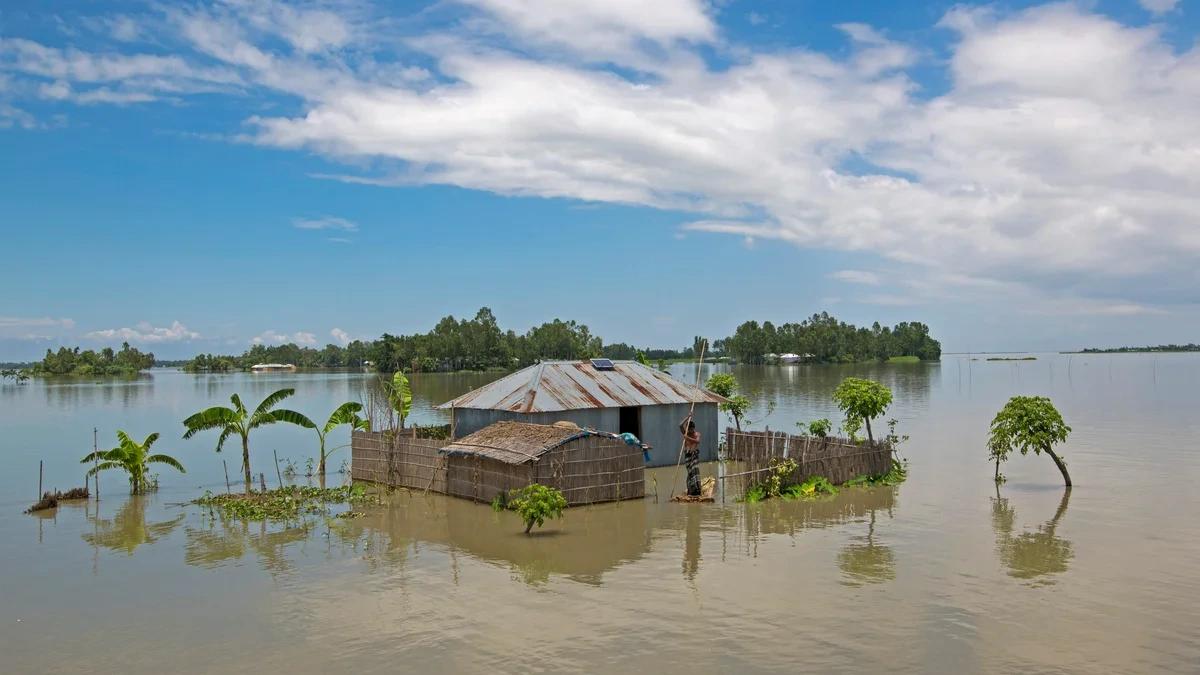
Bangladesh has already achieved one of the world’s most consequential disaster-management transformations. Through sustained investments in early warning systems, cyclone shelters, community preparedness, and volunteer mobilization, cyclone mortality has fallen by roughly 100-fold since 1970, making the country a global reference point in disaster preparedness and risk reduction. However, while lives are increasingly protected, livelihoods, assets, and economic gains remain exposed. Climate and disaster risks continue to impose substantial economic costs, eroding productive assets, disrupting livelihoods, and slowing development gains. World Bank projections suggest recurring floods and cyclones could reduce Bangladesh’s output by around 2 percent of GDP annually, while severe flooding could lower GDP by as much as 9 percent in extreme years (World Bank, 2022). As Figure 1 shows, the economic challenge extends beyond physical damage to a widening gap between disaster-related financing needs and available resources.
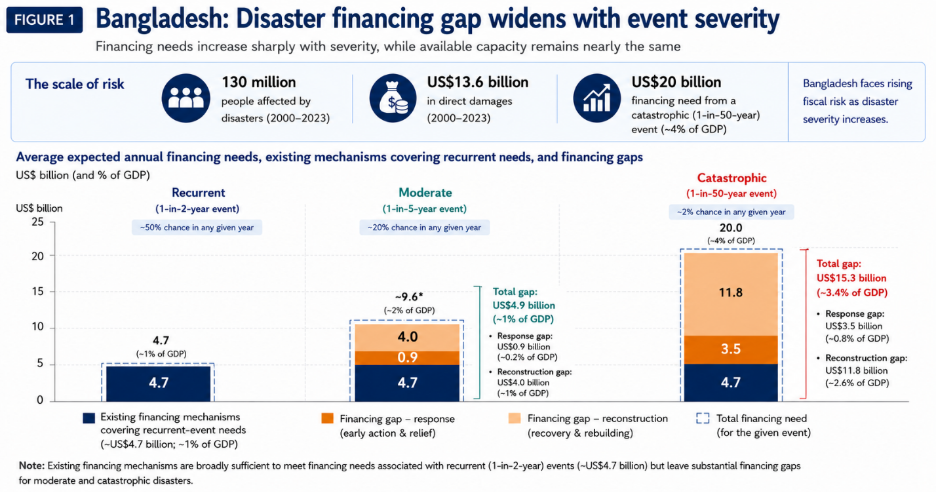
Figure 1. Disaster Financing Gap in Bangladesh, Source: World Bank (2022) and International Monetary Fund (2025).
Figure 1 reveals only part of the story. Disaster statistics measure what is destroyed; they rarely capture what is delayed. Businesses postpone investment. Households liquidate productive assets. Credit quality deteriorates. Meanwhile, public resources shift from development priorities toward emergency response and reconstruction. The cumulative effect is slower capital accumulation, lower productivity, and reduced long-term growth. Therefore, Bangladesh is not simply a country exposed to recurring hazards; it is an economy absorbing a persistent resilience deficit that compounds over time.
The question is no longer whether Bangladesh can forecast risk; it is whether it can finance action before risk becomes loss.
Moreover, evidence from anticipatory-action programmes across multiple countries suggests that every USD 1 invested can generate up to USD 7 in avoided losses and added benefits, reinforcing the economic case for acting before disasters occur rather than responding afterward (FAO, 2025).
In disaster economics, timing can be as important as funding itself. A household that receives support before a flood can protect assets and livelihoods; the same support delivered afterward primarily compensates for losses that have already occurred. The amount of money remains unchanged. However, its economic value does not.
Forecast-Based Financing (FbF), often referred to as anticipatory action financing, is built on this principle. By linking objective forecast triggers to pre-arranged financing and predefined action protocols, it enables households, businesses, and institutions to act before hazards strike rather than recover afterward.
Traditional disaster finance follows a familiar sequence:
By contrast, Forecast-Based Financing reverses that logic:
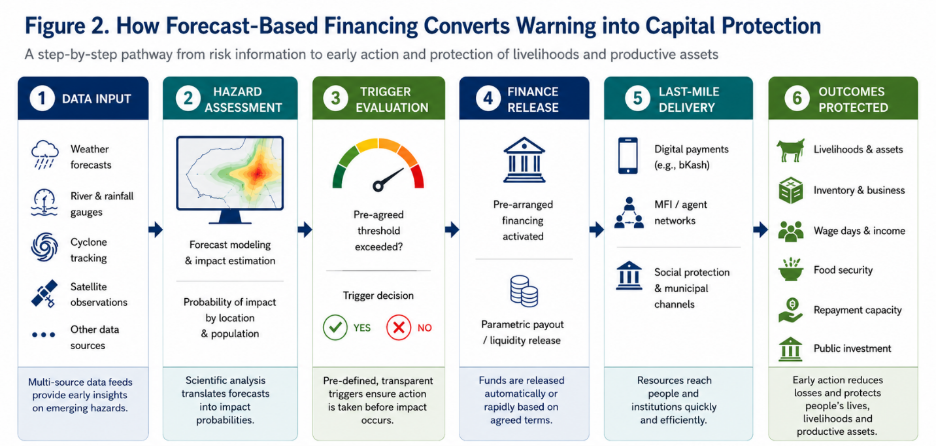
Figure 2. How Forecast-Based Financing Converts Warning into Capital Protection, Source: Author synthesis based on FAO (2025), World Food Programme guidance, and Christian et al. (2025)
Figure 2 illustrates the core economic logic of Forecast-Based Financing: value is created not through larger transfers, but through earlier decisions.
The distinction is not operational; it is economic. For example, early liquidity allows farmers to relocate livestock, secure agricultural inputs, and preserve productive assets. Small enterprises can protect inventory and maintain business continuity. At the same time, local authorities can pre-position resources and reduce emergency expenditures. The same financial transfer delivered after impact largely compensates for losses rather than preventing them.
Furthermore, this principle now has support from rigorous randomized controlled trial (RCT) evidence. In 2024, WFP and the World Bank’s DECDI unit tested forecast-based cash transfers across flood-prone communities in Bangladesh and Nepal. Households receiving transfers before peak flooding experienced improved food security, relied less on distress coping strategies, and reported better psychosocial well-being than households receiving the same assistance after the floods (Christian et al., 2025). Importantly, the findings reveal that disaster outcomes often depend not only on information constraints but also on liquidity constraints. People frequently know risk is coming; what they lack is the financial flexibility to act on that knowledge.
More fundamentally, Forecast-Based Financing transforms a forecast from a meteorological product into an investment signal. Information creates value when it improves decisions before uncertainty resolves. When linked to finance, forecasts enable households, businesses, and governments to move capital before hazards become losses.
The conventional framing of disaster finance as humanitarian relief understates what is ultimately at stake. Climate shocks do not only generate welfare losses; they destroy productive, business, and fiscal capital, with lasting consequences for growth and development. In contrast, Forecast-Based Financing shifts the focus from compensation after loss to protection before loss. By enabling early action, it helps preserve assets, incomes, liquidity, and fiscal space, reducing the need for costly recovery and reconstruction.
In economic terms, anticipatory finance is fundamentally an investment in continuity. Capital preserved before impact remains productive afterward, allowing households, businesses, and governments to recover faster and sustain development trajectories. Therefore, Forecast-Based Financing should increasingly be viewed not merely as a humanitarian tool, but as an instrument of economic resilience and development.
Many climate-vulnerable countries are still trying to build the institutional foundations required for anticipatory action. By comparison, Bangladesh already possesses many of them. In 2024, the World Food Programme and the Ministry of Disaster Management and Relief activated 15 anticipatory-action interventions across 20 districts, reaching approximately 430,000 people before floods, cyclones, flash floods, and heatwaves occurred (WFP, 2025).
Equally important, Bangladesh’s digital financial infrastructure provides a strong foundation. As of December 2024, Bangladesh had more than 238 million registered mobile financial service accounts, representing approximately 11.4 percent of all mobile-money accounts globally despite accounting for only around 2.2 percent of the world’s population (GSMA, 2025). Average daily MFS transactions reached approximately Tk 4,833 crore (around USD 396 million).
Cyclone Remal in 2024 demonstrated the system’s potential. Forecast-triggered cash transfers reached vulnerable households through bKash within hours of activation. Despite these strengths, the financing layer remains substantially below what the risk environment demands. The total anticipatory-action requirement for 2025 stands at approximately USD 42 million. However, only USD 10.4 million was mobilised in 2024. More than 54 percent of identified households remained uncovered, while flash-flood-prone communities faced an 88.2 percent coverage gap (WFP, 2025). Approximately 4.1 million households remain exposed annually to major climate-related hazards.
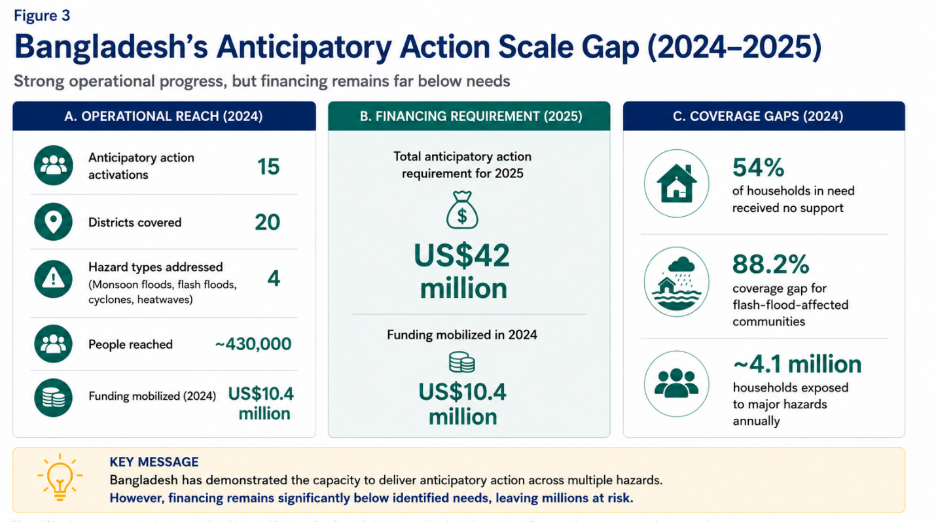
Figure 3. Bangladesh’s Anticipatory Action Scale Gap (2024–2025), Source: World Food Programme & Ministry of Disaster Management and Relief (2025).
Figure 3 demonstrates that Bangladesh’s challenge is now financing scale rather than proof of concept.
Viewed from another perspective, Bangladesh’s resilience gap is also an underserved financial market. At the same time, recurring climate risks create sustained demand for financial protection. Bangladesh also possesses many of the elements that investors typically seek: sophisticated forecasting systems, one of the world’s largest mobile financial services ecosystems, extensive microfinance penetration, and growing policy support for resilience finance.
Insurance penetration remains below 0.5 percent of GDP, significantly lower than regional averages, highlighting a substantial gap in financial protection and a largely untapped market for resilience and risk-transfer solutions in Bangladesh. MSMEs contribute roughly one-quarter of GDP and account for 40 percent of manufacturing output, yet remain highly exposed to climate-related hazards (ADB, 2015).
Table 1. Private-Sector Entry Points in Bangladesh’s Resilience Finance Ecosystem
| Opportunity Area | Potential Actors | Financial Instrument | Strategic Rationale |
|---|---|---|---|
| Sovereign Risk Protection | Reinsurers, capital markets, development partners | Parametric insurance, catastrophe risk transfer | Rapid liquidity after major disasters and reduced fiscal pressure |
| Household & Agricultural Resilience | Insurers, MFIs, fintechs | Index-based flood and cyclone microinsurance | Protection of productive assets and livelihoods |
| MSME Continuity & Recovery | Commercial banks, DFIs, and impact investors | Contingent credit, emergency liquidity facilities | Business continuity and employment protection |
| Climate-Resilient Infrastructure | ESG funds, institutional investors, blended-finance vehicles | Resilience bonds, adaptation finance, blended capital | Long-term adaptation investment |
| Forecast-Triggered Delivery Systems | Mobile financial service providers, fintechs | Digital cash transfer platforms, embedded payment systems | Fast, scalable, and transparent disbursement |
Taken together, these opportunities suggest that resilience finance should be viewed not as a niche climate intervention, but as an emerging market spanning insurance, credit, digital finance, and capital markets.
Importantly, inclusion is not merely a social objective within this market; it is a risk-management imperative. Female-headed households, smallholder farmers, informal workers, persons with disabilities, and coastal communities often represent both the highest-exposure and least-protected segments. Excluding them does not reduce risk. It misprices it.
Bangladesh’s microfinance networks and digital finance rails already extend well beyond formal banking. In other words, the delivery architecture largely exists. The challenge is developing financial products and investment structures capable of moving capital through those channels at scale.
Bangladesh’s challenge is no longer forecasting disasters. The country already possesses many of the foundations required to scale anticipatory finance: credible forecasting systems, extensive mobile financial services, deep microfinance penetration, and growing operational experience. However, what remains missing is the financial architecture capable of connecting these assets at scale.
Three shifts are particularly important.
These priorities align closely with Bangladesh’s National Adaptation Plan (2023–2050), the Bangladesh Delta Plan 2100, and the country’s emerging disaster risk financing agenda. They also advance SDG 1 (No Poverty), SDG 10 (Reduced Inequalities), SDG 11 (Sustainable Cities and Communities), and SDG 13 (Climate Action), while reinforcing the Sendai Framework’s emphasis on investing in resilience and preparedness. More fundamentally, they reflect a shift from financing recovery to protecting development gains before climate shocks erode them.
For decades, resilience in Bangladesh has been measured largely by how effectively disasters could be forecast and lives protected. That achievement is significant, but it represents only part of the resilience equation. As climate risks become more frequent, interconnected, and economically disruptive, resilience will increasingly depend on how effectively information can translate into financial decisions. FbF demonstrates that resilience is not simply a function of better forecasts; it is a function of what societies are able to do with those forecasts. By protecting productive assets, preserving fiscal space, sustaining business continuity, and reducing distress coping, anticipatory finance shifts disaster management from a reactive exercise in recovery to a proactive strategy for safeguarding development gains.
Thus, the countries that are most capable of sustaining growth and protecting development gains will not necessarily be those exposed to fewer shocks, but those able to act before shocks become losses.
The storm is inevitable. The economic loss does not have to be.
The article was authored by Nowreen Tasnim, Former Trainee Consultantat LightCastle Partners. For further clarifications, please contact: [email protected]
Our experts can help you solve your unique challenges
Stay up-to-date with our Thought Leadership and Insights